Understanding A182 F44
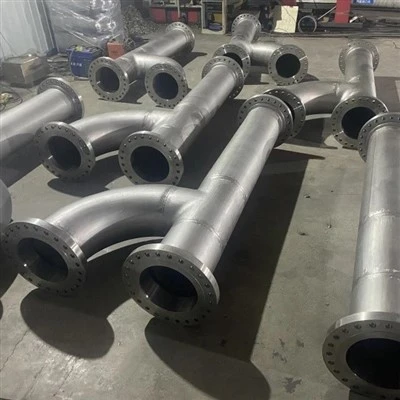
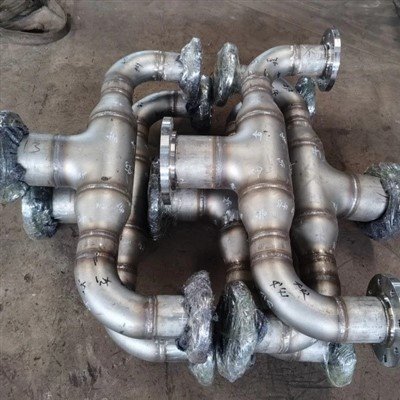
ASTM A182 F44 is a specification covering forged or rolled alloy and stainless steel pipe fittings, flanges, valves, and similar parts intended for high-temperature service. Specifically, F44 refers to a super duplex stainless steel. This means it has a two-phase microstructure and offers significantly higher strength and corrosion resistance than standard duplex or common austenitic grades like 304 or 316. Its common trade names include UNS S32750 and EN 1.4410.
A182 F44 is chosen for demanding applications, especially where excellent resistance to corrosion, high strength, and good toughness are critical, often in aggressive environments like seawater, chemical processing, or oil and gas production.

A182 F44 Super Duplex Advantages
The standout features of A182 F44 come from its high alloy content – substantial amounts of chromium (Cr), molybdenum (Mo), and nitrogen (N). This combination gives it exceptional resistance to pitting and crevice corrosion, measured by a high Pitting Resistance Equivalent Number (PREN > 40).
It also offers very high strength; its yield strength is typically double that of standard austenitic stainless steels like A182 F316 and significantly higher than standard duplex grades like A182 F51 (2205). This strength advantage allows engineers to design components with thinner walls, potentially saving weight and material cost.
Furthermore, A182 F44 maintains good toughness and weldability, along with resistance to SCC in chloride-containing environments, outperforming many austenitic grades in this regard.
A182 F44 vs Austenitic Grades
Compared to common austenitic stainless steels specified under A182, such as F304, F316, and F316L, A182 F44 is in a different league for demanding applications. While F304/F316 offer good general corrosion resistance and formability at a lower cost, they lack the strength and localized corrosion resistance of F44.
A182 F44 provides vastly superior resistance to pitting and crevice corrosion, especially in environments with chlorides or weak acids. Its yield strength is approximately twice as high as F316L. Crucially, F44 is much more resistant to chloride-induced stress corrosion cracking (SCC), a common failure mode for 300-series austenitics in warm chloride environments.
However, standard austenitics are generally easier and cheaper to fabricate and machine than the harder super duplex F44.
A182 F44 vs Duplex Grades
A182 F44 belongs to the duplex family but is classified as "super duplex" due to its enhanced properties compared to "standard" or "lean" duplex grades like A182 F51 and A182 F53 is often listed for both F53 and F44, but F44 typically implies the super duplex grade meeting the higher end S32750 specs.
The key difference lies in the alloy content and resulting performance. A182 F44 contains higher levels of chromium, molybdenum, and nitrogen than F51 or standard F53. This directly translates to a significantly higher PREN value, meaning much better resistance to aggressive pitting and crevice corrosion.
A182 F44 also offers higher strength both yield and tensile and better SCC resistance than standard duplex grades. While F51/F53 are excellent, cost-effective choices for many moderately corrosive applications, A182 F44 is specified for the most severe conditions where standard duplex might be borderline or insufficient.
Cost and Fabrication for A182 F44
While A182 F44 offers outstanding performance, it comes at a higher initial material cost compared to austenitic F304/F316 or duplex F51/F53 stainless steels.
Its high alloy content makes it more expensive. Fabrication also requires more expertise. Machining is slower due to its high strength and work hardening tendency, requiring appropriate tools and techniques. Welding A182 F44 is critical; it demands strict control of heat input, interpass temperature, and the use of properly matched super duplex filler metals to maintain the correct phase balance and avoid the formation of detrimental intermetallic phases that can ruin corrosion resistance and toughness.
Post-weld heat treatment is usually not recommended. Proper procedures and qualified welders are essential. Despite these challenges, the combination of extreme corrosion resistance, high strength, and long service life in harsh environments often makes A182 F44 the most cost-effective solution over the lifetime of a project.
A182 F44 Typical Applications
A182 F44 is specified for critical components where its superior properties are necessary. Common applications include seawater systems, offshore oil and gas equipment, desalination plants, chemical and petrochemical processing, flue gas desulfurization systems, and pulp & paper digesters. In these environments, A182 F44 reliably performs where standard grades would suffer rapid pitting, crevice corrosion, SCC, or require excessive thickness due to lower strength.
Conclusion
Choosing A182 F44 depends on the specific demands of the application. It outperforms standard austenitic (F304/F316) and standard duplex (F51/F53) grades significantly in strength, pitting/crevice corrosion resistance, and chloride SCC resistance, making it essential for the most severe environments.
Compared to super austenitic grades, F44 offers superior strength and SCC resistance, often at a competitive cost per unit strength, though fabrication requires more care.
While its initial cost and fabrication complexity are higher, A182 F44 provides unmatched reliability and longevity in aggressive, high-stress applications.