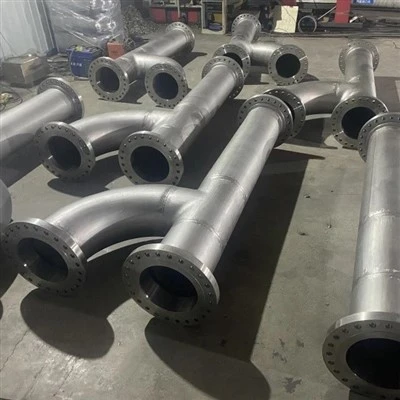
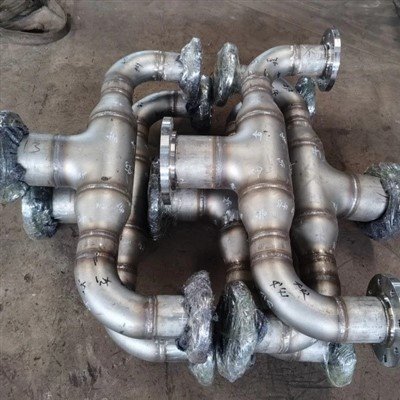
In its primary, annealed state, 316 stainless steel is non-magnetic; however, it can become weakly magnetic following mechanical processing or welding.

316 stainless steel is technically classified as a non-magnetic material due to its austenitic crystalline structure, but it can exhibit magnetic properties through "strain-induced martensitic transformation" during cold working or the formation of delta-ferrite during welding.
Basics of Magnetism in Metals
To grasp why 316 stainless steel behaves as it does, we must first understand magnetism in metals. Magnetism arises from the alignment of electron spins and orbital motions within atoms. In ferromagnetic materials like iron or carbon steel, magnetic domains-regions where spins align-allow the material to be strongly attracted to magnets and retain magnetism.

In contrast, paramagnetic materials have unpaired electrons that align weakly with an external magnetic field but do not retain magnetism once the field is removed. Diamagnetic materials, like copper, weakly repel magnetic fields. Stainless steels fall into different categories based on their alloying elements and microstructure: ferritic and martensitic grades are magnetic, while austenitic grades, including 316, are generally non-magnetic or paramagnetic.
316 stainless steel, also known as AISI 316 or UNS S31600, is an austenitic grade. Its composition includes 16-18% chromium, 10-14% nickel, 2-3% molybdenum, and low carbon. The high nickel content stabilizes the austenite phase, which has a face-centered cubic (FCC) crystal structure. In this FCC lattice, the atomic arrangement prevents the formation of large magnetic domains, rendering the material non-magnetic at room temperature.
Why Is 316 Stainless Steel Non-Magnetic in Its Standard Form?
In its annealed condition-where the steel is heated to high temperatures and then cooled slowly-the microstructure of 316 is fully austenitic. Annealing relieves internal stresses and promotes the stable FCC phase. At this point, 316 exhibits no ferromagnetic behavior; it won't stick to a magnet, and its magnetic permeability is very low, typically around 1.005-1.02, close to that of air.

This non-magnetic property is a key advantage. In applications where magnetic interference must be avoided, such as MRI machines, electronic enclosures, or food processing equipment, 316 outperforms magnetic steels. The molybdenum addition enhances corrosion resistance in chloride environments, making it ideal for marine hardware or chemical tanks, without compromising its non-magnetic nature.
Our factory produces 316 stainless steel with precise annealing processes to ensure consistent non-magnetic performance, backed by rigorous testing.
Paramagnetism is worth noting here. Even non-magnetic austenitic steels like 316 are slightly paramagnetic, meaning they can be weakly attracted to very strong magnets, such as rare-earth ones. This is due to the random alignment of electron spins that temporarily orient in a magnetic field. However, this effect is negligible in everyday use and doesn't make the material "magnetic" in the common sense.
Why 316 Steel Might Still Be Magnetic?
If the theory says it is non-magnetic, why do we often see 316 bolts or machined parts showing magnetic pull? There are three primary industrial reasons:
1. Cold Working (Strain-Induced Martensite)
This is the most common cause. When 316 stainless steel is subjected to mechanical stress at room temperature-such as cold rolling, deep drawing, wire pulling, or bending-the crystal lattice is physically distorted.
If the deformation is severe enough, a portion of the austenite transforms into Martensite. Unlike austenite, martensite is magnetic. Therefore, a 316 sheet might be non-magnetic in the center, but the edges where it was sheared or the corners where it was bent may show a magnetic response.
2. The Welding Process (Delta Ferrite)
When we weld 316 stainless steel, the filler metals and the base metal melt and solidify. To prevent "hot cracking" during cooling, welding consumables are intentionally designed to produce a small amount of Delta Ferrite (usually 3–8%) in the weld pool.
Delta ferrite is a magnetic phase. Consequently, a perfectly non-magnetic 316 plate will almost always exhibit a magnetic "hot spot" at the weld seam. This is not a sign of poor quality; it is a sign of a structurally sound weld.
3. Casting vs. Wrought Products
Cast 316 stainless steel (often designated as CF8M) often has a slightly different microstructure than wrought 316 (sheets/bars). Castings frequently contain a small percentage of ferrite to improve castability and prevent cracking, which often results in a detectable magnetic pull that is absent in forged or rolled versions of the same alloy.
Conclusion
To summarize, while 316 stainless steel is inherently non-magnetic, it is not "magnet-proof." Magnetism in 316 is an indicator of the material's processing history, not its chemical purity. A magnetic response usually indicates that the material has been strengthened through cold work or stabilized through specific welding techniques.