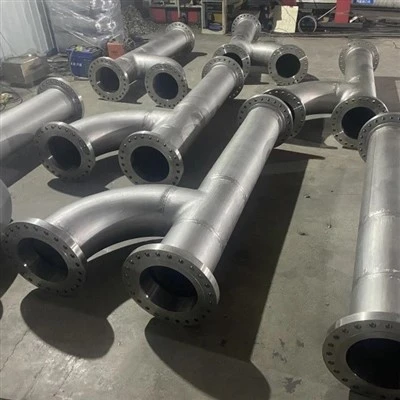
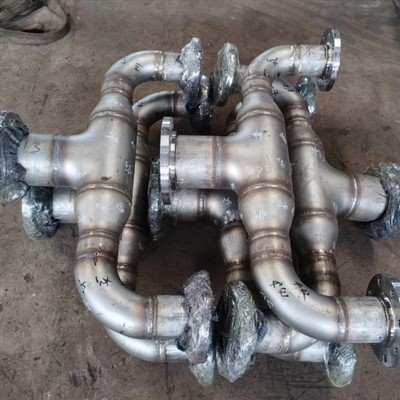
- Incoloy 825 can be welded to austenitic stainless steel (316L/304) as a routine, code-qualifiable dissimilar joint - provided a nickel-based filler is used.
- AWS A5.14 ERNiCrMo-3 (Inconel 625 filler, UNS N06625) is the industry-standard filler: its over-alloyed Ni-Mo deposit tolerates dilution from both base metals and keeps the weld metal at least as corrosion-resistant as Alloy 825.

- Stainless fillers such as 316L or 309L are unacceptable for corrosive 825-to-stainless service: the diluted weld metal becomes the corrosion weak point and is prone to solidification cracking.
- Recommended practice: GTAW with 100% argon and back purge, heat input 0.5-1.5 kJ/mm, interpass temperature at or below about 150 C, stringer beads, dedicated nickel-alloy tooling, and normally no preheat and no PWHT.
- Qualify the joint per ASME BPVC Section IX (or AWS D1.6 / EN ISO 15614-1) with tensile, guided bend, hardness, PMI, and service corrosion testing.
Can Incoloy 825 Be Welded to Stainless Steel?
Yes - Incoloy 825 is routinely and reliably welded to austenitic stainless steels such as 316L and 304 as a dissimilar joint, provided a nickel-based filler such as ERNiCrMo-3 is used and the procedure is controlled.
Dissimilar 825-to-stainless welds are standard practice in heat exchangers (825 tubes to stainless tubesheets), piping transitions, and vessel nozzles. The two alloys are metallurgically compatible: both are austenitic, both weld with the same processes (GTAW, GMAW, SMAW), and their coefficients of thermal expansion are close enough that differential-stress problems seen in steel-to-stainless joints do not dominate here. The engineering challenge is not weldability - it is preserving corrosion resistance in the weld metal and heat-affected zones, which is exactly what filler selection controls.
Why Is ERNiCrMo-3 the Preferred Filler for 825-to-Stainless Joints?
AWS A5.14 ERNiCrMo-3 (Inconel 625 filler, UNS N06625) is the default filler because its over-alloyed nickel-molybdenum deposit tolerates dilution from both base metals and keeps the weld metal at least as corrosion-resistant as the Alloy 825 base metal - the weld never becomes the weak link.
The logic is called "over-matching." In a dissimilar weld, the base metals partially melt and mix (dilute) into the weld pool. ERNiCrMo-3 starts with roughly 58% nickel and 8-10% molybdenum, so even after dilution with 316L on one side and 825 on the other, the solidified weld metal remains a nickel-base alloy with pitting resistance equal to or better than the 825 parent metal. The higher-molybdenum deposit acts as a corrosion buffer in sulfuric, phosphoric, and chloride service. ERNiCrMo-3 also welds the alloy to itself, to stainless, and to low-alloy steel, which simplifies consumable inventories.
What Happens If You Use a Stainless Steel Filler (316L or 309L)?
Welding 825 to stainless steel with a stainless filler is not acceptable for corrosive service: the diluted weld metal becomes a lean, corrosion-prone weak point, and the austenitic deposit is prone to solidification cracking.

A 316L or 309L filler creates weld metal with lower nickel and molybdenum than either requirement demands once the nickel-rich base dilutes into it - but more importantly, the weld is no longer a nickel-base alloy. In chloride and acid service it pits and crevice-corrodes well before either base metal, and it can suffer solidification (hot) cracking because of the composition and solidification mode.
A 309L joint is sometimes seen in non-corrosive structural work, but for exchanger, chemical, or sour service it is a design flaw, not a choice. When a customer's specification calls for 825, the weld must match that performance level; only an over-matching nickel filler delivers it.
What Other Filler Options Exist Besides ERNiCrMo-3?
The practical alternatives are ERNiFeCr-1 (matching 825 composition) where specifications demand exact matching, ERNiCr-3 (Inconel 82) for cosmetic or high-temperature cases, and the ENiCrMo-3 covered electrode for stick (SMAW) welding - but ERNiCrMo-3 remains the default for corrosion service.
ERNiFeCr-1 (AWS A5.14, UNS N08825 filler chemistry: Ni 38-46, Cr 19.5-23.5, Mo 2.5-3.5, Cu 1.5-3.0, Ti 0.6-1.2) is the "matching" filler, used when a project specification requires weld metal chemistry equal to the base alloy. ERNiCr-3 (Inconel 82) is an acceptable alternative where an exact color match or specific high-temperature properties matter, but it carries less molybdenum, so it is not preferred where pitting resistance is the driver.
For field and shop SMAW, the covered electrode equivalent is ENiCrMo-3 (AWS A5.11), giving the same deposit chemistry as the bare wire. Many fabricators qualify ERNiCrMo-3 as the single consumable for all 825 joints - to itself and to stainless - for simplicity and one proven corrosion level.
How Should the Dissimilar Joint Be Designed and Prepared?
Use a standard single-V (or J for thick sections) groove with clean, bright, contamination-free surfaces, a controlled root gap, and backing gas for the root - the groove geometry and fit-up are what control dilution and root quality.
- Groove design - single-V with a 60 included angle is typical for pipe and tube; J-groove for thick sections to reduce weld volume and heat input.
- Surface preparation - machine or grind the bevel to bright metal; remove oxides, scale, and any work-hardened layer from sheared edges.
- Cleanliness - degrease with solvent/acetone; keep tools, wire brushes, and grinding wheels dedicated to nickel alloys so ferrous or sulfur contamination never reaches the joint.
- Root protection - back-purge with argon on the root pass to prevent internal oxidation, which would otherwise destroy corrosion resistance on the bore.
- Fit-up - consistent root gap and alignment; excessive gap invites root dilution, insufficient gap causes lack of fusion.
What Welding Parameters and Techniques Are Recommended?
Weld 825-to-stainless joints with GTAW (TIG) using 100% argon, back purge on the root, low heat input of roughly 0.5-1.5 kJ/mm, interpass temperature kept at or below about 150 C (tighter for acid service), and stringer beads - with no preheat in normal conditions.
- Process - GTAW is preferred for tube and thin-wall work; GMAW with argon-helium mixes and SMAW with ENiCrMo-3 are acceptable for heavier sections.
- Shielding - 100% argon for GTAW; back-purging (argon) is mandatory for root passes on tube and pipe to prevent internal oxidation.
- Heat input - keep to 0.5-1.5 kJ/mm; excessive heat widens the heat-affected zone, drives titanium out of solution, and promotes carbide precipitation.
- Interpass temperature - maximum about 150 C (300 F), with many acid-service specs tightening this to 100 C or below; measure with contact pyrometer or temperature crayons.
- Bead technique - narrow stringer beads instead of weaving; minimize weld passes and total heat input.
- Preheat - generally not required; if ambient temperature is below about 5 C (41 F), a gentle preheat to 15-20 C removes moisture only.
Is Post-Weld Heat Treatment Required?
Normally no - titanium-stabilized Alloy 825 does not require PWHT to restore intergranular corrosion resistance, and applying PWHT to a 825-to-stainless joint can sensitize the stainless side; heat treatment is only performed when the code or service conditions specifically demand it.

The titanium addition in 825 "lock up" carbon so chromium carbides do not precipitate in the heat-affected zone during welding - the reason the alloy is weldable in the as-welded condition. For a dissimilar joint, a stress-relief at typical stainless temperatures (around 600-850 C) puts the 316L side squarely in the sensitization range and can degrade its corrosion resistance, so PWHT should not be added without a specific requirement.
Where a code or service condition does demand solution treatment, the window is approximately 920-980 C followed by rapid cooling, and the whole joint geometry must permit it. In practice, most fabricated 825 equipment ships as-welded.
What Metallurgical and Corrosion Risks Must Be Managed?
The five risks in a 825-to-stainless weld are dilution, stainless-side HAZ sensitization, molybdenum partitioning and unmixed zones, chloride stress-corrosion on the stainless side, and ferrous contamination - each is managed by filler choice, controlled heat input, cleanliness, and inspection.
Dilution - controlled by over-alloyed ERNiCrMo-3 and by groove/fit-up design so the final deposit never drops below acceptable nickel and molybdenum.
- Stainless HAZ sensitization - chromium-carbide precipitation in the 316L heat-affected zone is minimized by low heat input and interpass control.
- Mo partitioning / unmixed zone - molybdenum can segregate during solidification and an unmixed zone can form at the fusion boundary; stringer beads and complete penetration reduce localized lean regions.
- Chloride SCC on the stainless side - the 316L leg remains susceptible to stress-corrosion cracking in hot chlorides; in such service, designers often move the joint location or upgrade the stainless leg rather than rely on the weld.
- Ferrous contamination - carbon-steel particles from shared tooling create local corrosion cells; dedicated nickel-alloy brushes and abrasives are mandatory.
How Is an 825-to-Stainless Weld Qualified and Tested?
Qualify the joint with a documented welding procedure per ASME BPVC Section IX (or AWS D1.6 / EN ISO 15614-1), then verify production welds by tensile, guided bend, hardness, PMI, and service-specific corrosion testing.

- Procedure qualification (PQR/WPS) - record filler classification, process, gas, heat input range, interpass limit, and positions; test coupons per the governing code.
- Mechanical tests - transverse tensile, guided side/facing bends, and hardness surveys validate strength and ductility of the dissimilar deposit.
- Chemical verification - positive material identification (PMI) on filler and finished weld confirms the deposit is ERNiCrMo-3, not a substituted grade.
- Corrosion tests - where the specification requires, run service-appropriate tests (e.g., intergranular attack or pitting tests) on the weld to prove the deposit matches the base-metal performance.
- Welder qualification - welders must be qualified for the specific process, filler, and positions used on the job.
Where Are Incoloy 825-to-Stainless Joints Used?
825-to-stainless dissimilar welds appear wherever Alloy 825 must transition to economical stainless construction: heat-exchanger tube-to-tubesheet and nozzle joints, chemical plant piping transitions, vessel nozzles, scrubber systems, and oil-and-gas produced-water lines.
- Heat exchangers - 825 tubes welded or seal-welded into 316L tubesheets, and 825 channels/nozzles transitioned to stainless piping.
- Chemical processing - sulfuric/phosphoric acid plants where 825 internals join stainless shells and piping.
- Pollution control - scrubber and FGD systems with 825 wetted sections transitioning to stainless ducting.
- Oil and gas - produced-water and sour-service coolers where 825 components tie into stainless manifolds.
Weld 825 to Stainless Steel the Right Way
Incoloy 825 welds to stainless steel cleanly and reliably - but only when the joint is treated as a corrosion-engineering decision, not a routine weld. Specify ERNiCrMo-3 filler (AWS A5.14) or its ENiCrMo-3 electrode equivalent, control heat input and interpass temperature, protect the root with argon back purge, keep tools nickel-dedicated, skip PWHT unless a code demands it, and qualify the procedure with mechanical and corrosion tests. Done that way, the dissimilar joint delivers the same service life as the Alloy 825 equipment it connects.