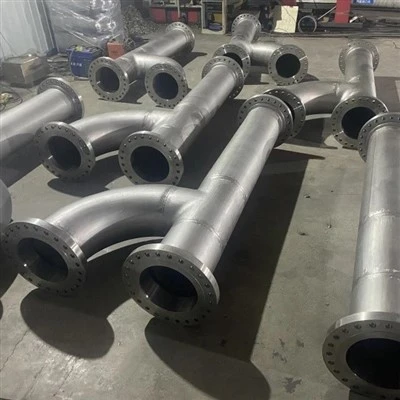
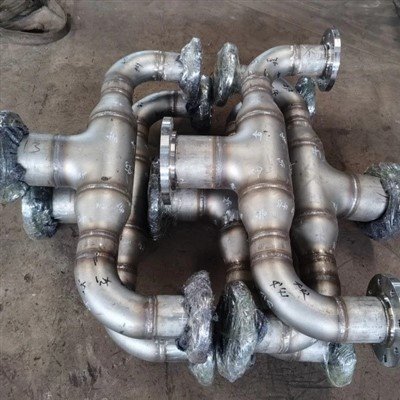
We produce Incoloy 825 plates strictly to ASTM B424 and ASME SB424 specifications, offering thicknesses from 3/16″ (4.8 mm) to 2″ (50.8 mm) and beyond, with widths up to 2,500 mm and custom cut-to-size options. This article explores the advantages and applications of Incoloy 825 plates.

Advantages of Incoloy 825 Plate
Superior Corrosion Resistance
The most compelling advantage of Incoloy 825 plate lies in its broad-spectrum corrosion resistance. The alloy demonstrates outstanding performance in sulfuric and phosphoric acids, where many materials experience rapid degradation. This resistance extends to organic acids, alkaline solutions, and seawater environments.
The high nickel content provides effective resistance to chloride-induced stress corrosion cracking, a common failure mechanism in austenitic stainless steels. Meanwhile, molybdenum and copper work synergistically to combat reducing agents and acids, while chromium ensures protection against oxidizing conditions, including nitric acid, nitrates, and oxidizing salts.
Resistance to Localized Attack
Beyond general corrosion, Incoloy 825 plate exhibits excellent resistance to pitting and crevice corrosion. These localized attack mechanisms often prove more dangerous than uniform corrosion, as they can lead to rapid perforation with minimal material loss. The molybdenum content, typically 2.5-3.5%, elevates the pitting resistance equivalent number (PREN) well above standard 300-series stainless steels.

The titanium stabilization serves another crucial function: it prevents intergranular attack after welding. When conventional stainless steels are heated in the sensitization temperature range (650-760°C), chromium carbides precipitate at grain boundaries, depleting adjacent areas of chromium and rendering them susceptible to corrosion. Incoloy 825's titanium ties up carbon as stable titanium carbides, preserving chromium in solid solution where it belongs.
Mechanical Properties and Performance
Incoloy 825 plate delivers reliable mechanical properties across a broad temperature range. In the annealed condition, typical tensile strength reaches 586-662 MPa (85-96 ksi), with yield strength of 310-338 MPa (45-49 ksi) and elongation of 45% . This combination of strength and ductility facilitates fabrication while ensuring in-service performance.
The alloy maintains useful mechanical properties from cryogenic temperatures down to -200°C up to approximately 550°C. For pressure vessel applications, Incoloy 825 carries approvals up to 538°C under ASME Boiler and Pressure Vessel Code Sections I, III, VIII, and IX. This temperature capability covers the majority of chemical process operations while excluding the range where brittle phases might form.
Physical properties complement these mechanical characteristics. Density is 8.14 g/cm³, with a melting range of 1370-1400°C. Thermal conductivity of 11.1 W/m-K and electrical resistivity of 113 μΩ·cm provide predictable performance in heat transfer and instrumentation applications.
Fabrication Advantages
Incoloy 825 plate offers excellent weldability using all conventional processes. The titanium stabilization ensures that welded joints maintain corrosion resistance matching the base material, eliminating the need for post-weld heat treatment in most applications. This characteristic significantly reduces fabrication costs and complexity for large vessels and structures.
The alloy maintains a stable, fully austenitic structure during prolonged thermal exposure, preventing embrittlement or phase transformations that could compromise performance.
Available Forms and Specifications

Incoloy 825 plate is manufactured to multiple international standards ensuring consistent quality and performance. The primary specification for plate is ASTM B424 / ASME SB-424, with supplementary requirements available under ASTM B906.
Plate thicknesses typically range from 0.1 mm to 100 mm, with widths from 600 mm to 2000 mm and lengths customized to project requirements. Surface finishes include No. 1 (hot-rolled and annealed), 2B (cold-rolled, bright annealed), and various polished finishes for specialized applications.
Additional product forms available include sheet, strip, pipe, tube, bar, forgings, and fittings, all covered by complementary specifications such as ASTM B163, B423, B425, and B564. This comprehensive specification coverage facilitates multi-product procurement for complete projects.
Main Applications of Incoloy 825 Plate
Chemical Processing Industry
The chemical process industry represents the largest application sector for Incoloy 825 plate. Sulfuric acid pickling plants utilize the alloy for heating pipes, containers, baskets, and chains where resistance to hot acid environments is essential . Phosphoric acid production facilities employ Incoloy 825 for evaporators, heat exchangers, washing equipment, and dip tubes handling aggressive acid slurries.
For organic acid production and handling, the alloy provides reliable service where stainless steels would rapidly corrode. Equipment fabricators specify Incoloy 825 when process streams contain multiple corrosive species or when operating conditions fluctuate between oxidizing and reducing regimes.
Oil and Gas Industry
Oil and gas extraction increasingly occurs in challenging environments containing hydrogen sulfide, carbon dioxide, and chlorides. Incoloy 825 plate meets NACE MR0175/ISO 15156 requirements for sour service, making it suitable for downhole equipment, wellhead components, and surface facilities handling acidic production fluids.
The alloy finds application in piping systems for acidic gas environments, seawater injection lines, and chemical injection systems where reliability directly impacts production uptime . Its resistance to both general and localized corrosion provides the durability required for remote or inaccessible installations.
Marine Engineering
Seawater systems present multiple corrosion challenges, including general corrosion, pitting, crevice corrosion, and biofouling-related attack. Incoloy 825 plate addresses these challenges effectively, serving in heat exchangers, piping systems, and pump components for marine applications.
Propeller shafts, marine exhaust systems, and seawater-cooled calorifiers benefit from the alloy's resistance to flowing seawater and its ability to withstand intermittent exposure without accelerated attack. For naval architecture and offshore platforms, the combination of corrosion resistance and mechanical strength proves particularly valuable.
Pollution Control Equipment
Flue gas desulfurization systems in power plants and industrial facilities create some of the most corrosive environments encountered in modern industry. Incoloy 825 plate serves in scrubbers, ductwork, and stack liners where condensing acids would rapidly destroy lesser materials.
Electrostatic precipitator electrodes and ash handling equipment benefit from the alloy's resistance to both acidic condensates and abrasive particulates. As environmental regulations tighten globally, the demand for reliable materials in pollution control continues to grow.
Nuclear Industry Applications
Nuclear fuel reprocessing and radioactive waste handling demand materials that combine corrosion resistance with predictable long-term performance. Incoloy 825 plate meets these requirements, serving in dissolvers, storage tanks, and transfer systems for nuclear applications.
Jinie Incoloy 825 Plate Factory From China
Our manufacturing facility maintains extensive inventory of Incoloy 825 plate in multiple thicknesses and sizes, supported by complete mill certifications and traceability. Contact our technical team to discuss your specific requirements.