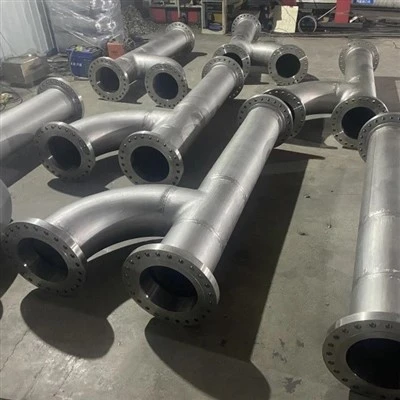
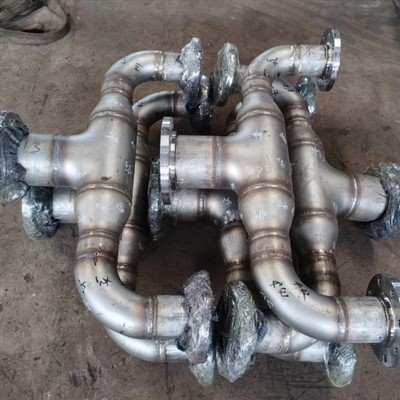
Welding Destroys Stainless Steel's Passive Film
Stainless steel resists corrosion because of an invisible chromium-oxide layer on its surface, typically just 1–3 nanometres thick. This layer forms spontaneously when chromium in the alloy reacts with atmospheric oxygen. Engineers call it the 'passive film.' It is the reason stainless steel does not rust the way carbon steel does.

Welding disrupts this film in several ways:
|
Welding Effect |
What It Does |
Corrosion Risk |
|
Heat Tint / Oxidation |
Chromium migrates to surface oxide; adjacent zone is chromium-depleted |
Very High - sensitization risk |
|
Weld Scale (Spatter) |
Thick iron-oxide deposits block passive film reform |
High - crevice corrosion initiation |
|
Sensitisation (HAZ) |
Chromium carbide precipitation at grain boundaries at 425–870°C |
High - intergranular corrosion (IGC) |
|
Flux & Slag Residue |
Chemical contamination prevents uniform passivation |
Medium–High |
|
Mechanical Damage |
Grinding scratches create active surface sites |
Medium |
Source: ASTM A967/A967M-17, Section 1; ASTM A380/A380M-17, Section 4; TWI Ltd. – Welding & Corrosion (2023).
Passivation after welding is not optional for critical applications. It is the process of chemically treating the cleaned weld area to re-establish a uniform, dense chromium-oxide passive film, thereby fully restoring corrosion resistance to design specification.
ASTM A967 for Stainless Steel Passivation
ASTM A967 / A967M-17 ('Standard Specification for Chemical Passivation Treatments for Stainless Steel Parts') is published by ASTM International. It is the primary specification used in the United States and internationally to define acceptable passivation methods for stainless steel components, including welded assemblies.
Key scope elements of ASTM A967:
|
Standard Element |
Details |
|
Full Title |
Standard Specification for Chemical Passivation Treatments for Stainless Steel Parts |
|
Publication Designation |
ASTM A967 / A967M-17 (metric edition available) |
|
Companion Standard |
ASTM A380/A380M-17 - Cleaning and Descaling Stainless Steel |
|
Treatment Methods Covered |
Nitric Acid Passivation (Practices A–D); Citric Acid Passivation (Practice E); Other Methods (Practice F) |
|
Acceptance Tests Covered |
Water Immersion, High Humidity, Salt Spray, Copper Sulfate, Potassium Ferricyanide–Nitric Acid |
|
Industries Requiring A967 |
Pharmaceutical (ASME BPE), Food Processing (3-A), Aerospace (AMS 2700), Medical Devices (FDA/ISO) |
|
Related Standards |
ISO 16048, EN 2516, AMS 2700, NACE SP0169 |
Source: ASTM A967/A967M-17 Standard Specification (ASTM International, 2017); ASTM A380/A380M-17.
|
Key Takeaway ASTM A967 does not prescribe a single passivation recipe. It defines a menu of approved methods and the tests that verify success. The welding engineer or quality team selects the appropriate method based on alloy grade and service conditions. |
Surface Preparation Before Passivation
ASTM A967 is explicit: passivation chemicals cannot penetrate through contamination. The passive film will not form uniformly on a surface that has grease, scale, weld spatter, or iron contamination. Pre-treatment is therefore not preliminary - it is integral to the passivation process.

Heat Tint and Weld Scale Removal
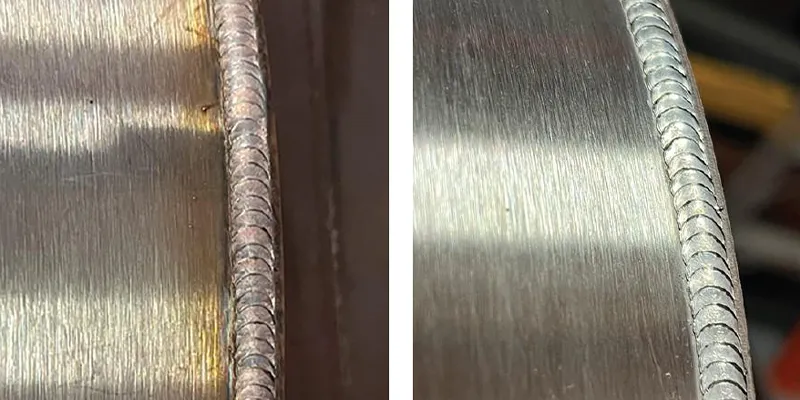
Heat tint (the rainbow discolouration visible on stainless welds) signals chromium depletion. The intensity of the tint correlates directly with the degree of chromium loss and therefore the reduction in corrosion resistance. ASTM A380 classifies these oxide tints by colour:
|
Tint Colour |
Temperature Range (°C) |
Chromium Oxide Thickness (nm) |
Action Required |
|
Straw / Light Gold |
300–400 |
~10–15 |
Passivation may suffice |
|
Gold / Dark Gold |
400–500 |
~15–25 |
Pickling recommended |
|
Brown / Bronze |
500–600 |
~25–40 |
Pickling required |
|
Purple / Blue |
600–700 |
~40–60 |
Aggressive pickling required |
|
Dark Blue / Black |
>700 |
>60 |
Grinding + pickling required |
Source: ASTM A380/A380M-17 Table 1; TWI Guide to Stainless Steel Heat Tint (2022); Euro Inox Passivation Handbook, 4th Edition.
Approved Pre-Treatment Methods
|
Pre-Treatment Method |
Common Agents / Tools |
Notes |
|
Mechanical Grinding |
Stainless-dedicated abrasive wheels, angle grinder |
Remove scale to bright metal; do not use carbon steel tools |
|
Wire Brushing |
Stainless steel wire brushes only |
Risk of embedding iron - follow with pickling |
|
Abrasive Blasting |
Glass bead, alumina (not steel shot) |
Creates uniform anchor profile; follow with passivation immediately |
|
Acid Pickling |
HNO3/HF mixture (10–15% HNO3 + 1–3% HF) or proprietary paste |
Most effective for heavy scale; requires proper PPE and waste disposal |
|
Electrochemical Cleaning |
Electrolytic polishing units |
Effective on site welds; restores passivation simultaneously |
|
Degreasing |
Acetone, MEK, alkaline cleaners, ultrasonic bath |
Always the final step before passivation acid bath |
Source: ASTM A380/A380M-17, Section 5; ASTM A967/A967M-17, Section 6.1; Euro Inox - Cleaning and Maintenance of Stainless Steel.
|
Critical Warning Never use carbon steel wire brushes, iron-containing abrasives, or carbon steel tools on stainless steel surfaces. Free iron embedded in the surface will corrode rapidly and can initiate pitting corrosion even after passivation. Per ASTM A380, any tool that has contacted carbon steel must not be used on stainless steel. |
ASTM A967 Specifies Six Passivation Practices
ASTM A967 defines the following passivation practices. The welding engineer must select the correct practice for the stainless steel grade being treated. Using a method designed for one grade on an incompatible grade can cause hydrogen embrittlement, surface etching, or inadequate passivation.
Nitric Acid Passivation (Practices A, B, C, D)
|
Practice |
HNO3 Concentration (% v/v) |
Temperature (°F / °C) |
Time (min) |
Grades Applicable |
|
A |
20–25% |
120–140°F / 49–60°C |
20–30 |
300 & 400 series; Ferritic |
|
B |
20–45% |
Room temp (70–90°F / 21–32°C) |
30–60 |
300 & 400 series (alternative) |
|
C |
20–25% + 2–3% sodium dichromate |
120–140°F / 49–60°C |
20–30 |
400 series, PH grades (17-4, 15-5) |
|
D |
45–55% |
Room temp (70–90°F / 21–32°C) |
30–60 |
Free machining grades (303, 416) |
Source: ASTM A967/A967M-17 Table 1 - Nitric Acid Passivation Practices (ASTM International, 2017).
Citric Acid Passivation (Practice E)
Citric acid passivation (ASTM A967 Practice E) has become increasingly preferred in food, pharmaceutical, and medical applications because citric acid is non-toxic, biodegradable, and does not generate the hazardous nitrous oxide fumes associated with nitric acid. ASTM A967 fully approves citric acid as a passivation method provided the process parameters are correctly applied and the required tests pass.
|
Citric Acid Concentration |
Temperature |
Immersion Time |
Notes |
|
4–10% by weight |
120–150°F / 49–66°C |
4–20 minutes |
Suitable for 300-series, Duplex, Superaustenitic |
|
4–10% by weight |
Room temp (70–90°F) |
10–60 minutes |
Extended time compensates for lower temperature |
|
>10% concentration |
Any |
Consult standard |
Higher concentration reduces time but increases cost |
Source: ASTM A967/A967M-17 Table 3 - Citric Acid Passivation (Practice E); ASTM International (2017).
Nitric Acid vs. Citric Acid: Direct Comparison
|
Factor |
Nitric Acid (Practices A–D) |
Citric Acid (Practice E) |
|
Effectiveness (300-series) |
Excellent |
Excellent (equivalent per A967) |
|
Effectiveness (400-series / PH) |
Excellent (with dichromate additive) |
Good - verify with testing |
|
Safety Hazards |
Nitrous oxide fumes (NOx); strong oxidiser; burns |
Low hazard; non-fuming |
|
Environmental Disposal |
Hazardous waste; EPA-regulated |
Biodegradable; lower cost disposal |
|
Regulatory Status |
Restricted in some facilities (pharma, food) |
Fully approved for food-contact, pharma (3-A, FDA) |
|
Cost (chemicals) |
Lower unit cost |
Slightly higher unit cost |
|
Process Temperature |
49–60°C (elevated) |
49–66°C (slightly more flexible) |
|
Time |
20–30 min (typical) |
4–20 min (elevated temp) / 10–60 min (ambient) |
|
Industry Trend |
Established; still widely used |
Growing adoption; preferred in regulated industries |
Source: ASTM A967/A967M-17; ASTM A380/A380M-17; NACE International Corrosion 2021 Paper No. 16492; Metal Finishing Guidebook.
|
Definitive Conclusion - Acid Method Selection For standard austenitic grades (304, 316, 316L) in industrial applications: ASTM A967 Practice A (nitric acid, 20–25%, 49–60°C, 20–30 min) is the default specification-compliant choice. For pharmaceutical, food-processing, or medical device applications, or where hazardous waste minimisation is required: ASTM A967 Practice E (citric acid, 4–10%, 49–66°C, 4–20 min) is the recommended and fully standard-compliant alternative. |
Complete Post-Weld Passivation Procedure: Step-by-Step
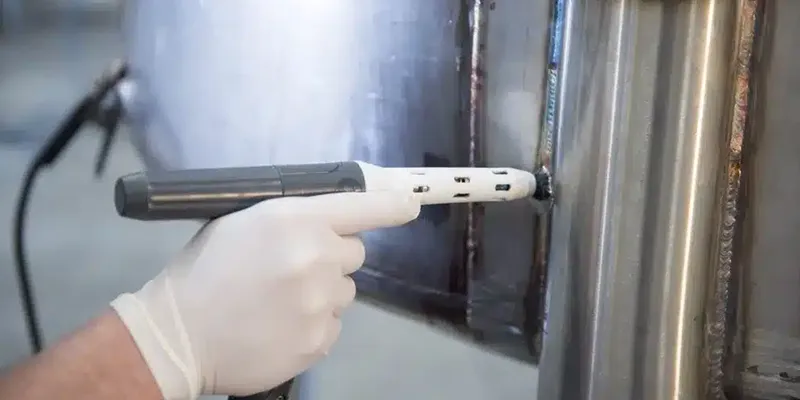
The following procedure integrates ASTM A967 and ASTM A380 requirements into an actionable sequence for field and shop applications. Each step is critical - omitting or shortcutting any step will compromise the final passive film quality.
|
Step |
Operation |
Specification / Detail |
Accept / Reject Criterion |
|
1 |
Post-Weld Inspection |
Visual inspection per AWS D1.6 / ASME IX; identify heat tint extent |
No cracks, undercut >0.5mm; map tint severity |
|
2 |
Mechanical Cleaning |
Stainless wire brush or dedicated abrasive to remove gross weld scale and spatter |
Bright metal surface; no embedded iron (ASTM A380 §5) |
|
3 |
Pickling (if required) |
HNO3/HF paste or bath per ASTM A380 §5.3; rinse with DI water |
No visible heat tint; uniform matte-grey surface |
|
4 |
Degreasing |
Wipe or soak in acetone, MEK, or approved alkaline cleaner; allow to dry |
Water-break-free surface (ASTM A967 §6.2) |
|
5 |
Pre-Passivation Rinse |
DI water rinse at room temperature; no tap water (Cl⁻ contamination risk) |
pH of rinse water neutral; no visible contamination |
|
6 |
Passivation Treatment |
Immerse or apply per ASTM A967 Practice A, B, C, D, or E (see Section 4) |
Full immersion or thorough coverage; maintain temperature ±5°F |
|
7 |
Post-Passivation Rinse |
Two-stage DI water rinse; first rinse at 120°F / 49°C, second at room temp |
Rinse pH within 0.5 of supply water pH |
|
8 |
Drying |
Air dry or dry with oil-free compressed air; no wiping with unclean cloths |
No water spots or residue |
|
9 |
Verification Testing |
Per ASTM A967 Section 7 (see Section 6 below) |
Pass all required tests for the specification |
|
10 |
Documentation |
Record batch, concentration, temperature, time, analyst, test results |
Complete traceability record retained per applicable QMS |
Source: ASTM A967/A967M-17 Section 6; ASTM A380/A380M-17 Section 5; AWS D1.6 Structural Welding Code - Stainless Steel.
ASTM A967 Requires Verification Testing to Confirm Passivation Quality
Completing the passivation treatment does not automatically guarantee a compliant result. ASTM A967 Section 7 specifies five acceptance tests. Parts must pass at least the tests required by the purchase order or applicable product standard. The most common tests for welded components are summarised below:
|
Test Method |
Procedure Summary |
Duration |
Acceptance Criterion |
|
Water Immersion Test (ASTM A967 §7.1) |
Immerse in distilled water at 100°F / 38°C |
1 hour minimum |
No rust or corrosion visible after 24h drying |
|
High Humidity Test (ASTM A967 §7.2) |
Expose to 97–100% RH at 100°F / 38°C |
24 hours |
No rust, pitting, or staining |
|
Salt Spray Test (ASTM B117) |
5% NaCl fog at 95°F / 35°C |
2 hours minimum |
No rust after 2h (or 24h for premium grades) |
|
Copper Sulfate Test (ASTM A967 §7.4) |
Apply CuSO4 solution; observe 6 minutes |
6 minutes |
No copper plating (indicates free iron present) |
|
Potassium Ferricyanide–Nitric Acid Test (ASTM A967 §7.5) |
Apply reagent solution; observe 30 seconds |
30 seconds |
No blue colour (blue = free iron or iron contamination) |
Source: ASTM A967/A967M-17 Section 7; ASTM B117 Standard Practice for Operating Salt Spray (Fog) Apparatus.
Note on Test Selection: The Potassium Ferricyanide test is the most sensitive indicator of free iron and is widely used as a rapid QC screen for welded components. The Water Immersion and High Humidity tests are best suited for verifying the overall passive film integrity, particularly after citric acid passivation. Salt Spray (ASTM B117) is most commonly specified in aerospace and defence applications per AMS 2700.
Passivation Requirements Vary by Stainless Steel Grade
Not all stainless steel grades respond identically to passivation treatments. The chromium content, nickel content, molybdenum additions, and carbon content all influence how readily the passive film reforms and which passivation method is appropriate. The following table provides grade-specific guidance for the most commonly welded stainless steel families:
|
Grade (UNS) |
Family |
Recommended A967 Practice |
Special Considerations |
Typical Industries |
|
304 / 304L (S30400/S30403) |
Austenitic |
Practice A or E |
Standard workhorse; both methods effective |
General fabrication, food processing |
|
316 / 316L (S31600/S31603) |
Austenitic |
Practice A or E |
Mo addition aids corrosion resistance; citric acid preferred for pharma |
Pharmaceutical, marine, chemical |
|
321 / 347 (S32100/S34700) |
Stabilised Austenitic |
Practice A or E |
Stabilised grades less susceptible to sensitisation; standard passivation effective |
High-temp, aerospace |
|
2205 Duplex (S32205) |
Duplex |
Practice A (avoid elevated temp for long periods) |
Ferrite/austenite microstructure; short pickle times to avoid over-etching |
Oil & gas, desalination |
|
2507 Super Duplex (S32750) |
Super Duplex |
Practice A or E; consult supplier |
High PREN (>40); sensitive to over-pickling; electrochemical cleaning preferred on site |
Subsea, offshore, chemical |
|
17-4 PH (S17400) |
Precipitation Hardening |
Practice C (with sodium dichromate) |
Avoid hydrogen embrittlement risk; elevated temp nitric + dichromate required |
Aerospace, defence, valves |
|
410 / 420 (S41000/S42000) |
Martensitic |
Practice C or D |
High carbon; susceptible to hydrogen cracking; careful process control required |
Cutlery, turbine blades |
|
430 (S43000) |
Ferritic |
Practice A or B |
Lower Ni; adequate with standard nitric acid |
Automotive, architectural |
Source: ASTM A967/A967M-17 Table 1 and Annex A; ASTM A380/A380M-17; Euro Inox Passivation Guide; IMOA Duplex Stainless Steel Handbook (2014).
7 Passivation Mistakes That Cause Post-Weld Corrosion Failures
Understanding what can go wrong is as important as understanding the correct procedure. The following are the most frequently encountered errors in post-weld passivation, their root causes, and the specification requirement that addresses each:
|
# |
Mistake |
Consequence |
Governing Requirement |
Corrective Action |
|
1 |
Passivating without removing heat tint first |
Incomplete passive film; corrosion under oxide scale |
ASTM A380 §5 - pre-treatment mandatory |
Pickle or grind to bright metal before passivation |
|
2 |
Using tap water instead of DI water for rinsing |
Chloride deposition (Cl⁻); pitting corrosion initiation |
ASTM A967 §6.3 - deionised water required |
Use DI or RO water; verify Cl⁻ <25 ppm |
|
3 |
Using wrong Practice for the grade |
Etching of surface; inadequate passivation; HE risk on PH grades |
ASTM A967 Table 1 - grade-specific selection |
Verify grade UNS number; select correct Practice |
|
4 |
Insufficient immersion time or temperature |
Incomplete passive film formation |
ASTM A967 §6.4 - minimum time and temp mandatory |
Calibrate bath; monitor continuously; use timers |
|
5 |
Cross-contamination from carbon steel tools |
Free iron embedding; rapid rust formation |
ASTM A380 §4.2 - dedicated tooling required |
Segregate tools; inspect with ferrite test before use |
|
6 |
Skipping verification testing |
Non-conforming passivation delivered to service |
ASTM A967 §7 - testing is a specification requirement |
Implement mandatory test protocol with records |
|
7 |
Re-contamination after passivation |
Re-deposition of iron, grease, or Cl⁻ on passive film |
ASTM A967 §6.6 - handle with clean gloves post-passivation |
Gloves, clean packaging; avoid re-work after passivation |
Source: ASTM A967/A967M-17; ASTM A380/A380M-17; NACE International RP0169; Nickel Institute Technical Series No. 10 044.
Post-Weld Passivation Requirements Vary by Industry Standard
ASTM A967 is the foundational passivation standard, but individual industries impose additional requirements on top of it. The engineer or quality team must identify both the ASTM A967 practice and any industry-specific overlay standard that applies:
|
Industry Sector |
Primary Standard |
Passivation Method Typically Required |
Additional Requirements |
|
Pharmaceutical / Biotech |
ASME BPE (Bioprocessing Equipment) |
ASTM A967 Practice E (citric acid preferred) |
Electropolishing often required; Ra ≤0.51 µm; full documentation; batch certificates |
|
Food & Beverage Processing |
3-A Sanitary Standards Inc. |
ASTM A967 Practice A or E |
No crevices in welds; full-penetration welds; surface finish specified; citric preferred |
|
Aerospace & Defence |
AMS 2700 (SAE Aerospace) |
Nitric acid per Method 1 or 2; or citric per Method 5 |
Salt spray test (ASTM B117) mandatory; certified lab processing; traceability to heat lot |
|
Medical Devices |
ISO 13485 / FDA 21 CFR Part 820 |
ASTM A967 Practice A or E (application dependent) |
Full lot traceability; passivation validation; SOPs required; biocompatibility per ISO 10993 |
|
Oil, Gas & Petrochemical |
NACE MR0175 / NACE SP0169 |
ASTM A967 Practice A or E + specific pre-treatment |
SSC/SCC resistance verification; PREN compliance; weld procedure qualification (ASME IX) |
|
Marine & Offshore |
DNV-ST-F101; NORSOK M-630 |
ASTM A967 + pickling per NORSOK M-630 |
Duplex and super duplex specific requirements; hardness limits; KISCC testing |
|
General Industrial / Construction |
ASTM A967 (baseline) |
Practice A or E per grade |
Verification by water immersion or humidity test; records per customer PO |
Source: ASME BPE-2022; 3-A Standard 31-00; SAE AMS 2700E; ISO 13485:2016; NACE MR0175/ISO 15156; NORSOK M-630 Rev. 4.
Frequently Asked Questions
Q1: Does stainless steel passivate itself naturally after welding?
Partially. Stainless steel will begin to re-form a passive film through natural atmospheric oxidation after welding, but the process is slow (days to weeks) and the resulting film is non-uniform, thinner, and less protective than a chemically passivated film. In any application with hygiene, corrosion, or pressure requirements, relying on natural re-passivation is not acceptable. ASTM A967 chemical passivation produces a superior, specification-compliant passive film in 4–30 minutes.
Q2: Can you passivate stainless steel in the field (on-site) rather than in a shop?
Yes. Passivation can be performed in the field using paste or gel formulations that are applied to the weld area and then rinsed off. Electrochemical passivation tools (electrolytic weld cleaning units) are also effective for on-site work. ASTM A967 does not restrict passivation to shop environments, but adequate containment for acid rinse water disposal must be provided, and all DI water and temperature requirements must still be met.
Q3: How long after welding should passivation be performed?
ASTM A967 does not specify a maximum time limit between welding and passivation, but good practice is to passivate as soon as possible after cleaning - ideally within 24–48 hours. In marine or chloride-rich environments, any delay significantly increases the risk of pitting corrosion initiating at the depleted heat-affected zone. In pharmaceutical or food processing environments, passivation is typically required before any process fluid contact.
Q4: Do you need to passivate 316L stainless steel after welding?
Yes. Although 316L (UNS S31603) has superior corrosion resistance to 304 due to its molybdenum content, welding still creates heat-affected zones with chromium depletion and heat tint that must be removed and the passive film must be restored. The low-carbon 'L' designation reduces (but does not eliminate) sensitisation risk. Post-weld passivation per ASTM A967 Practice A or E is standard practice for 316L in pharmaceutical, marine, and process industry applications.
Q5: What is the difference between pickling and passivation?
These are distinct but complementary processes. Pickling (using HNO3/HF or proprietary acid pastes) is an aggressive cleaning step that removes weld scale, heavy oxides, and heat tint by chemically dissolving the surface layer. It prepares the metal for passivation. Passivation (per ASTM A967) then uses a milder acid treatment - nitric or citric - to chemically promote and densify the chromium-oxide passive film. Pickling without subsequent passivation leaves an active surface. Passivation without prior pickling may fail if heavy scale is present. ASTM A380 governs pickling; ASTM A967 governs passivation.
Q6: Is citric acid passivation per ASTM A967 as effective as nitric acid?
For austenitic grades (304, 316, 316L, and most Duplex grades), ASTM A967 considers citric acid passivation (Practice E) equivalent to nitric acid (Practices A–D) when performed correctly and when the required acceptance tests are passed. Multiple independent studies, including those cited by ASTM and NACE, confirm that citric acid produces a passive film of equivalent thickness and composition. For high-carbon martensitic grades (410, 420) and precipitation hardening grades (17-4 PH), nitric acid with sodium dichromate is generally preferred to avoid hydrogen embrittlement risk.
Q7: How do you test if passivation was successful?
ASTM A967 Section 7 specifies five acceptance tests: (1) Water Immersion Test - no rusting after 1 hour immersion and 24h drying; (2) High Humidity Test - no rusting after 24h at 97–100% RH; (3) Salt Spray Test (ASTM B117) - no rust after 2h exposure; (4) Copper Sulfate Test - no copper deposition (indicates free iron absent); (5) Potassium Ferricyanide–Nitric Acid Test - no blue colour (most sensitive to free iron). The purchase order or product standard will specify which tests are required. The Copper Sulfate and Ferricyanide tests are the fastest field-applicable options.
Q8: What stainless steel grades must not be passivated with standard nitric acid?
Free-machining grades containing high sulfur or selenium (e.g., 303/UNS S30300, 416/UNS S41600, 430F/UNS S43020) must be passivated with high-concentration nitric acid per ASTM A967 Practice D (45–55% HNO3) at room temperature, not the standard Practice A elevated-temperature process. This is because the sulfide inclusions in free-machining grades can preferentially dissolve in hot dilute nitric acid, creating pitting. Precipitation-hardening grades (17-4 PH, 15-5 PH) require Practice C with sodium dichromate to avoid hydrogen embrittlement.
Conclusion
|
Post-weld passivation of stainless steel is not a cosmetic finishing step - it is a performance-critical engineering requirement.
Welding destroys the chromium-oxide passive film that gives stainless steel its corrosion resistance. Without chemical passivation to restore this film, even premium grades like 316L and 2205 Duplex are vulnerable to pitting, crevice corrosion, and stress corrosion cracking in service.
The ASTM A967 best-practice sequence is: (1) Remove all heat tint and weld scale by mechanical cleaning and/or pickling per ASTM A380. (2) Degrease to a water-break-free surface. (3) Apply the appropriate passivation treatment - nitric acid (Practices A–D) or citric acid (Practice E) - selected to match the stainless steel grade and industry requirements. (4) Rinse with deionised water. (5) Verify with the required acceptance tests per ASTM A967 Section 7. (6) Document everything.
Industry overlay standards - ASME BPE, AMS 2700, 3-A Sanitary, NACE MR0175, NORSOK M-630 - add requirements on top of ASTM A967. Specifying engineers must identify which overlays apply to their service environment and ensure that both the ASTM A967 base requirements and the industry-specific additions are met.
The selection between nitric acid and citric acid passivation should be driven by grade compatibility, environmental regulations, and industry standards - not by convention alone. Both methods are fully ASTM A967-compliant when correctly applied and verified. Citric acid is the emerging preferred option for regulated industries and sustainability-conscious operations. |