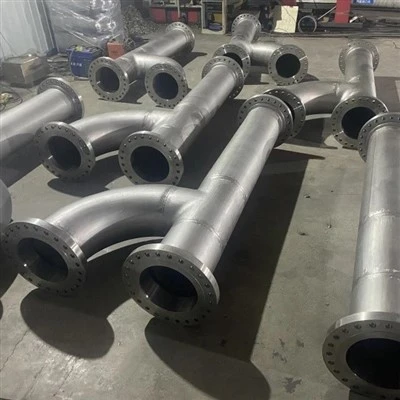
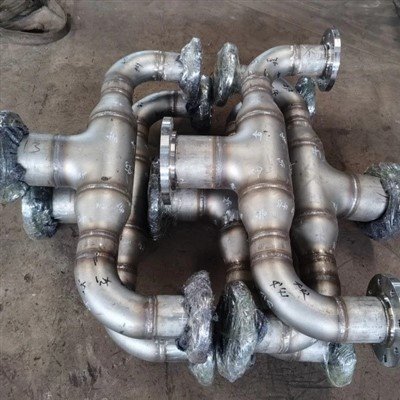
Stainless steel heat exchanger tubes are the core heat-transfer component in shell-and-tube exchangers, condensers, heaters, and coolers used across chemical processing, power generation, HVAC, and food and beverage production. Choosing between U-bend, straight, and fin tube geometries determines thermal performance, cleaning access, thermal-stress tolerance, and total lifecycle cost. This guide compares all three geometries in stainless steel - grades 304/304L, 316/316L, 321, and duplex 2205 - so engineers and procurement teams can match the right tube type to the right process condition.

What Are the Main Types of Stainless Steel Heat Exchanger Tubes?
The three primary stainless steel heat exchanger tube geometries are U-bend tubes, straight tubes, and fin tubes, each defined by how the tube is shaped and finished to manage thermal expansion, cleaning access, and surface area.
Each geometry solves a different engineering problem inside the same basic shell-and-tube architecture:
U-bend tubes: A single length of tubing bent into a U or hairpin shape and fixed at one tube sheet only. The free bend absorbs thermal expansion without a separate expansion joint.
Straight tubes: A tube run fixed at both ends between two tube sheets, offering the simplest bore for mechanical cleaning and inspection.
Fin tubes: Straight or U-bend tubes fitted with external fins (extruded, welded, or wrapped) to multiply the outside heat-transfer surface, typically for gas-side service where the gas film coefficient is the limiting factor.
The choice among these three is rarely about which is "best" in the abstract - it is about matching tube geometry to fluid cleanliness, allowable pressure drop, thermal cycling, and maintenance strategy, as detailed in the sections below.
What Is the Difference Between U-Bend Tubes and Straight Tubes?
U-bend tubes accommodate thermal expansion internally and need only one tube sheet, while straight tubes require a floating head or expansion joint but offer full-bore access for mechanical cleaning at both ends.

U-bend heat exchangers use a single fixed tube sheet; the U-shaped bend at the far end is free to move, so the tube bundle itself absorbs the differential expansion between the tube metal and the shell. This eliminates the need for a floating head or bellows expansion joint, reducing the number of gasketed joints and lowering the risk of shell-side leakage. The tradeoff is access: because the bend is closed at one end, mechanical cleaning tools (brushes, hydro-lances) cannot pass all the way through, so U-bend units are best suited to clean or lightly fouling services such as steam, boiler feedwater, and closed-loop cooling water.
Straight tube exchangers are fixed between two tube sheets, so both ends are open. This allows full mechanical cleaning and straight-line eddy current inspection along the entire tube length, which is why straight-tube designs dominate in fouling or particulate-heavy services - cooling tower water, process slurries, and crude oil fractions. The tradeoff shifts to thermal stress management: a straight tube bundle typically needs a floating tube sheet, expansion joint, or U-tube-style relief elsewhere in the design to prevent the tubes from buckling as they heat and cool.
What Are Fin Tubes and Why Do They Improve Heat Transfer?
Fin tubes add external metal fins to a bare stainless steel tube, increasing outside surface area by roughly 3 to 20 times, which is essential whenever the limiting resistance to heat transfer sits on the gas or low-density fluid side.
In a bare tube, the outside and inside surface areas are nearly equal, so heat transfer is balanced between both fluids. But gases have a far lower heat transfer coefficient than liquids - often by a factor of 10 to 50 - so in gas-to-liquid duty (air coolers, economizers, waste-heat recovery, HVAC coils) the gas side becomes the bottleneck. Fins compensate by multiplying the exposed metal area on the gas side, bringing the two thermal resistances back into balance without lengthening the tube bundle.
Fin tubes on stainless steel bases are produced three common ways: helically wound and tension-wrapped fins (economical, moderate bond strength), extruded fins machined from an outer aluminum or copper sleeve bonded to the steel core (strong mechanical bond, better for higher temperatures), and fully welded stainless steel fins (highest cost, used in corrosive or high-temperature gas streams where dissimilar-metal fins are unsuitable).
When fin tubes are the right call
- Gas-side film coefficient is the limiting resistance (air-cooled heat exchangers, economizers, HVAC coils).
- Available footprint is constrained and more surface area is needed without a longer shell.
- The gas stream is relatively clean - fins are far harder to mechanically clean than bare tube.
Which Tube Type Delivers the Highest Thermal Efficiency?
Fin tubes deliver the highest overall thermal efficiency in gas-side or low-density-fluid duty, while bare U-bend and straight tubes perform equally well - and more economically - in liquid-to-liquid service where both sides already have a strong heat transfer coefficient.

Overall heat transfer efficiency depends on which side of the tube wall controls the resistance. In liquid-to-liquid exchangers, both film coefficients are already high, so adding fins yields diminishing returns relative to their added cost and pressure drop; here U-bend and straight bare tubes perform essentially identically for the same tube diameter, wall thickness, and material, since geometry (bend versus straight run) has negligible effect on the heat transfer coefficient itself.
In gas-side duty, fin tubes can raise the overall U-value substantially per unit of shell volume, because the added external area directly offsets the weaker gas film coefficient. In short: geometry (U-bend vs. straight) affects mechanical performance and maintainability far more than thermal performance, while surface enhancement (fin vs. bare) is the lever that actually changes thermal efficiency.
Which Tube Type Is the Most Cost-Effective Over the Tube's Lifecycle?
Straight tubes usually have the lowest upfront and lifecycle cost in fouling services because they avoid premature bundle replacement, while U-bend tubes lower cost in clean, high-cycling services by eliminating floating-head hardware, and fin tubes cost more per foot but reduce the equipment footprint needed to hit a target duty.
Upfront tube cost per linear foot is generally lowest for straight tubes (no bending operation), moderate for U-bend (added bending and stress-relief steps), and highest for fin tubes (fin material and bonding process). Lifecycle cost, however, is driven more by maintenance access, cleaning frequency, and replacement interval than by the initial tube price. A straight-tube bundle in a fouling service that cannot be mechanically cleaned will foul faster, lose duty, and may need premature retubing - costs that dwarf the small unit-price premium of choosing the right geometry up front.
Conversely, specifying U-bend tubes in a fouling application, or fin tubes in a dirty gas stream, often produces the highest lifecycle cost of all three options because the design cannot be adequately cleaned in service.
Lifecycle cost drivers to model, not just unit price
- Frequency and method of required cleaning (mechanical vs. chemical).
- Expected fouling rate and its effect on duty degradation over time.
- Ease and cost of inspection (eddy current testing, borescope access).
- Retubing labor and downtime if the bundle must be replaced.
Which Option Is Easiest to Clean, Inspect, and Maintain?
Straight tubes are the easiest to clean and inspect because both ends are open for full-bore access, U-bend tubes are moderately harder due to the closed bend radius, and fin tubes are the most difficult to mechanically clean once fouling accumulates between fins.
Maintenance access follows directly from geometry. Straight tubes allow a cleaning brush, hydro-jet lance, or eddy-current probe to pass completely through in one motion, and either tube sheet can be removed for a full pull-and-inspect. U-bend tubes can be cleaned from the fixed end up to the start of the bend, but the bend radius itself is difficult to reach mechanically and is more commonly cleaned chemically or inspected with flexible-probe eddy current testing. Fin tubes present the most restrictive access: the interstitial gaps between fins trap particulate and scale, and cleaning typically requires external methods such as soot blowing, air-lancing, or periodic chemical washing rather than mechanical brushing.
Which Stainless Steel Grade Is Best Paired With Each Tube Type?
TP304/304L suits general clean-service tubes of any geometry, TP316/316L is the standard upgrade for chloride-bearing or moderately corrosive fluids, TP321 is preferred for U-bend tubes in high-temperature cyclic service due to titanium stabilization against sensitization, and duplex 2205 is reserved for straight tubes in aggressive, high-chloride process streams that demand higher strength and pitting resistance.

Grade selection is layered on top of geometry selection, not a substitute for it:
TP304/304L: the baseline austenitic grade for potable water, steam, and mild process fluids across all three tube geometries; lowest cost of the corrosion-resistant options.
TP316/316L: adds molybdenum for improved resistance to chlorides and mildly acidic process streams; the default upgrade whenever seawater, brackish water, or dilute chemical exposure is expected.
TP321: titanium-stabilized to resist carbide precipitation (sensitization) at the elevated, cyclic temperatures typical of U-bend applications in boiler and superheater service, where the bend itself experiences repeated thermal stress.
Duplex 2205: combines austenitic and ferritic microstructures for roughly double the yield strength of 316L and superior chloride pitting resistance, most often specified for straight-tube bundles in high-chloride, high-pressure process duty where wall thickness and weight savings matter.
Fin tube assemblies add a second material decision: aluminum or copper fins bonded to a stainless core lower cost and improve conductivity in benign atmospheres, while all-stainless welded fins are specified when the gas stream itself is corrosive enough to attack a dissimilar-metal fin.
How Do I Choose the Right Tube Type for My Application?
Start from the fouling tendency and cleaning requirement of the process fluid, then layer in thermal cycling severity and footprint constraints - fouling liquids point to straight tubes, clean cyclic liquids point to U-bend tubes, and gas-side duty points to fin tubes, with stainless grade selected afterward based on chloride content and temperature.
A practical selection sequence for engineers and procurement teams:
1. Characterize the fluid. Is it clean, lightly fouling, or heavily particulate-laden? Heavy fouling with a liquid on either side generally rules out U-bend and points to straight tubes.
2. Assess thermal cycling. Frequent startup/shutdown cycles or large temperature swings favor U-bend tubes, which tolerate expansion without added hardware.
3. Identify the controlling resistance. If one side is a gas or low-density fluid, fin tubes will usually improve overall duty per unit of shell volume more than switching bare-tube geometry will.
4. Match the stainless grade to chloride content and temperature using the grade guidance above, independent of the geometry decision.
5. Model lifecycle cost, not just unit price, using expected cleaning frequency and inspection access as the dominant variables.
U-Bend vs. Straight vs. Fin Tube: Side-by-Side Comparison
The table below summarizes the practical differences across the criteria covered in this guide.

|
Criterion |
U-Bend Tubes |
Straight Tubes |
Fin Tubes |
|
Typical shell design |
Single tube sheet (fixed at one end) |
Two tube sheets (fixed or floating head) |
Single or dual tube sheet; bare or extruded fins |
|
Thermal expansion handling |
Excellent - the bend absorbs strain |
Requires expansion joint or floating head |
Same as base tube geometry (straight or U-bend core) |
|
Mechanical cleaning access |
Difficult inside the bend radius |
Straightforward - full bore access both ends |
Limited on the finned section; fair on bare ends |
|
Heat transfer area per shell volume |
Moderate (bare tube) |
Moderate (bare tube) |
High - fins add 3–20x surface area |
|
Best-fit fluid service |
Clean or lightly fouling liquids, steam |
Fouling or particulate-laden fluids requiring mechanical cleaning |
Gas-to-liquid or gas-to-gas duty, low-density gas streams |
|
Relative manufacturing cost |
Moderate (bending adds labor) |
Lowest per linear foot |
Highest per linear foot (fin application) |
|
Common stainless grades |
TP304/304L, TP316/316L, TP321 |
TP304/304L, TP316/316L, duplex 2205 |
TP304/304L, TP316/316L with aluminum or copper fins, or all-welded stainless fins |
|
Inspection/retubing complexity |
Higher - bend geometry limits eddy-current probe travel |
Lowest - straight bore simplifies NDE and retubing |
Moderate - depends on fin type and bundle access |
Table 1. Comparative summary of U-bend, straight, and fin tube options in stainless steel heat exchanger service.
Frequently Asked Questions
Can U-bend and fin tubes be combined in the same exchanger?
Yes. Fins are frequently applied to the straight sections of a U-bend tube for gas-side service; the fin treatment and the bend geometry address two independent design variables and are commonly specified together in air-cooled and waste-heat-recovery exchangers.
Does bending a stainless steel tube weaken it?
Cold bending work-hardens the outer bend radius and can reduce corrosion resistance locally if not properly stress-relieved; reputable manufacturers apply controlled bend radii (typically at least 1.5x the tube outside diameter) and, for stabilized grades like TP321, a post-bend heat treatment to restore microstructure at the bend.
Which tube type has the lowest pressure drop?
Straight tubes generally have the lowest pressure drop per unit length because they avoid the added flow resistance of a bend; fin tubes have the highest pressure drop on the finned side due to the added surface area restricting flow.
Is 316L always better than 304L for heat exchanger tubes?
Not necessarily. 316L costs more and is unnecessary where chloride exposure is minimal, such as clean steam or treated boiler feedwater; 304L is the more cost-effective choice in those services, with 316L reserved for chloride-bearing or mildly corrosive fluids.
How often do fin tubes need cleaning compared to bare tubes?
Fin tubes in dirty gas service typically require more frequent external cleaning (air-lancing, soot blowing, or wash-down) than bare straight or U-bend tubes, because particulate collects between fins faster than it accumulates on a smooth bare surface.