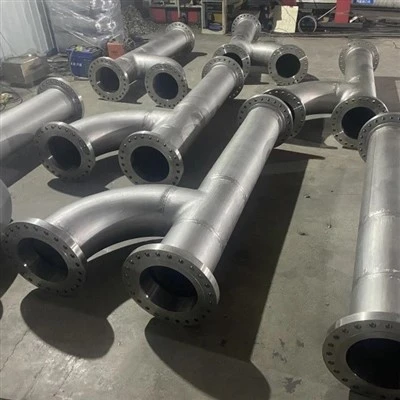
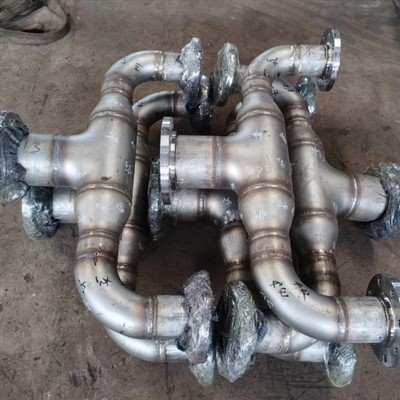
Hastelloy C276 (UNS N10276) is highly resistant to stress corrosion cracking (SCC) in sour gas service and is explicitly listed as an acceptable corrosion-resistant alloy in NACE MR0175 / ISO 15156 Part 3 for both sulfide stress cracking (SSC) and stress-oriented hydrogen-induced cracking (SOHIC) environments.

Unlike austenitic stainless steels such as 316L, which fail by chloride SCC above about 60 degrees C, C276 is essentially immune to chloride SCC and to hydrogen-induced SSC because its nickel matrix does not support the cracking mechanism. Compliance requires the material to be in the solution-annealed condition with hardness below 35 HRC and cold work below 20 percent; no post-weld heat treatment is permitted in the 600-1150 degrees C range.
Does Hastelloy C276 Resist Stress Corrosion Cracking in Sour Gas?
Yes. C276 is essentially immune to stress corrosion cracking (SCC) and sulfide stress cracking (SSC) in sour gas because its high-nickel (approximately 57 percent) fully austenitic matrix does not undergo the chloride-induced or hydrogen-induced cracking mechanisms that destroy carbon steel and even 300-series stainless steel in the same service.
Stress corrosion cracking in sour environments has two familiar failure modes that C276 avoids. The first is chloride stress corrosion cracking (Cl-SCC), which plagues austenitic stainless steels (304/316) when hot, wet, chlorinated conditions exceed about 60 degrees C; these alloys crack along grain boundaries under modest tensile stress. C276, despite also being austenitic, does not crack this way because its nickel content (about 57 percent) disrupts the mechanism - nickel alloys above roughly 40-45 percent Ni are generally immune to Cl-SCC.
The second is sulfide stress cracking (SSC), the classic carbon-steel killer in H2S service: atomic hydrogen from H2S corrosion penetrates the steel, collects at hard zones, and causes sudden brittle fracture under tensile stress. C276 resists this because it is extremely homogeneous, has no hard phases when solution-annealed, and its nickel matrix does not embrittle the way body-centered cubic steel does. Field experience across sour gas, FGD, and chemical plants confirms C276 service lives of 20-30 years without SCC failures.
What Does NACE MR0175 / ISO 15156 Say About C276?
NACE MR0175 / ISO 15156 Part 3 lists UNS N10276 (Hastelloy C276) as an acceptable corrosion-resistant alloy (CRA) for sour service in the solution-annealed condition, with a maximum hardness of 35 HRC and a maximum cold work of 20 percent - meaning C276 can be specified for the most aggressive H2S + CO2 + chloride environments without environmental cracking restrictions that bind carbon and low-alloy steels.
NACE MR0175 / ISO 15156 is the global standard that defines acceptable materials and environmental limits for oil and gas production in sour (H2S-containing) service. Part 3 covers corrosion-resistant alloys (CRAs), including nickel-base alloys. Within it, C276 is qualified as a CRA with no SSC/SOHIC environmental cracking limit tied to H2S partial pressure, because the alloy is intrinsically resistant.
The standard does impose two material-condition controls: hardness must not exceed 35 HRC (to ensure no hard phases), and cold work must not exceed 20 percent (cold work can raise hardness and introduce residual stress). These limits are easily met by solution-annealed C276, whose hardness is typically 85-95 HRB (roughly 15-20 HRC equivalent). The practical implication: an engineer can specify C276 for a sour gas wellhead, flowline, or separator without the elaborate environmental cracking calculations required for carbon steel, provided the fabrication controls (annealed, low cold work, no forbidden PWHT) are observed.
Table 1. NACE MR0175 / ISO 15156-3 Requirements for C276 (UNS N10276)
|
Requirement |
Limit for C276 (CRA) |
|
Standard reference |
NACE MR0175 / ISO 15156-3 |
|
Alloy status |
Corrosion-resistant alloy (CRA), accepted |
|
Condition |
Solution annealed |
|
Maximum hardness |
35 HRC |
|
Maximum cold work |
20 percent |
|
SSC / SOHIC limit |
No environmental limit (intrinsically resistant) |
|
H2S partial pressure |
Accepted at high pH2S (no CRA limit) |
|
Post-weld heat treatment |
None permitted in 600-1150 C |
|
Certification |
EN 10204 3.1 / 3.2; PMI verification |
Source: NACE MR0175 / ISO 15156-3 (2020 edition); Annex covering nickel-base alloys.
Why Do Austenitic Stainless Steels Crack but C276 Does Not?
Austenitic stainless steels such as 316L crack in sour chloride service above about 60 degrees C because their iron-chromium matrix is susceptible to chloride stress corrosion cracking, whereas C276's nickel-dominant matrix (about 57 percent Ni) is metallurgically immune to both chloride SCC and hydrogen-induced SSC - so the failure mechanism that destroys 316L simply cannot propagate in C276.

To understand the difference, compare the two mechanisms. Chloride SCC in stainless steel requires three conditions: susceptible microstructure (sensitized or cold-worked austenite), tensile stress, and chlorides above a temperature threshold (commonly cited as about 60 degrees C for 316L, lower with high chloride or low pH). The crack nucleates at a pit or crevice and propagates intergranularly. C276 contains only about 5-7 percent iron and 16 percent chromium but 57 percent nickel; nickel alloys with Ni above roughly 40-45 percent do not exhibit Cl-SCC in the same way, and C276 in particular has a long service record in hot chlorinated and acidic environments without SCC.
For hydrogen-induced SSC, carbon and low-alloy steels fail because absorbed hydrogen collects at hard martensite or at grain boundaries; C276, being a single-phase face-centered cubic nickel solid solution, has no such hard-phase trap and absorbs/transports hydrogen without embrittling. The net effect: where a designer must choose between 316L and C276 for a sour, chlorinated, warm service, C276 removes the SCC failure mode entirely rather than merely pushing the threshold higher.
Table 2. SCC Behavior Comparison: 316L vs C276 in Sour Service
|
Mechanism |
316L Stainless Steel |
Hastelloy C276 |
|
Chloride SCC threshold |
Fails above ~60 C |
Essentially immune |
|
Sulfide stress cracking (SSC) |
Possible if hard/HAZ |
Immune at < 35 HRC |
|
Hydrogen embrittlement |
Susceptible (ferritic/martensitic) |
Not susceptible (Ni matrix) |
|
Maximum service temp (SCC) |
Limited by Cl-SCC |
Limited by corrosion, not SCC |
|
Cold work sensitivity |
High (sensitizes) |
Low (but keep < 20 percent) |
|
NACE MR0175 use |
Restricted (environmental limits) |
Accepted as CRA, no SCC limit |
Source: NACE MR0175; SCC threshold references (e.g., Materials Performance reports); alloy datasheets.
How Does C276 Compare with Other CRAs in Sour Gas?
Among corrosion-resistant alloys for sour gas, C276 is the conservative top-tier choice for severely reducing, high-chloride, high-H2S streams; Inconel 625 covers oxidizing-chloride and higher-strength needs, Alloy 825 covers moderate sour, and 904L/316L are restricted to low-chloride, lower-H2S duty - so C276 is selected when the environment is too aggressive for the lower-tier alloys.
The choice among CRAs is a corrosion-envelope decision. For sour gas specifically: 316L and 904L are limited by chloride SCC and by chloride pitting (their PREN is only 23-26 and 33-36, respectively), so they are used only where chloride and H2S are low. Alloy 825 (PREN about 30) handles moderate sour and sulfuric acid but is not ideal where chlorides are high.
Inconel 625 (PREN about 51) is excellent in oxidizing-chloride and seawater-like sour service and offers higher strength, but in strongly reducing acid plus H2S, C276 (PREN about 68 due to 15-17 percent Mo) is superior. C22 (PREN about 65) is very close to C276 and often used where oxidizing mixed acids dominate; for pure sour/reducing dominance, C276 is the benchmark. The table below maps each alloy to its sour-service envelope so a designer can justify selecting C276 over a cheaper alternative only when the chemistry genuinely requires it.
Table 3. CRA Selection for Sour Gas Service
|
Alloy |
PREN |
Sour Gas Suitability |
When to Choose |
|
316L |
23-26 |
Low Cl, low H2S only |
Mild, non-chloride sour |
|
904L |
33-36 |
Moderate, low Cl |
Sulfuric acid + light sour |
|
Alloy 825 |
30 |
Moderate sour |
Sour + moderate H2SO4 |
|
625 |
51 |
High Cl, oxidizing sour |
Seawater-like, high strength |
|
C22 |
65 |
Severe, mixed acid + sour |
Oxidizing-chloride dominant |
|
C276 |
68 |
Severe, reducing + high H2S |
Reducing acid + high Cl + H2S |
Source: NACE MR0175 alloy tables; PREN computed from nominal chemistry; CRA selection guides.
What Are the Environmental Operating Limits for C276 in Sour Service?
Because C276 is qualified as a CRA with no environmental cracking limit in NACE MR0175, its operating boundary in sour gas is set by general and localized corrosion (not by SCC) - typically it performs to about 190-230 degrees C in sour aqueous service and to about 400-450 degrees C in dry sour gas, well beyond the temperature range where carbon steel would fail by SSC.

For carbon and low-alloy steels, NACE MR0175 imposes strict limits based on H2S partial pressure, pH, and chloride (the 'environmental cracking' envelope). C276, as a CRA, is exempt from those SSC/SOHIC limits, so the real limit becomes corrosion rate.
In aqueous sour service (produced water with H2S, CO2, chlorides), C276 remains passive and corrodes at less than 0.1 mm/year up to roughly 190-230 degrees C, beyond which general corrosion in strong acid may rise. In dry or non-aqueous sour gas (no free water), C276 can serve at even higher temperatures, with the alloy's high-temperature limit governed by its oxidation/sulfidation resistance - about 400-450 degrees C in sulfur-containing environments (and up to about 650 degrees C in air-limited service).
The design point is: specify C276 for the wet, chlorinated, high-H2S zone of a sour system; for the dry, hotter upstream sections, lower alloys or C276 both may work, but C276 provides margin. Temperature limits should always be confirmed against the specific acid concentration and chloride level using corrosion data or testing.
Table 4. Indicative C276 Operating Envelope in Sour Service
|
Service Condition |
Indicative Limit for C276 |
|
Aqueous sour (H2S + Cl- + H2O) |
Up to ~190-230 C, corrosion < 0.1 mm/yr |
|
Dry sour gas (no free water) |
Up to ~400-450 C (sulfidation limit) |
|
Chloride concentration |
No practical SCC limit; pitting resistant to high Cl- |
|
H2S partial pressure |
Accepted (no CRA environmental limit) |
|
pH |
Full range; tolerant of low pH (unlike carbon steel) |
|
CO2 |
Highly tolerant (no CO2 cracking mechanism) |
Source: NACE MR0175 CRA envelope; Haynes C276 corrosion data; oil & gas materials guidelines.
What Hardness and Cold-Work Controls Apply to C276 in Sour Service?
For NACE MR0175 compliance, C276 must be supplied in the solution-annealed condition with hardness below 35 HRC and total cold work below 20 percent; these controls prevent hard-phase formation and residual stress that could, in theory, compromise the alloy's intrinsic SSC immunity.
Although C276 is intrinsically SSC-immune, NACE still imposes hardness and cold-work caps because fabrication can inadvertently introduce hard zones or residual stress. The 35 HRC ceiling is easily met: solution-annealed C276 typically measures 85-95 HRB, which converts to roughly 15-20 HRC - well under the limit. Cold work above 20 percent both raises hardness and introduces tensile residual stress, so it is capped; any forming beyond 20 percent must be followed by a full solution anneal to restore compliance.
Welds are a special case: because C276 is immune to sensitization, the as-welded zone is accepted without PWHT, but the weld deposit hardness must also be verified below 35 HRC (ERNiCrMo-4/10 deposits are typically in the 85-95 HRB range). Procurement and fabrication specifications should explicitly reference NACE MR0175, require hardness testing on both base metal and weld, and forbid cold work exceeding 20 percent unless re-annealed.
Table 5. Hardness and Cold-Work Compliance Checklist
|
Control |
Requirement |
How Verified |
|
Base metal hardness |
Below 35 HRC |
Hardness test on MTC / PMI lot |
|
Weld deposit hardness |
Below 35 HRC |
Portable hardness on cap + HAZ |
|
Cold work |
Below 20 percent |
Document forming; re-anneal if exceeded |
|
Condition |
Solution annealed |
Heat treatment record |
|
No forbidden PWHT |
No 600-1150 C treatment |
WPS states no PWHT |
|
PMI verification |
Confirm UNS N10276 |
XRF on every length / weld |
Source: NACE MR0175/ISO 15156-3; ASME Section IX; fabrication quality plans.
How Is C276 Welded for Sour Gas Service?
C276 for sour gas is welded with ERNiCrMo-4 or ERNiCrMo-10 filler, strict argon backing purge (O2 below 50 ppm), heat input 0.5-1.5 kJ/mm, interpass below 93 degrees C, and no post-weld heat treatment - and the finished weld must be hardness-verified below 35 HRC to retain NACE MR0175 compliance.

Welding C276 for sour service follows the same disciplined procedure as general C276 welding, with the added requirement of a hardness survey to prove compliance. The filler (ERNiCrMo-4 or ERNiCrMo-10) deposits weld metal that is itself intrinsically SSC-resistant and measures below 35 HRC, so no PWHT is needed - which is fortunate because PWHT in the 600-1150 degrees C range would be forbidden anyway (it would embrittle the alloy). The argon backing purge (O2 below 50 ppm) protects the root from oxidation that could create a corrosion initiation site in sour service.
Heat input control prevents intermetallic precipitation. After welding, PT (for surface cracks) plus RT/UT (for internal soundness) and a hardness check on the weld cap and HAZ confirm the joint meets NACE. For linepipe or flowline welds, a qualified WPS per ASME Section IX with NACE acceptance is mandatory, and the weld procedure qualification record (WPQR) should document the hardness results.
Table 6. C276 Sour-Service Welding Parameters
|
Parameter |
Requirement |
|
Filler metal |
ERNiCrMo-4 or ERNiCrMo-10 (UNS N10276 / N06059) |
|
Shielding / backing |
99.99 percent Ar; O2 < 50 ppm purge |
|
Heat input |
0.5 - 1.5 kJ/mm |
|
Interpass temperature |
Below 93 C |
|
Preheat |
None |
|
PWHT |
None (forbidden 600-1150 C) |
|
NDT |
PT + RT/UT per code |
|
Hardness check |
Weld cap + HAZ below 35 HRC |
|
PMI |
Confirm UNS N10276 base and filler |
Source: ASME Section IX; NACE MR0175; Haynes C276 welding guide H-2002.
Case Study: Sour Gas Flowline - 316L Failure Replaced by C276
A sour gas flowline originally specified in 316L failed by chloride stress corrosion cracking after 14 months in a warm, high-chloride, high-H2S service; replacing the affected spool with Hastelloy C276 (UNS N10276) eliminated the SCC failure mode and has operated without incident for over 9 years.
The field produced wet sour gas with approximately 3-5 percent H2S, 8-10 percent CO2, and 30,000-60,000 ppm chloride in the produced water, at a flowline temperature of about 75-90 degrees C. The original 316L spool, although within its NACE MR0175 environmental limit on paper, failed by intergranular chloride SCC at a weld heat-affected zone after just 14 months, causing a contained but costly leak and shutdown. Metallurgical investigation confirmed classic Cl-SCC originating at a pit.
The operator re-specified the failure-prone spool (and several similar locations) in C276 (UNS N10276), solution-annealed, with ERNiCrMo-10 weld filler and full NACE-compliant fabrication. Since installation, the C276 spools have accumulated over 9 years of service with no SCC, no leaks, and corrosion rates below 0.05 mm/year on ultrasonic monitoring. The material premium (C276 about 12-16 times the 316L cost per kg) was justified by avoiding repeated shutdowns and the safety risk of a sour-gas release.
Source: Operator failure investigation report (anonymized); JN Alloy sour-service case archive.
How Is C276 Qualified and Inspected for Sour Service?
C276 sour-service qualification relies on confirming the NACE MR0175 material condition (solution-annealed, < 35 HRC, < 20 percent cold work) plus standard weld qualification per ASME Section IX, supported by PMI, hardness testing, and NDT; formal SSC testing per NACE TM0177 is optional but may be requested for critical service.

Because C276 is already listed as a qualified CRA, most projects do not re-run SSC laboratory tests (NACE TM0177 Method A/B) unless the procurement specification demands it. The routine qualification path is: (1) mill certificate (EN 10204 3.1/3.2) confirming UNS N10276 chemistry and solution-annealed condition; (2) hardness test confirming below 35 HRC on base and weld; (3) PMI confirming the correct alloy on every length and on the weld deposit; (4) WPS/WPQ per ASME Section IX; (5) NDT (PT, RT/UT) per the governing code.
For critical or high-H2S (e.g., Class 3) service, the purchaser may require a TM0177 SSC test coupon that confirms no cracking after 720 hours under load in the standard H2S solution - C276 passes this readily. The documentation package becomes the evidence of NACE MR0175 compliance for the equipment file.
Table 7. Sour-Service Qualification and Inspection
|
Activity |
Method / Standard |
Acceptance |
|
Chemistry & condition |
Mill MTC (EN 10204 3.1/3.2) |
UNS N10276, solution annealed |
|
Hardness |
Portable or bench hardness |
Below 35 HRC |
|
PMI |
XRF on base + weld |
Matches N10276 / filler |
|
Weld qualification |
ASME Section IX WPS/WPQ |
Tensile + bend + macro |
|
Surface NDT |
PT (liquid penetrant) |
No linear indications |
|
Volumetric NDT |
RT or UT |
Per ASME Sec VIII |
|
Optional SSC test |
NACE TM0177 (720 h) |
No cracking |
|
Cold work check |
Forming records |
Below 20 percent |
Source: NACE MR0175; NACE TM0177; ASME Section IX / VIII; fabrication QC plans.
Frequently Asked Questions: C276 and Sour Gas
Q: Is Hastelloy C276 approved for NACE MR0175 sour service?
A: Yes. UNS N10276 (Hastelloy C276) is listed as an acceptable corrosion-resistant alloy (CRA) in NACE MR0175 / ISO 15156 Part 3 for sour service in the solution-annealed condition. It has no environmental cracking (SSC/SOHIC) limit tied to H2S partial pressure because it is intrinsically resistant. Compliance requires hardness below 35 HRC and cold work below 20 percent, with no post-weld heat treatment in the 600-1150 degrees C range.
Q: Why does C276 resist sulfide stress cracking when stainless steel does not?
A: C276's high nickel content (about 57 percent) makes its matrix immune to both chloride stress corrosion cracking and hydrogen-induced sulfide stress cracking (SSC). Austenitic stainless steels such as 316L crack by chloride SCC above about 60 degrees C and can be embrittled in sour service, whereas C276's single-phase nickel solid solution does not support these mechanisms. In field terms, C276 removes the SCC failure mode rather than merely raising the threshold.
Q: Can C276 be used in high-H2S, high-chloride sour gas?
A: Yes. C276 is specifically suited to the most aggressive sour, chlorinated, reducing environments - high H2S partial pressure, high chloride produced water, and low pH - where 316L, 904L, and even Alloy 825 would be restricted or fail. Its PREN of about 68 and high molybdenum content give it both chloride resistance and immunity to SSC. The operating limit is set by general corrosion (roughly up to 190-230 degrees C in wet sour service), not by environmental cracking.
Q: Does C276 need post-weld heat treatment for sour service?
A: No. C276 must NOT be post-weld heat treated in the 600-1150 degrees C range because that would cause embrittling intermetallic precipitation. The as-welded condition is already optimal for corrosion and SCC resistance, and NACE MR0175 accepts the as-welded joint. The only requirement is to verify weld deposit hardness below 35 HRC and to use NACE-compliant welding (ERNiCrMo-4/10 filler, argon purge, controlled heat input).
Q: How does C276 compare with Inconel 625 for sour gas?
A: Both are excellent CRAs for sour service. C276 (PREN about 68, higher molybdenum) is superior in strongly reducing, high-chloride, high-H2S acid environments, while Inconel 625 (PREN about 51) excels in oxidizing-chloride and seawater-like sour service and offers higher strength. C276 is the benchmark for reducing-acid-dominated sour streams; 625 is often chosen where higher mechanical strength or oxidizing chloride resistance is the priority.
Q: What is the cost premium of using C276 over 316L in sour service?
A: C276 costs roughly 12 to 16 times more per kilogram than 316L stainless steel. However, in sour, chlorinated service where 316L fails by chloride SCC within 1-2 years, C276 delivers 20-30 year service life, eliminating shutdowns, leak risk, and repeated replacement. Lifecycle cost analysis usually favors C276 for the critical sour zones, with lower alloys reserved for the non-critical sections of the system.