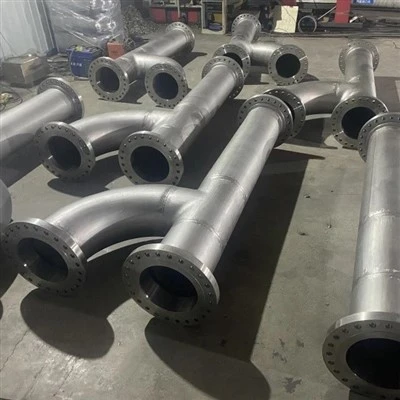
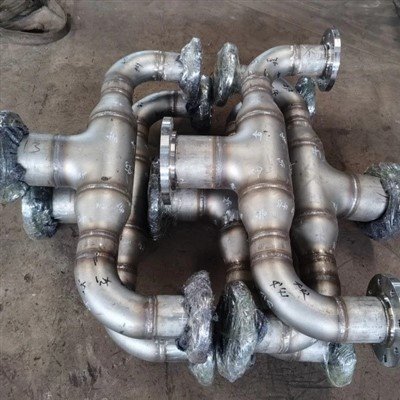
Flue gas desulfurization (FGD) is the technology that strips sulfur dioxide (SO2) out of the exhaust stream from coal- and oil-fired power plants and industrial boilers. Inside an FGD absorber vessel - also called a wet scrubber - hot flue gas meets a limestone slurry that captures SO2 and converts it into gypsum. The process is excellent for air quality, but it creates one of the most corrosive process environments in all of heavy industry.

For the most aggressive zones of the absorber, engineers have long specified Hastelloy C276 (UNS N10276) - a nickel-chromium-molybdenum-tungsten alloy - as a thin corrosion-resistant lining or cladding, rather than building the entire vessel from solid, expensive metal. This article explains, in plain terms, why C276 works in FGD, how a lining differs from a cladding, how it compares with C22 and Alloy 625, and how to select, weld, and cost the right solution for your absorber.
What Makes Hastelloy C276 Suitable for Flue Gas Desulfurization Service?
Hastelloy C276 is suitable for FGD because its balanced nickel-chromium-molybdenum-tungsten chemistry resists the combined oxidizing, reducing, and chloride-driven corrosion that destroys ordinary stainless steels inside an absorber vessel.
An FGD slurry attacks metal in three ways at the same time: oxidants (dissolved oxygen, ferric ions, sulfate), reducing acids (sulfuric and hydrochloric), and chlorides (typically 10,000-80,000 ppm in the recycled slurry). Very few alloys survive all three mechanisms together. C276 does, and the reason is its chemistry:
- Nickel ~57% (balance): forms the ductile matrix and gives near-immunity to chloride stress corrosion cracking (SCC).
- Chromium 14.5-16.5%: builds the passive oxide film that resists oxidizing species.
- Molybdenum 15-17%: the primary defense against reducing acids, pitting, and crevice corrosion.
- Tungsten 3-4.5%: reinforces resistance to localized (pitting/crevice) attack.
- Ultra-low Carbon <=0.010% and Silicon <=0.08%: prevent grain-boundary carbide precipitation in the weld heat-affected zone (HAZ).
Its Pitting Resistance Equivalent Number - PREN = %Cr + 3.3 x %Mo - sits at roughly 68, far above the ~35-45 of 316L or 904L stainless and comfortably above the threshold required for high-chloride FGD slurry. Because the carbon level is so low, C276 can be placed in service in the as-welded condition with no post-weld heat treatment (PWHT) - a decisive advantage for field-erected absorbers that are welded on site.
What Corrosion Mechanisms Attack FGD Absorber Vessels?
An FGD absorber is attacked by roughly ten corrosion factors operating at once - low pH, chlorides, sulfuric acid, trace hydrofluoric acid, dissolved oxygen, temperature swings, fly-ash abrasion, acid-dew-point condensation, wet/dry cycling, and stress-corrosion-cracking risk.
A single absorber tower can experience every factor below simultaneously. The table contrasts what happens to a common stainless such as 316L versus why C276 survives:
|
Corrosion factor |
Typical FGD value |
Effect on 316L / ordinary stainless |
Why C276 resists |
|
Slurry pH |
4.5-6.0 (absorber); 0-2 (acid clean) |
Pitting & crevice below pH 4.5 |
15-17% Mo resists low pH |
|
Chloride (Cl-) |
10,000-80,000 ppm |
SCC above ~50 ppm; pitting above 500 ppm |
High Ni suppresses SCC; Mo blocks pitting |
|
Sulfuric acid |
5-30% in slurry |
Reducing acid; pitting >1 mm/yr in 10% H2SO4 |
Withstands up to ~70% H2SO4 at 80C |
|
Hydrofluoric acid |
Trace (from coal silicates) |
Dissolves SiO2 film -> rapid pitting |
Unaffected by trace HF |
|
Dissolved oxygen |
2-8 ppm (oxidation air) |
Accelerates general & pitting corrosion |
14.5-16.5% Cr holds stable passive film |
|
Temperature |
50-95C op.; 120-150C inlet |
Rate ~doubles per 10C rise |
Stable passive film to ~200C in slurry |
|
Fly-ash / slurry |
15-20% solids, high velocity |
Erosion-corrosion coupling |
Solid solution strength + tough matrix |
|
Acid dew point |
Gas inlet condensation |
Severe localized attack |
Resists mixed acid condensate |
|
Wet/dry cycling |
Inlet & outlet zones |
SCC & fatigue risk |
Ductile, crack-resistant matrix |
|
Halogen oxidants |
Wet Cl2, hypochlorite (cleaning) |
Rapid attack on low-Cr alloys |
Cr-Mo-W synergy resists oxidants |
The practical takeaway: no single mechanism defeats C276; it is the sum of all ten that makes FGD so punishing, and C276 is one of the few alloys rated for the full combination.
Why Are FGD Absorber Vessels Zoned by Corrosion Severity?
Engineers divide the absorber into zones of rising severity and specify a different, fit-for-purpose alloy for each - because using solid C276 everywhere wastes money, while under-specifying any one zone causes early failure.
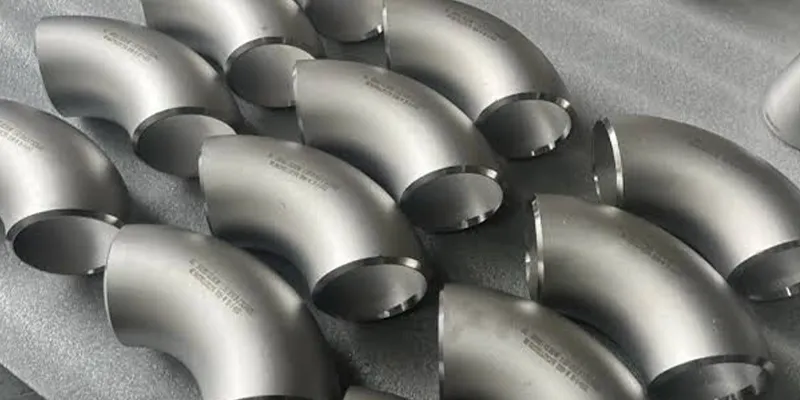
Following the corrosion-zone model used in utility FGD design handbooks (e.g., the New Brunswick Power FGD design manual), a typical wet absorber is specified top-to-bottom as:
|
Zone |
Conditions |
Typical alloy specification |
|
Gas inlet / dry-wet interface |
120-180C; Cl- up to 60,000 ppm; acid-dew-point |
C276 or Alloy 59 solid plate / wallpaper |
|
Spray / absorption zone |
50-80C; pH 4-6; 15-20% solids |
6-Mo super-austenitic (254SMO / 1925hMo) on CS, or C276 lining |
|
Reaction tank / slurry circulation |
~60C; Cl- up to 40,000 ppm |
Alloy 625 (2 mm) on CS, or C276 |
|
Outlet / clean-gas duct |
Cooler, less acidic |
317L / 904L |
C276 is therefore concentrated where it earns its cost - the inlet and lower-spray zones - while cheaper alloys protect the milder upper sections. This zoning is the foundation of the lining vs cladding decision that follows.
What Is the Difference Between Lining and Cladding for FGD Vessels?
A lining is a thin corrosion-resistant sheet mechanically attached (plug- or spot-welded, overlapping) inside the vessel and is replaceable in place; a cladding is a metallurgically bonded corrosion-resistant layer (2-3 mm) fused to a carbon-steel base plate and becomes part of the vessel wall. Weld overlay is a third method that deposits the alloy directly by welding.
Under ASME BPVC Section VIII, Division 1, Appendix 3 and UG-26, the two are treated differently: a lining is considered an independent protective layer that generally does NOT contribute to the pressure boundary strength, whereas a clad plate is part of the structural wall. The operational consequences:
|
Attribute |
Lining (loose / "wallpaper") |
Cladding (metallurgically bonded) |
|
Attachment |
Plug/spot welds at intervals; overlapping lap joints |
Explosion- or roll-bonded integral bond to CS base |
|
Bond |
Mechanical only |
Metallurgical (bond strength > weaker parent metal) |
|
Heat transfer |
Poor (air gap) |
Excellent (integral) |
|
Replaceable in situ |
Yes - liners can be swapped |
No - part of the wall |
|
Leak detection |
Weep holes / conductivity monitoring |
Not applicable |
|
Upfront cost |
Lowest |
Moderate (but 50-60% below solid alloy) |
|
Lead time |
Short (sheet stock) |
Longer (bonded plate) |
|
Best for |
Retrofit, fast-track, replaceable service |
New high-value vessels, heat transfer |
How Does Weld Overlay Compare to Cladding and Lining?
Weld overlay (automatic strip or TIG cladding) fuses corrosion-resistant metal straight onto the base, making it ideal for repairs, tubesheets, and complex geometries - but it is slower over large areas and risks alloy dilution if procedure control is weak.
Repair & retrofit: overlay can be applied to an existing vessel without ordering bonded plate - the fastest path to restore a failed zone.
Tubesheets & nozzles: overlay gives a sound, full-penetration corrosion barrier on complex shapes where bonded plate is hard to form.
Dilution risk: if heat input or technique is wrong, carbon from the base steel mixes into the overlay, lowering corrosion resistance; procedure qualification is mandatory.
Speed vs area: for very large flat shells, bonded clad plate is usually faster and more uniform than overlay; for small or irregular parts, overlay wins.
Is Hastelloy C276 Lining or Cladding the Better Choice for Your FGD Absorber?
For new, large absorber shells, explosion- or roll-bonded clad plate (2-3 mm C276 on carbon steel) is usually best - it cuts material cost 50-60% versus solid plate while keeping full corrosion resistance. For retrofit, fast-track schedules, or where in-place replacement and leak detection matter, loose lining (wallpapering) wins.
Representative material cost benchmarks for a 10 mm-equivalent wall (US$/m2 of wetted surface):
|
Option |
Approx. cost (US$/m2) |
Corrosion resistance |
Note |
|
Solid C276 plate |
800-1,000 |
Excellent |
Maximum resistance, highest cost |
|
CS + C22 clad (2 mm) |
350-450 |
Excellent (overlay surface) |
Dissimilar weld at clad boundary |
|
CS + 625 clad (3 mm) |
300-400 |
Good (625 overlay) |
Common Zone-4 practice |
|
C276 loose lining (wallpaper) |
Lowest upfront |
Excellent |
Replaceable; weep-hole leak detection |
Two rules of thumb protect the investment: (1) the clad or overlay must always face the slurry - never reverse the plate, or the carbon-steel backing contacts the corrosive liquor; and (2) edges and nozzle penetrations must be welded with overlay-compatible filler to avoid galvanic attack at the clad/carbon-steel interface.
How Does Hastelloy C276 Compare to C22 and 625 in FGD Service?
In modern FGD absorber liners, Hastelloy C22 (UNS N06022) is generally preferred over C276 because the wet-scrubber environment is oxidizing (oxidation air, ferric ions), where C22 higher chromium (20-22.5%) holds a more stable passive film. C276 remains the better choice only in strongly reducing services such as hot hydrochloric acid. Alloy 625 is the common, lower-cost Zone-4 option.

The core difference is a chromium-vs-molybdenum trade-off:
|
Property |
Hastelloy C276 (N10276) |
Hastelloy C22 (N06022) |
Alloy 625 (N06625) |
|
Chromium |
14.5-16.5% |
20-22.5% |
20-23% |
|
Molybdenum |
15-17% |
12.5-14.5% |
8-10% |
|
Tungsten |
3-4.5% |
2.5-3.5% |
none |
|
FGD strength |
Reducing + mixed acids |
Oxidizing chlorides (best in FGD) |
Good general, lower PREN |
|
Reported FGD liner life |
~8-12 yr (some 5-8 yr failures reported) |
~18-25 yr |
~10-12 yr (Zone 4) |
|
Material premium vs 316L |
~8x |
~10x (+15-25% over C276) |
~6-7x |
Field data from operating plants show C276 liners failing in 5-8 years in some oxidizing FGD duties, while C22 liners in equivalent service exceeded 20 years. The extra upfront cost of C22 is usually recovered within the first inspection cycle through avoided shutdowns. Note the nuance: by the simple PREN formula C276 scores slightly higher (more molybdenum), but FGD is oxidizing enough that chromium dominates passive-film stability - which is exactly why C22 now leads new absorber specifications.
What Welding Considerations Apply to C276 Lining and Cladding?
Weld C276 with matching ERNiCrMo-4 filler (AWS A5.14), control heat input to avoid heat-affected-zone precipitation, use a "buttering" transition joint where clad meets carbon steel, and verify the bond with ultrasonic testing.
- Filler metal: ERNiCrMo-4 (AWS A5.14) keeps the weld chemistry matching the base - never use a C22 filler on C276, which would starve the weld of molybdenum.
- Heat input: low-carbon C276 avoids sensitization, but controlling heat input still matters; modern Surface Tension Transfer (STT) runs ~7,000 J/in versus 25,000-30,000 J/in for older pulsed GMAW, minimizing distortion and HAZ effects.
- Transition joints: on clad plate, "butter" the carbon-steel side (e.g., 309L) then cap with the matching nickel filler so the corrosive surface is all C276.
- Lining welds: thin 1.6-3.2 mm sheets are plug-welded then seam/edge-welded with overlapping lap joints; burn-through and warpage are the constant threats.
- Inspection: verify clad bond integrity by UT per ASTM A578; inspect all welds by PT and RT/UT per the fabrication specification.
What Are the Lifecycle Cost and Thickness Guidelines for C276 FGD Linings?
Typical C276 FGD liners are 1.6-3.2 mm (1/16-1/8 in) thick and deliver 7-15+ years of service; clad overlays of 2-3 mm are standard. The dominant cost driver is not the alloy itself but the chloride content of the coal, which sets the PREN threshold the lining must meet.
Thickness is chosen by zone severity and replacement schedule:
1.6 mm (1/16 in): used at the slurry-bottom and milder zones where cost and a 7-10 year replacement plan balance.
3.2 mm (1/8 in): specified near spray nozzles and the gas-inlet zone where corrosion is most severe.
2-3 mm clad overlay: the standard bonded-plate thickness that matches solid-alloy corrosion life at a fraction of the cost.
The single most important variable in alloy selection is coal chloride content. Chlorine enters with the coal, concentrates in the recirculating slurry to 10,000-50,000+ ppm, and drives both pitting and crevice corrosion at every wetted surface. As a quick reference: at ~60,000 ppm slurry chloride the minimum PREN required is about 69, which places C276 at the "marginal" edge and higher-PREN alloys (e.g., Alloy 686) in the "safe" range. Coal chloride should be tested specifically (ASTM D4208 or ISO 587), because standard coal analyses omit it.
Which Standards Govern Hastelloy C276 FGD Construction?
Material is governed by ASTM B575 / ASME SB-575 (plate) and companion product specs; vessel construction by ASME BPVC Section VIII Div 1 (Appendix 3 for clad/linings, UG-26 for linings); welding filler by AWS A5.14 (ERNiCrMo-4); sour-service qualification by NACE MR0175 / ISO 15156; and clad bond integrity by ASTM A578 ultrasonic testing.
|
Standard |
Role in C276 FGD work |
|
ASTM B575 / ASME SB-575 |
Chemical composition & mechanical properties of C276 plate, sheet, strip |
|
ASTM B574 / B622 / B619 / B564 |
Bar, seamless pipe, welded pipe, forgings (full product form coverage) |
|
ASME BPVC Sec. VIII Div.1 App. 3 / UG-26 |
Rules for clad plate and linings; linings excluded from strength credit |
|
AWS A5.14 (ERNiCrMo-4) |
Welding filler consumable for C276 |
|
NACE MR0175 / ISO 15156 |
Sour (H2S) service qualification where applicable |
|
ASTM A578 |
Ultrasonic inspection of clad plate bond integrity |
|
ASTM D4208 / ISO 587 |
Determination of chlorine in coal (sets FGD chloride severity) |
Frequently Asked Questions
Hastelloy C276 (UNS N10276, W.Nr. 2.4819) is a nickel-chromium-molybdenum-tungsten corrosion-resistant alloy with ultra-low carbon. It resists oxidizing and reducing acids, chlorides, pitting, crevice corrosion, and stress corrosion cracking, and is used as-welded without post-weld heat treatment.
Why is an FGD environment so corrosive?
The absorber combines low pH slurry, 10,000-80,000 ppm chlorides, 5-30% sulfuric acid, trace hydrofluoric acid, dissolved oxygen, abrasive fly ash, and temperature swings - roughly ten corrosion mechanisms acting simultaneously.
At what chloride level is Hastelloy C276 needed in FGD?
C276 is typically specified when slurry chlorides exceed about 20,000-40,000 ppm in the severe zones. Above ~60,000 ppm, even C276 becomes marginal and higher-PREN alloys (e.g., C22, Alloy 686) are preferred.
Is lining or cladding cheaper for an FGD absorber?
Lining has the lowest upfront cost and shortest lead time; clad plate costs more upfront but 50-60% less than solid C276 and is cheaper over the full lifecycle for new vessels. The choice depends on whether replaceability or structural integration matters more.
Can Hastelloy C276 be used as-welded without PWHT?
Yes. Its carbon is capped at 0.010% (and silicon at 0.08%), so it does not sensitize in the weld HAZ and can be placed in service in the as-welded condition with no post-weld heat treatment.
What filler metal is used to weld C276?
ERNiCrMo-4 per AWS A5.14. Use matching C276 filler only; do not substitute C22 filler, which would lower the molybdenum content of the weld and create a corrosion weak point.
How long does a C276 FGD liner last?
Field experience ranges from about 7-10 years for stainless wallpaper to 8-15+ years for C276 liners and claddings in severe FGD zones, depending on chloride level and process upsets.
Is Hastelloy C22 better than C276 for FGD?
For wet FGD absorber liners, yes in most cases - the oxidizing scrubber environment favors C22 higher chromium (20-22.5%), giving 18-25 year life versus 8-12 years for C276. C276 stays superior only in strongly reducing acids such as hot HCl.
What thickness of C276 lining is typical in FGD?
Liners are usually 1.6 mm (1/16 in) in milder zones and 3.2 mm (1/8 in) near nozzles and the gas-inlet zone. Bonded clad overlays are typically 2-3 mm.
What does "wallpapering" mean in FGD?
Wallpapering is the field practice of attaching thin (1.6-3.2 mm) stainless or nickel-alloy sheets to the inside of an absorber by plug welding and overlapping lap joints, forming a replaceable corrosion lining.
Can clad plate be installed reversed?
No. The corrosion-resistant overlay must always face the slurry. Reversing the plate would expose the carbon-steel backing to the corrosive liquor and cause rapid failure.
Why does coal chloride content matter so much?
Chlorine from coal concentrates in the recirculating slurry and drives pitting and crevice corrosion at every wetted surface. It cannot be removed by process adjustment, so it sets the minimum PREN the lining must meet - the master variable in alloy selection.
Is C276 resistant to hydrofluoric acid in FGD?
Trace hydrofluoric acid from coal silicates does not significantly attack C276, whereas it dissolves the silica-based protective film on some materials. Full-strength HF service, however, calls for different alloys (e.g., Monel 400).
What standards apply to FGD clad vessels?
ASTM B575 (material), ASME BPVC Section VIII Div 1 Appendix 3 and UG-26 (clad/linings), AWS A5.14 (filler), NACE MR0175 / ISO 15156 (sour service), and ASTM A578 (clad bond UT).
Can a C276 lining be repaired in place?
Yes. Loose linings are designed for in-situ replacement, and weld overlay can restore a failed zone on an existing vessel without ordering bonded plate. Weep-hole monitoring helps detect leaks early.
What is PREN and why does it matter for FGD?
PREN (Pitting Resistance Equivalent Number) = %Cr + 3.3 x %Mo estimates pitting resistance. FGD slurries with high chlorides require a high PREN (roughly 65-69+); C276 and C22 both qualify, which is why they dominate severe FGD zones.
What temperature range does C276 tolerate in FGD?
In FGD slurry service C276 performs well from ambient up to about 200C at the wetted surface. The gas-inlet zone (120-180C) is within range; sustained structural load is limited to roughly 538C (1000F) per ASME.