|
Hastelloy B3 (UNS N10675 / W.Nr. 2.4600) delivers unmatched corrosion resistance in pure, non-oxidizing acids such as boiling hydrochloric acid. However, because it contains only ~1.5% chromium, it cannot form a protective oxide film when oxygen enters the system. Even minor air ingress during plant startup, shutdown, or vacuum leaks shifts the process environment from reducing to oxidizing-causing rapid metal loss that steady-state corrosion charts fail to predict. |

In chemical processing, pharmaceutical synthesis, and petrochemical refining, engineers select materials based on normal operating conditions. For severe reducing acids-such as hot hydrochloric, sulfuric, or acetic acid-Hastelloy B3 (UNS N10675) is often the gold standard. Yet across real industrial plants, process streams rarely stay 100% stable forever. A leaking pump seal, an incomplete nitrogen purge, or a vacuum breach can pull ambient air into closed piping and pressure vessels. Evaluating how Hastelloy B3 behaves during these brief 'upset conditions' is critical to preventing unexpected leaks, unplanned shutdowns, and costly equipment replacement.
Why Does Air Ingress Accelerate Corrosion in Hastelloy B3 Equipment?
Air ingress introduces dissolved oxygen and oxidizing metal ions that strip away Hastelloy B3's chemical stability, causing uniform and localized corrosion rates to spike by orders of magnitude.
- How Reducing vs. Oxidizing Chemistry Works: To understand this shift, imagine a tug-of-war inside a chemical pipe. In a 'reducing' environment (free of oxygen), acids attack metals by releasing hydrogen ions. Hastelloy B3 is engineered with roughly 65% nickel and 28.5% molybdenum to win this exact battle. Molybdenum slows down hydrogen evolution, keeping the metal surface intact even in concentrated boiling hydrochloric acid.
- What Happens When Oxygen Enters the Stream: When air leaks into the process stream, oxygen dissolves into the acid and creates an 'oxidizing' environment. Worse still, dissolved oxygen oxidizes trace iron or copper impurities already present in the fluid into aggressive ferric (Fe³⁺) and cupric (Cu²⁺) ions. Unlike stainless steels or chromium-rich nickel alloys, Hastelloy B3 contains only 1.0% to 3.0% chromium-far too little to build a self-healing passive chromium-oxide shield. Without that shield, oxidizing agents rapidly pull metal atoms directly off the pipe wall.
How Does Hastelloy B3 Compare to Hastelloy C276 and 316L Stainless Steel During Upset Conditions?
Hastelloy B3 outperforms both alloys in pure reducing acids, but Hastelloy C276 offers far safer tolerance when air ingress or mixed oxidizing impurities occur, while 316L stainless steel fails rapidly in hot hydrochloric acid under any condition.
Balancing Molybdenum and Chromium: Selecting the right alloy requires matching the metal's chemistry to both normal operations and worst-case upsets. Hastelloy B3 maximizes molybdenum (~28.5%) for pure reducing strength at the expense of chromium (~1.5%). By contrast, Hastelloy C276 (UNS N10276) balances ~16% molybdenum with ~15.5% chromium and ~4% tungsten, allowing it to survive both reducing acids and unexpected oxidizing spikes.
Comparative Engineering Matrix: The table below summarizes how these three industrial alloys compare across normal reducing service, air-ingress upset conditions, and fabrication requirements:
|
Technical Parameter |
Hastelloy B3 (UNS N10675) |
Hastelloy C276 (UNS N10276) |
316L Stainless Steel (UNS S31603) |
|
Primary Alloy Chemistry |
~65% Ni, 28.5% Mo, 1.5% Cr, 1.5% Fe |
~57% Ni, 16% Mo, 15.5% Cr, 4% W |
~68% Fe, 17% Cr, 12% Ni, 2.2% Mo |
|
Pure Reducing Acid Service (e.g., Hot HCl) |
Exceptional (Best-in-class resistance) |
Good (Moderate corrosion at high temp/conc.) |
Poor (Rapid general dissolution) |
|
Tolerance to Air Ingress / Oxidizing Ions |
Low (Vulnerable to O₂, Fe³⁺, Cu²⁺ spikes) |
High (Cr forms protective passive film) |
Moderate in dilute oxidizing media; fails in HCl |
|
Thermal Stability & Weldability |
High stability; resists grain-boundary carbides |
Excellent; no post-weld anneal usually needed |
Good; low carbon prevents sensitization |
|
Typical Process Role |
Closed, oxygen-free reducing acid loops |
Multi-purpose chemical & upset-prone lines |
Mild aqueous, marine, and general piping |
Why Do Steady-State Corrosion Charts Fail to Predict Upset Damage?
Standard laboratory corrosion tables measure pure reagents in sealed, oxygen-free glassware, ignoring real-world transient events like vacuum leaks, vapor-phase condensation, and residual weld stresses.

Laboratory Ideal vs. Plant Reality: Isocorrosion charts for Hastelloy B3 often show corrosion rates below 0.1 mm/year across wide concentrations of boiling hydrochloric acid. However, those tests are conducted using reagent-grade chemicals purged of air. In an active plant, transient events occur during batch loading, filter changes, or emergency depressurization.
Vapor-Phase and Crevice Amplification: During air ingress, damage rarely spreads evenly. In partially filled pipes or distillation columns, oxygen concentrates in the vapor phase above the liquid line, causing accelerated thinning near nozzles, flanges, and weld heat-affected zones (HAZs). Although Hastelloy B3 offers dramatically better thermal stability than its predecessor Hastelloy B2-resisting brittle intermetallic precipitation during welding-an oxidizing upset can still attack localized crevices beneath gaskets if oxygen is not excluded.
Which Plant Operating Scenarios Trigger High-Risk Air Ingress?
Startup and shutdown purges, sub-atmospheric (vacuum) distillation loops, and worn pump mechanical seals represent the top three pathways for unintended oxygen entry into Hastelloy B3 systems.
1. Incomplete Nitrogen Inerting During Startup/Shutdown: Before introducing hot reducing acids into a newly cleaned reactor or piping spool, operators must flush out ambient air with dry nitrogen. If dead legs, bypass loops, or drain valves retain trapped air pockets, initial acid contact immediately creates localized oxidizing zones.
2. Vacuum Operation and Flange Joint Leaks: Many acid recovery units operate under vacuum to lower boiling temperatures. Under negative pressure, any worn gasket, improperly torqued flange, or porous weld seam acts like a straw, pulling outside air directly into the hot acid stream.
3. Recycled Feedstocks and Pump Seal Failures: Reusing spent acid streams often introduces dissolved oxygen or trace ferric ions picked up from upstream carbon-steel storage tanks. Similarly, a failing single mechanical seal on a transfer pump can aspirate air into the suction line during high-flow operation.
How Should Engineers Review and Protect Hastelloy B3 Piping Systems?
Engineers should conduct a dedicated upset-condition Hazard and Operability (HAZOP) review that pairs strict oxygen exclusion controls with precision-manufactured, non-destructively tested piping components.
Process Controls and Hybrid Alloy Design: When reviewing a Hastelloy B3 system, project teams should verify continuous nitrogen blanketing, install oxygen or oxidation-reduction potential (ORP) sensors upstream of critical vessels, and evaluate hybrid material transitions-using Hastelloy C276 for vent headers, relief lines, or inlet nozzles where air contact is unavoidable.
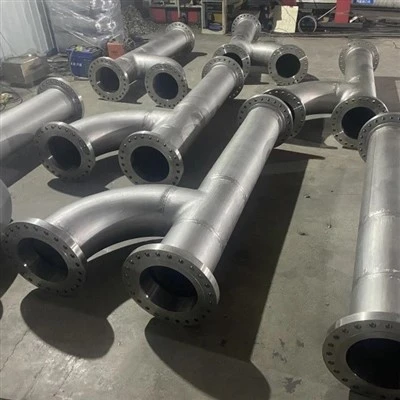
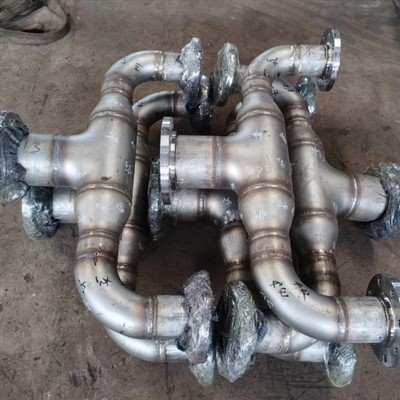
Manufacturing Integrity and Quality Assurance at JN Alloys: Even the best chemical control cannot compensate for flawed pipe welds or substandard forgings. At Jinie Technology (JN Alloys), our automatic production lines, online solution annealing, and precision prefabrication of pipe spools, seamless pipes, fittings, and flanges are engineered to eliminate crevices and weld defects where upset corrosion begins. Every component undergoes rigorous verification-including Positive Material Identification (PMI), X-ray radiographic inspection, eddy current testing, metallographic analysis, and hydrostatic testing-in full compliance with ASTM/ASME, DIN, EN, and JIS standards.
|
Partner with JN Alloys for Critical Corrosion-Resistant Piping
Planning a new reducing-acid line or reviewing existing equipment for upset-condition reliability? Jinie Technology (JN Alloys) supplies certified Hastelloy B3, Hastelloy C276, Inconel, Monel, Duplex, and Stainless Steel pipes, plates, forgings, flanges, and custom prefabricated pipe spools backed by 15+ years of export expertise. Contact our metallurgical consultation team at Market@jnalloy.com or visit www.jnalloys.com to request technical specifications and an RFQ. |