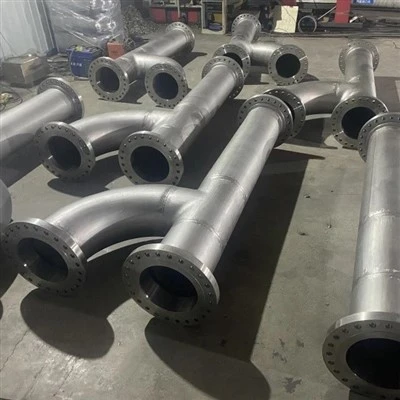
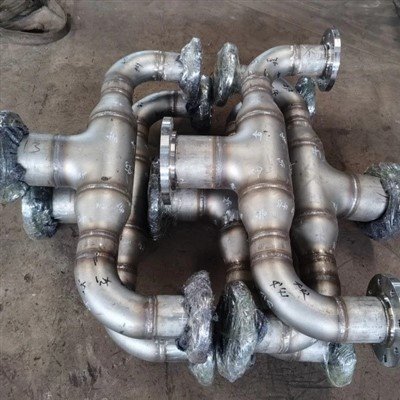
Hastelloy B2 is a nickel-molybdenum alloy renowned for its exceptional resistance to reducing environments. Unlike standard stainless steels, which rely on chromium for oxidation resistance, Hastelloy B2 derives its corrosion resistance from a high molybdenum content (approximately 28%). This composition makes it virtually immune to hydrochloric acid at all concentrations and temperatures, as well as sulfuric, acetic, and phosphoric acids.

Our factory ensures that all raw materials comply with ASTM B564 standards for nickel alloy forgings. The typical mechanical properties for solution-annealed Hastelloy B2 include a tensile strength of 760 MPa (110 ksi), a yield strength of 350 MPa (50 ksi), and an elongation of 40%.
ASME B16.5 Hastelloy B2 WN Flange Specification Table
The ASME B16.5 specification table for Weld Neck Flanges is the definitive reference for ensuring interchangeability, pressure integrity, and installation compatibility. Below is a detailed breakdown of each key feature and column typically presented in the standard tables (dimensions shown in inches unless noted; metric equivalents provided for clarity).
1. Nominal Pipe Size (NPS)
Ranges from ½ in to 24 in. This defines the matching pipe diameter and ensures the flange bore aligns with the pipe schedule specified by the purchaser.
2. Outside Diameter of Flange (O / A)
The overall flange diameter. Critical for bolt circle alignment and equipment compatibility. Tolerances: ±1.6 mm (≤24 in) or ±3.2 mm (>24 in).
3. Thickness of Flange (C / B / T)
Minimum flange thickness (excluding raised face for higher classes). Provides the necessary strength to resist internal pressure and bolt loads. For Class 150, thickness starts at 0.38 in for NPS ½ and increases progressively.
4. Diameter of Raised Face (R / G)
Standard raised-face diameter per class. For Classes 150 and 300: 1/16 in (1.6 mm) height; for Classes 600 and above: 1/4 in (6.4 mm) height. Ensures proper gasket compression and sealing.
5. Diameter of Hub at Base (X)
The large end of the tapered hub. Distributes bending stresses effectively.
6. Length Through Hub (Y / H)
Overall length from flange face to weld end. Critical for weld preparation and pipe alignment. Longer hubs in higher classes provide additional reinforcement.
7. Bore (B1)
Matches the inside diameter of the connecting pipe (specified by purchaser according to wall thickness/schedule). For standard bore, values are provided; custom bores are available.
8. Hub Diameter at Welding End
Approximately equal to the pipe outside diameter, with tolerances ensuring proper weld fit-up (+2.4 mm / –0.8 mm for ≤5 in; +4.0 mm / –0.8 mm for ≥6 in).
9. Bolt Circle Diameter
Distance across bolt-hole centers. Determines bolt spacing and wrench clearance.
10. Number of Bolt Holes and Bolt Hole Diameter
Standardized for each class and size (bolt holes are 1/8 in larger than bolt diameter). Ensures uniform load distribution.
11. Fillet Radius (r)
Transition radius at hub-to-flange junction. Minimizes stress concentration.
12. Welding Neck Taper Details
The hub tapers smoothly from the weld end to the flange face, providing optimal stress distribution.
These parameters are interdependent. For example, the hub length and taper directly influence the flange's ability to handle bending moments, while the bolt circle and number of holes ensure even gasket loading.
All dimensions are verified during CNC machining with tolerances tighter than ASME B16.5 minimums to guarantee perfect field fit-up.
ASME B16.5 Dimension Tables for Hastelloy B2 WN Flanges

|
NPS |
O |
C |
R |
X |
Y |
K |
# Holes |
Bolt Hole Dia |
|
½ |
3.50 |
0.44 |
1.38 |
1.19 |
1.81 |
2.38 |
4 |
0.62 |
|
¾ |
3.88 |
0.50 |
1.69 |
1.50 |
2.00 |
2.75 |
4 |
0.62 |
|
1 |
4.25 |
0.56 |
2.00 |
1.94 |
2.12 |
3.12 |
4 |
0.62 |
|
1¼ |
4.62 |
0.62 |
2.50 |
2.31 |
2.19 |
3.50 |
4 |
0.62 |
|
1½ |
5.00 |
0.69 |
2.88 |
2.56 |
2.38 |
3.88 |
4 |
0.62 |
|
2 |
6.00 |
0.75 |
3.62 |
3.06 |
2.44 |
4.75 |
4 |
0.75 |
|
2½ |
7.00 |
0.88 |
4.12 |
3.56 |
2.69 |
5.50 |
4 |
0.75 |
|
3 |
7.50 |
0.94 |
5.00 |
4.25 |
2.69 |
6.00 |
4 |
0.75 |
|
3½ |
8.50 |
1.00 |
5.50 |
4.81 |
2.81 |
7.00 |
8 |
0.75 |
|
4 |
9.00 |
1.00 |
6.19 |
5.31 |
2.94 |
7.50 |
8 |
0.75 |
|
5 |
10.00 |
1.12 |
7.31 |
6.44 |
3.44 |
8.50 |
8 |
0.88 |
|
6 |
11.00 |
1.12 |
8.50 |
7.56 |
3.44 |
9.50 |
8 |
0.88 |
|
8 |
13.50 |
1.25 |
10.62 |
9.69 |
3.94 |
11.75 |
8 |
0.88 |
|
10 |
16.00 |
1.31 |
12.75 |
12.00 |
3.94 |
14.25 |
12 |
1.00 |
|
12 |
19.00 |
1.44 |
15.00 |
14.38 |
4.44 |
17.00 |
12 |
1.00 |
|
14 |
21.00 |
1.50 |
16.25 |
15.75 |
4.94 |
18.75 |
12 |
1.12 |
|
16 |
23.50 |
1.62 |
18.50 |
18.00 |
4.94 |
21.25 |
16 |
1.12 |
|
18 |
25.00 |
1.75 |
21.00 |
19.88 |
5.44 |
22.75 |
16 |
1.25 |
|
20 |
27.50 |
1.88 |
23.00 |
22.00 |
5.62 |
25.00 |
20 |
1.25 |
|
24 |
32.00 |
2.06 |
27.25 |
26.12 |
5.94 |
29.50 |
20 |
1.38 |
ASME B16.5 Class 300 WN Flange Dimensions
|
NPS |
O |
C |
R |
X |
Y |
K |
# Holes |
Bolt Hole Dia |
|
½ |
3.75 |
0.56 |
1.38 |
1.50 |
2.06 |
2.62 |
4 |
0.62 |
|
¾ |
4.62 |
0.62 |
1.69 |
1.88 |
2.25 |
3.25 |
4 |
0.75 |
|
1 |
4.88 |
0.69 |
2.00 |
2.12 |
2.44 |
3.50 |
4 |
0.75 |
|
1¼ |
5.25 |
0.81 |
2.50 |
2.50 |
2.62 |
3.88 |
4 |
0.75 |
|
1½ |
6.12 |
0.88 |
2.88 |
2.75 |
2.75 |
4.50 |
4 |
0.88 |
|
2 |
6.50 |
1.00 |
3.62 |
3.31 |
2.88 |
5.00 |
8 |
0.75 |
|
2½ |
7.50 |
1.12 |
4.12 |
3.94 |
3.00 |
5.88 |
8 |
0.75 |
|
3 |
8.25 |
1.19 |
5.00 |
4.62 |
3.06 |
6.62 |
8 |
0.75 |
|
3½ |
9.00 |
1.25 |
5.50 |
5.25 |
3.13 |
7.25 |
8 |
0.75 |
|
4 |
10.00 |
1.31 |
6.19 |
5.75 |
3.32 |
7.88 |
8 |
0.75 |
|
5 |
11.00 |
1.44 |
7.31 |
7.00 |
3.82 |
9.25 |
8 |
0.88 |
|
6 |
12.50 |
1.56 |
8.50 |
8.12 |
3.82 |
10.62 |
12 |
0.88 |
|
8 |
15.00 |
1.75 |
10.62 |
10.25 |
4.32 |
13.00 |
12 |
1.00 |
|
10 |
17.50 |
1.94 |
12.75 |
12.62 |
4.56 |
15.25 |
16 |
1.12 |
|
12 |
20.50 |
2.19 |
15.00 |
14.75 |
5.06 |
17.75 |
16 |
1.25 |
|
14 |
23.00 |
2.31 |
16.25 |
16.75 |
5.56 |
20.25 |
20 |
1.25 |
|
16 |
25.50 |
2.50 |
18.50 |
19.00 |
5.69 |
22.50 |
20 |
1.38 |
|
18 |
28.00 |
2.69 |
21.00 |
21.00 |
6.19 |
24.75 |
24 |
1.38 |
|
20 |
30.50 |
2.88 |
23.00 |
23.12 |
6.32 |
27.00 |
24 |
1.38 |
|
24 |
36.00 |
3.25 |
27.25 |
27.62 |
6.56 |
32.00 |
24 |
1.62 |
Higher-pressure classes (600, 900, 1500, 2500) follow the same structure with proportionally increased thickness, hub length, bolt circle, and bolt size to support elevated ratings.
Full tables for these classes, including ring-type joint (RTJ) facings and reducing flanges, are available on request.
Why Choose Jinie Alloy Flanges?

Precise adherence to ASME B16.5 guarantees:
• Zero leakage when paired with correct gaskets
• Optimal stress distribution through the tapered hub
• Full compatibility with existing piping systems worldwide
Every Hastelloy B2, Duplex UNS S32750, Inconel, or Monel WN flange we supply is produced from forged billets, heat-treated, and inspected to these exact specifications, backed by EN 10204 3.1/3.2 certificates.
For custom bore, special facings, or large-quantity pricing, contact our technical team with your NPS, class, material, and schedule requirements. We deliver globally with short lead times and uncompromising quality.