Within the vast, interconnected networks of piping systems that power industries, heat buildings, and transport vital resources, fittings are the essential unsung heroes. Elbows change direction, tees create branches, reducers transition sizes, and caps seal ends. The seamless function and, critically, the safety of the entire system depend on the integrity of these connection points.
They must withstand immense internal pressures, extreme temperatures, corrosive fluids, vibration, and mechanical stress without failing. This is where the manufacturing method of the fitting becomes paramount. Two primary processes dominate the production of high-performance metallic fittings: forging and wrought fabrication.
While both produce vital components, understanding their fundamental differences in creation, inherent properties, and optimal applications is crucial for engineers, procurement specialists, and installers. Choosing incorrectly can lead to leaks, catastrophic failures, downtime, and safety hazards. This deep dive explores "forged" versus "wrought" fittings, empowering you to make informed decisions for your next project.

What are Forged Fittings?
Forged fittings are born from the ancient and powerful art of forging, a process that fundamentally reshapes metal at its core. It begins with a solid billet or bar of high-quality metal – carbon steel, stainless steel, alloy steel, or nickel alloys are common. This billet is heated precisely to a temperature where the metal becomes plastic but not molten.
While in this malleable state, it is subjected to tremendous compressive forces, either through repeated blows from a powerful hammer or continuous pressure from a hydraulic press. This force can be applied in open dies or closed dies. The intense mechanical working is transformative: it breaks up and refines the metal's internal grain structure, eliminating voids, porosity, and segregation inherent in the original casting of the billet.
The grains are elongated and aligned along the contours of the fitting's shape, creating a continuous, uninterrupted flow. This results in a fitting with exceptional density, homogeneity, and directional strength. Forged fittings boast superior mechanical properties compared to cast or basic fabricated parts: significantly higher tensile and yield strength, outstanding toughness, and excellent fatigue resistance.
Common examples include socket weld fittings, threaded fittings, forged flanges, and high-pressure specialty components. They are rigorously manufactured to standards like ASME B16.11 and MSS-SP-79, -83, -97, ensuring dimensional consistency and performance predictability.
What are Wrought Fittings?
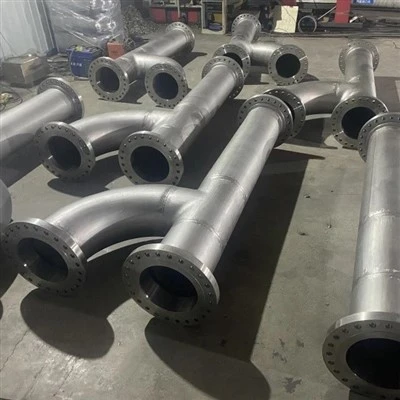
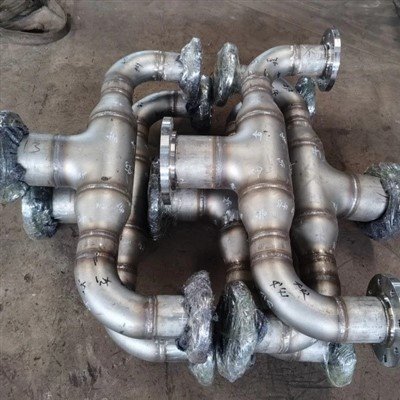
The term "wrought fittings" in modern industrial piping primarily refers to fittings fabricated from wrought products, namely pipe, tube, or plate/sheet metal. It's essential to clarify that "wrought" here describes the starting material, not necessarily the historical meaning of hand-hammered wrought iron. These base materials are themselves "wrought" products – they've undergone mechanical working processes like rolling, extrusion, or drawing during their initial production, giving them better properties than cast equivalents.
The fabrication of the fitting itself involves cutting, bending, forming, and welding these pre-manufactured stock shapes into the desired configuration. Key processes include:
Bending: Pipe or tube is bent into elbows (e.g., 90°, 45°) using methods like induction bending or cold bending with mandrels to maintain roundness.
Forming and Welding: Tees are made by welding a branch pipe onto a run pipe. Reducers are formed by cutting and welding tapered sections from plate or by reducing pipe ends. Caps are typically pressed or formed from plate and may have a welded seam.
Extrusion: Some smaller wrought elbows or tees might be hot extruded from a billet, but this is less common than fabrication from pipe/plate for standard fittings.
The defining characteristic of wrought fittings is the presence of welded seams and/or bent sections. While the base wrought material has good properties, the final fitting's integrity heavily relies on the quality of the welding and the forming operations. Common wrought fittings include butt-weld elbows, tees, reducers, caps, and stub ends, manufactured to standards like ASME B16.9, ASME B16.28, and MSS-SP-43 or SP-75.
Forged vs. Wrought Fittings
Internal Structure
- Forged: Starts as a solid, homogeneous mass. Shaped plastically under extreme pressure while hot. Grain structure is refined, aligned, and continuous throughout the entire fitting. No welds define the primary shape; it's monolithic. Think of it as sculpting strength from a solid block.
- Wrought: Starts as pre-formed wrought products. Shaped primarily by cutting, bending, forming, and crucially, welding pieces together. Grain structure, while good in the base material, is interrupted at welds. The heat-affected zone (HAZ) near welds has altered, potentially weaker properties. Forming can cause thinning. The final shape is an assembly, not inherently monolithic.
Material Difference
This difference in origin profoundly impacts material properties:
- Forged Grain Flow: The intense forging pressure creates a directional grain flow that follows the contour of the fitting. This unbroken grain structure provides maximum strength along the lines of greatest stress. It minimizes weak points and discontinuities.
- Wrought Integrity Challenges: While the base pipe or plate has a wrought grain structure, the welding process introduces potential weak links. The weld metal itself must fuse perfectly with the base metal.
More critically, the HAZ undergoes rapid heating and cooling cycles during welding, altering its microstructure and potentially reducing toughness and corrosion resistance compared to the base metal. Bending can also introduce localized thinning and work hardening. Quality control of welding and forming is paramount.
Pressure Ratings and Performance
The superior structural integrity of forged fittings translates directly to higher pressure ratings:
- Forged Dominance in High Pressure: Due to their dense, homogeneous, and continuous grain structure, forged fittings have significantly higher allowable pressure-temperature ratings for a given material and nominal size compared to wrought butt-welding fittings. They are the mandatory choice for high-pressure systems, critical hydrocarbon processing, high-pressure steam, and high-shock/vibration environments.
- Wrought Suitability: Wrought butt-welding fittings are perfectly adequate and standard for a vast range of lower to medium pressure applications. Their pressure ratings are sufficient for water lines, low-pressure steam, HVAC, general plant utilities, chemical processing, and structural applications. Their welded construction integrates seamlessly into the welded piping systems common at larger scales.
Size
- Forged: Highly efficient and produces the strongest parts in smaller sizes, typically NPS 4 inches and below. This is the domain of socket weld and threaded fittings. While forged fittings exist up to NPS 4" or sometimes larger, cost and manufacturing complexity increase significantly beyond smaller diameters.
- Wrought: The undisputed solution for larger diameters, generally NPS 2 inches and above, and the only practical method for very large sizes. Fabricating fittings from plate or large-diameter pipe is far more feasible and cost-effective than forging at this scale. Butt-welding is the standard connection method.
Cost Considerations
The manufacturing complexity influences price:
- Forged: The process requires significant energy, heavy machinery, specialized dies, and often extensive machining. This makes forged fittings more expensive per pound than comparable wrought fittings.
- Wrought: Fabrication processes are generally less capital-intensive and more scalable for larger sizes, making wrought fittings more cost-effective, especially for large diameters and standard configurations.
Conclusion
Forged and wrought fittings are not competitors, but complementary pillars of modern piping systems, each excelling in its designated realm. Forged fittings represent the pinnacle of strength, integrity, and reliability for small-to-medium diameter, high-pressure, high-stress, and mission-critical applications. Their solid, grain-refined, monolithic construction provides unmatched safety where failure is catastrophic. Wrought fittings offer a practical, cost-effective, and robust solution for larger diameter, lower-to-medium pressure systems, leveraging the advantages of welded construction and formed plate or pipe to efficiently connect vast networks.
Understanding the distinct manufacturing processes, resulting material properties, pressure capabilities, size limitations, and cost structures is not just academic. As a manufacturer deeply rooted in metallurgical expertise, we champion the application of high-quality forged fittings for the demanding services where their inherent superiority is indispensable. Choose wisely, build safely.