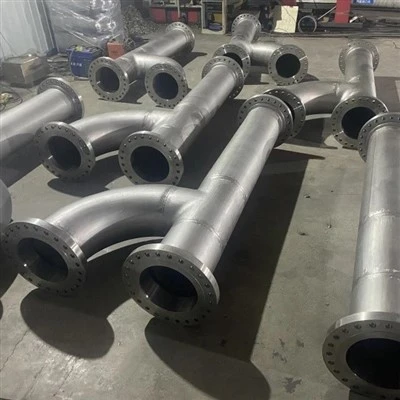
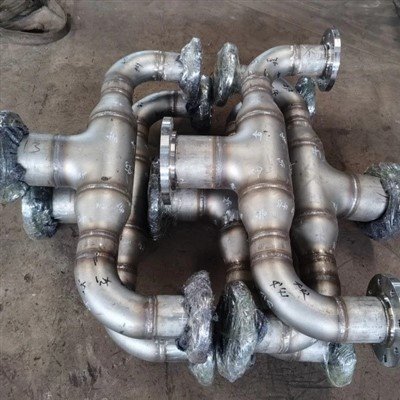
F91 material is a high-strength, chromium-molybdenum alloy steel specifically engineered for demanding high-temperature service. Often referred to as Grade 91 or simply F91, this material plays a critical role in industries where components must withstand intense heat and pressure over long periods without failing. Its specification defines a precise combination of chemical composition and mechanical properties that deliver superior performance compared to standard low-alloy steels, enabling more efficient and reliable operations in power generation and beyond.

F91 Material Mechanical Properties
F91 material is specified to deliver outstanding mechanical properties, particularly when operating in high-heat environments. After undergoing the mandatory heat treatment process, F91 exhibits significantly higher strength at elevated temperatures compared to older low-alloy steels like T22 or even P91's predecessor, P9. This high tensile and yield strength allows for the design of components with thinner walls, reducing thermal stress and component weight while still safely containing high pressures.
Equally important is its excellent creep strength and rupture strength, meaning it resists the tendency to slowly stretch or break when subjected to constant stress at high temperatures for thousands of hours – a critical factor for boilers and turbines designed to operate for decades.
While its room temperature toughness is good, the material's true value lies in maintaining its structural integrity under the intense thermal and mechanical loads encountered in its intended applications.
Heat Treatment
Achieving the remarkable properties defined in the F91 material specification absolutely requires precise heat treatment. The standard process involves normalizing followed by tempering. Normalizing involves heating the steel to a high temperature typically around 1040-1080°C / 1904-1976°F, holding it there to achieve a uniform austenitic structure, and then cooling it in still air. This step refines the grain structure and dissolves the alloying elements.
Immediately after normalizing, the steel must undergo tempering. This involves reheating to a lower temperature, holding, and then cooling often in air. Tempering is vital; it transforms the hard, brittle structure after normalizing into a tough, ductile microstructure called tempered martensite.
More importantly, it precipitates fine, complex carbides of vanadium and niobium within this structure. These fine precipitates are the primary source of F91's exceptional high-temperature strength and creep resistance.
F91 Material Applications
F91 material specification is tailored for components operating under high pressure and intense heat. Its predominant use is in fossil fuel power plants, especially in critical sections of modern, high-efficiency boilers operating at higher steam temperatures and pressures. You'll find F91 used extensively in:
- Super and Re heater Tubes: Carrying the hottest steam within the boiler.
- Main Steam Pipes and Headers: Transporting high-pressure, high-temperature steam from the boiler to the turbine.
- Turbine Casing and Components: Parts exposed to high-temperature steam within the turbine itself.
Beyond power generation, F91 is also specified for high-temperature piping, headers, and pressure vessels in certain demanding petrochemical processes and heat treatment furnaces, wherever its unique combination of strength and temperature resistance provides a significant advantage over standard alloys.
F91 Material Standards and Forms
F91 material is governed by internationally recognized standards that detail its chemical composition, mechanical properties, heat treatment requirements, testing procedures, and acceptable forms. Key standards include:
- ASTM A213: Covers seamless ferritic and austenitic alloy-steel boiler, superheater, and heat-exchanger tubes.
- ASTM A335: Covers seamless ferritic alloy-steel pipe for high-temperature service.
- ASTM A387: Covers chromium-molybdenum alloy steel plates for pressure vessels (Grade 91).
- EN 10216-2: Seamless steel tubes for pressure purposes - Part 2: Non-alloy and alloy steel tubes with specified elevated temperature properties (X10CrMoVNb9-1).
F91 is readily available in the forms needed for its applications, primarily as seamless tubes and pipes, plates, and forgings like fittings, flanges, valves.
F91 Material Production Process
Working with F91 material requires specific knowledge due to its alloy content and hardened microstructure. Welding is a critical process. F91 is considered weldable but demands strict procedures to avoid cracking and ensure the weld joint retains the parent metal's properties. This includes mandatory preheating before welding and post-weld heat treatment immediately after welding.
PWHT involves heating the welded component to the tempering temperature range (usually 730-780°C / 1346-1436°F) and holding it for a specific time based on thickness, followed by controlled cooling. This step is non-negotiable; it tempers the hard, brittle weld metal and heat-affected zone (HAZ), restoring toughness and stress-relieving the joint.
Controlling interpass temperature during welding and ensuring very clean conditions are also vital. Machining F91, especially in its heat-treated condition, can be more challenging than machining lower alloy steels due to its hardness and strength, requiring appropriate tooling and techniques.
F91 Material Advantages and Disadvantages
The F91 material specification offers compelling advantages: Superior High-Temperature Strength allows for thinner component walls, reducing weight and thermal stress. Excellent Creep and Rupture Strength ensures long-term reliability under extreme conditions, enabling higher efficiency power plants. Good Oxidation Resistance at service temperatures protects the material surface. Good Thermal Conductivity and Lower Thermal Expansion compared to austenitic stainless steels are also beneficial.
However, it also has disadvantages: Higher Cost compared to standard low-alloy steels. Complex Fabrication requiring strict welding and PWHT procedures. Limited Corrosion Resistance in acidic or chloride-containing environments – it's designed for high-temperature steam service, not general corrosion resistance. Brittleness Risk if improperly heat treated or cooled too slowly after tempering.
The F91 material specification defines a high-performance alloy steel engineered to excel where standard materials fall short. While working with F91 requires adherence to specific fabrication rules, particularly for welding, the payoff is components capable of reliable, long-term operation under extreme pressure and heat. When high-temperature strength and durability are paramount for pipes, tubes, headers, and pressure vessels, F91 material provides a proven and essential solution.