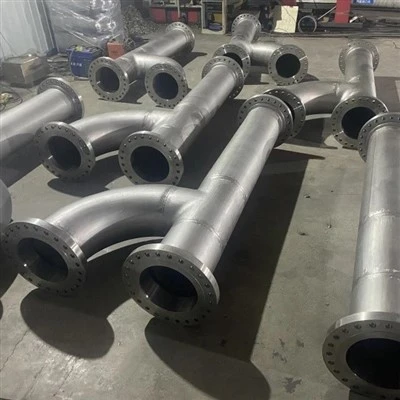
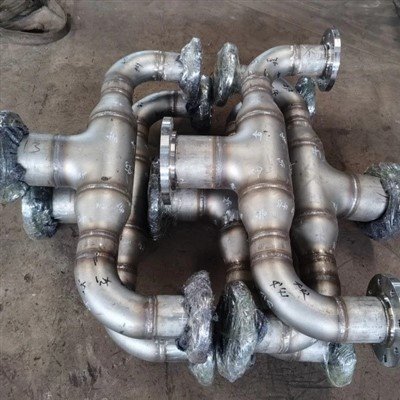
SS 304 often referred to simply as "304 stainless," this austenitic alloy forms the backbone of countless industrial, commercial, and even residential piping systems worldwide. Its exceptional balance of properties, cost-effectiveness, and ease of fabrication makes it the go-to choice for a staggering array of applications where corrosion resistance, hygiene, and durability are paramount.
This comprehensive guide delves into everything you need to know about SS 304 pipe, exploring its composition, defining characteristics, diverse applications, key benefits, available types, and why it remains an indispensable material in modern engineering and construction.


What is SS 304 Pipe?
SS 304 pipe refers to tubular products manufactured from Stainless Steel grade 304, the most common and widely used austenitic stainless steel. Defined primarily by its chemical composition – approximately 18% Chromium (Cr) and 8% Nickel (Ni).
It belongs to the "18-8" stainless steel family. This specific ratio of Cr and Ni is fundamental to its properties: Chromium provides the essential passive oxide layer for corrosion resistance, while Nickel stabilizes the austenitic microstructure, granting excellent formability, weldability, and toughness, even at cryogenic temperatures.
SS 304 pipes are produced to various international standards in a wide range of diameters, wall thicknesses, lengths, and surface finishes to meet diverse application requirements. Its popularity stems from its reliable performance across a broad spectrum of environments and its relatively accessible cost compared to higher-alloyed stainless steels.
Characteristics of SS 304 Pipe
The widespread adoption of SS 304 pipe is directly attributable to its well-balanced set of material characteristics:
Excellent Corrosion Resistance: The hallmark of SS 304 is its good general corrosion resistance. The chromium content forms a passive, self-repairing chromium oxide layer on the surface, protecting the underlying metal from oxidation and attack from a wide range of atmospheric conditions, freshwater, many mild chemicals, foodstuffs, and organic acids. It resists nitric acid well at moderate temperatures and concentrations. However, it is susceptible to pitting and crevice corrosion in chloride-containing environments and to stress corrosion cracking under tensile stress in the presence of chlorides at elevated temperatures.
Good Mechanical Properties: SS 304 offers a favorable combination of strength and ductility. Typical minimum yield strength is around 205 MPa (30 ksi) and tensile strength around 515 MPa (75 ksi), with elongation exceeding 40%. This provides adequate structural integrity for most piping applications while allowing for significant forming and fabrication without cracking. Its toughness remains good down to cryogenic temperatures.
Outstanding Formability and Weldability: The austenitic structure makes SS 304 exceptionally formable. It can be readily bent, formed, deep drawn, and spun into complex shapes, making it ideal for fabricating pipe fittings and system components. It also exhibits excellent weldability by all standard fusion and resistance welding methods, without the need for post-weld heat treatment in most cases, significantly simplifying fabrication.
Ease of Cleaning and Hygiene: The smooth, non-porous surface of SS 304 pipe is easy to clean and sterilize. It does not support bacterial growth or impart taste or odor to conveyed products. This inherent hygienic property is crucial for food, beverage, pharmaceutical, and medical applications.
Attractive Aesthetics: SS 304 naturally has a bright, silvery appearance that is aesthetically pleasing. It can be easily polished to various finishes or left with a standard mill finish, making it suitable for architectural and decorative applications where appearance matters.
Good High-Temperature Performance: SS 304 maintains useful strength and oxidation resistance at elevated temperatures. While not a dedicated high-temperature alloy like 309 or 310, it performs well in many moderate heat applications like exhaust systems or heat exchangers.
Applications of SS 304 Pipe
The versatility of SS 304 pipe ensures its presence across a remarkably broad spectrum of industries:
- Food & Beverage Processing: Ubiquitous in breweries, dairies, juice plants, and food processing lines for conveying ingredients, products, and cleaning solutions due to its hygiene, cleanability, and resistance to food acids.
- Pharmaceutical & Biotechnology: Essential for process piping, water-for-injection systems, and clean utilities where sterility, purity, and corrosion resistance are non-negotiable.
- Chemical & Petrochemical: Used for handling a wide range of organic chemicals, solvents, acids, and alkalis in less aggressive environments, including storage and transfer lines.
- Architectural & Construction: Widely employed for handrails, structural components, exterior cladding, water features, and interior design elements due to its aesthetics, durability, and low maintenance.
- Water Treatment & Distribution: Used in potable water treatment plants, distribution networks, and wastewater treatment facilities thanks to its corrosion resistance in freshwater and ease of maintenance.
- Automotive & Transportation: Found in exhaust systems, trim, fuel lines, and structural components.
- HVAC & Appliance: Used in heat exchangers, refrigerant lines, ducting, and within domestic appliances.
- Pulp & Paper Industry: Employed in certain process stages handling less corrosive liquors and bleach solutions.
- General Industrial: A go-to material for general plant piping, compressed air lines, hydraulic lines, and instrumentation tubing where corrosion resistance and durability are required.
Benefits of SS 304 Pipe
Choosing SS 304 pipe delivers significant advantages:
Cost-Effectiveness: While more expensive than carbon steel initially, SS 304 offers an excellent balance of performance and cost. Its longevity, reduced maintenance needs (no painting, less frequent replacement), and minimal downtime often result in a lower total cost of ownership over the lifespan of a system compared to cheaper, less durable materials. It provides premium stainless performance without the premium price of grades like 316 or duplex.
Long Service Life & Durability: The inherent corrosion resistance and strength of SS 304 ensure it withstands demanding environments far longer than carbon steel or many plastics. This translates to reliable, leak-free performance for decades with minimal intervention, reducing lifecycle costs and operational disruptions.
Low Maintenance: The passive oxide layer is self-repairing in the presence of oxygen. SS 304 pipe generally requires only routine cleaning to maintain its appearance and performance, eliminating the need for costly protective coatings, galvanizing, or frequent repainting required by other materials.
Types of SS 304 Pipe
SS 304 pipe is available in several forms to suit specific application requirements:
- Seamless Pipe: Manufactured by piercing a solid billet and extruding or drawing it into a hollow tube. Seamless pipe has no welded seam, offering the highest uniformity of structure and strength. It is preferred for high-pressure applications, critical services, harsh environments, and where the risk of leakage must be minimized.
- Welded Pipe: Formed by rolling stainless steel sheet or coil into a cylindrical shape and welding the seam longitudinally. Common welding methods include Electric Fusion Welding (EFW) and Automatic Welding (AW) like TIG or Plasma Arc. Welded pipe is generally more cost-effective than seamless, especially in larger diameters and thinner walls. Types include:
ERW (Electric Resistance Welded): Historically common, but largely superseded by more advanced methods for stainless.
EFW (Electric Fusion Welded): Includes subtypes like TIG (GTAW), Plasma Arc, Laser, and Combination Welds. Offers high-quality, consistent welds. ASTM A358 covers welded pipe specifically for high-temperature/corrosive service, often with 100% radiographic testing.
Summary
SS 304 pipe stands as the undisputed cornerstone of the stainless steel piping world. Its optimal blend of 18% Chromium and 8% Nickel delivers a powerful combination of good general corrosion resistance, excellent formability and weldability, inherent hygiene, reliable mechanical properties, and appealing aesthetics.