What is a Weld Neck Flange?
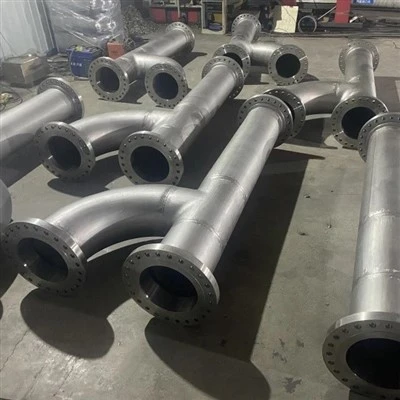
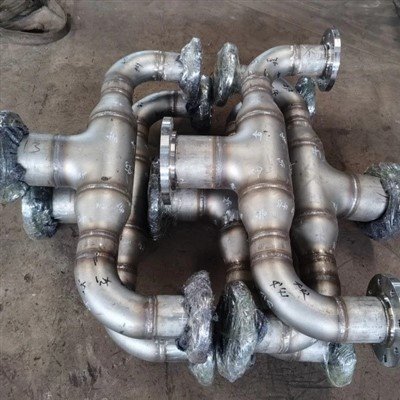
Weld Neck Flange is a circular forged or rolled steel fitting designed for permanent, high-integrity connection to pipes in critical piping systems. Its defining feature is a long, tapered "hub" that is smoothly contoured and precisely beveled at the end. This hub is butt-welded directly to the pipe, creating a connection that matches the pipe's strength and offers exceptional resistance to stress, vibration, bending moments, and thermal cycling.
A high-quality Weld Neck Flange isn't just a piece of metal; it's engineered reliability. Its characteristics include:
- The Tapered Hub: This is the heart of its performance. The gradual taper provides unparalleled reinforcement at the weld junction. This design efficiently distributes mechanical stresses away from the weld and into the pipe wall.
- Butt Weld Bevel: The hub end features a precise 37.5° bevel that perfectly matches the bevel on the pipe end. This ensures full penetration welding, creating a joint as strong as the pipe material.
- Raised Face (RF): The most common facing, providing a raised sealing surface for gaskets to seat against, concentrating sealing force effectively.
- Bolt Holes: Precisely machined holes conforming to ASME/ANSI or other relevant standards, ensuring perfect alignment and bolt load distribution.
- Material and Finish: Manufactured from certified materials matching the pipe grade, with machined surfaces for optimal sealing and dimensional accuracy. Critical surfaces are free of defects.


How are Weld Neck Flanges Made?
Understanding the manufacturing process highlights why quality control is non-negotiable for reliable flanges:
Material Selection and Preparation: It starts with certified raw material – typically carbon steel, alloy steel, or stainless steel billets or bars. Material certificates verifying chemical composition and mechanical properties are essential. Billets are cut to precise weights based on the flange size and pressure rating.
Forging: For critical applications, the cut billets are heated to high plasticity and formed under immense pressure in closed dies using a forging press or hammer. This aligns the grain structure of the metal, significantly enhancing strength, toughness, and resistance to impact and fatigue compared to casting or machining from plate. Forged flanges are the gold standard for pressure piping.
Heat Treatment: After forging, flanges undergo controlled heating to relieve internal stresses, refine the grain structure, and achieve the required mechanical properties.
Machining: The heat-treated blanks are precision machined on CNC lathes and machining centers. This creates the exact dimensions: bore diameter, hub taper, hub length, outer diameter, bolt circle, bolt hole diameter/counterbore, and the raised face. Surface finish on the sealing faces is critical. Tolerances are strictly controlled to ASME B16.5 or other applicable standards.
Surface Treatment and Inspection: Flanges may undergo surface treatments like phosphating or coating for corrosion protection during storage/transit. Crucially, they undergo rigorous inspection: dimensional checks, visual examination, material verification (PMI), and often non-destructive testing (NDT) like ultrasonic testing (UT) for forgings or magnetic particle inspection (MPI) for surface defects.
Types of Weld Neck Flanges
While the core design is consistent, variations exist to meet specific needs:
- Standard Weld Neck: The workhorse flange. Designed for nominal pressures from 150# to 2500# and higher for large diameters. The hub length and thickness increase with pressure class. Used across countless industries for general high-pressure service.
- Long Weld Neck Flange: Features a significantly extended hub. Primarily used as a "nozzle neck" for pressure vessels, heat exchangers, and columns, providing reinforcement at vessel openings and allowing for easier attachment of piping. The extra length also helps manage thermal stresses.
- Heavy Barrel Weld Neck Flange: A specialized, extremely thick-walled version used primarily in the oil and gas industry for high-pressure wellheads, Christmas trees, and manifold systems. Designed to withstand the most extreme pressures and mechanical loads encountered in drilling and production.
- Reducing Weld Neck Flange: Used when connecting pipes of different diameters. The bore of the flange hub is machined to match the smaller pipe size, while the outer dimensions match the bolt pattern required for the mating flange on the larger pipe.
How to Fit a Weld Neck Flange
Installing a WN flange correctly, especially on complex components like elbows, is paramount for leak-free performance. Here's the process for a 45° elbow:
- Preparation and Fit-Up: Ensure the flange hub bevel and the beveled end of the 45° elbow are clean, smooth, and free of defects. Align the flange concentrically with the elbow end. The goal is a uniform root gap around the entire circumference. Use alignment pins or clamps to hold the position.
- Critical Step: Rotate the assembly so the weld seam is positioned optimally for welding. Tack weld at 90° intervals.
- Welding Procedure: Follow a qualified Welding Procedure Specification. For carbon steel, this usually involves Shielded Metal Arc Welding or Gas Tungsten Arc Welding for the root pass, followed by SMAW or Flux-Cored Arc Welding for fill and cap passes. Ensure preheat is applied if required by the material/WPS. Execute the root pass meticulously, ensuring full penetration without internal concavity or burn-through. Maintain proper interpass temperature.
- Weld Progression: Complete the weld in multiple passes, carefully cleaning slag between SMAW/FCAW passes. Pay close attention to filling the weld joint completely, especially around the curve of the elbow where heat distribution varies. Ensure the weld bead profile is slightly convex and blends smoothly into the base metal.
- Post-Weld Inspection and Treatment: Allow the weld to cool slowly, potentially using insulation. Remove slag and spatter. Perform thorough visual inspection (VT) for cracks, porosity, undercut, or incomplete fusion. Non-destructive testing is often mandatory for pressure piping, especially on critical welds like this. Apply post-weld heat treatment if specified by the material code or WPS to relieve residual stresses.
What is the Purpose of a Weld Neck Flange?
The primary purpose of a Weld Neck Flange is to create the strongest, most reliable, leak-tight connection possible in high-pressure, high-temperature, or critical service piping systems. Its design specifically addresses the weaknesses inherent in other flange types:
- Stress Distribution: The tapered hub provides unmatched reinforcement at the weld joint, smoothly transferring stress from the thin pipe wall into the thicker flange body. This minimizes stress concentration at the weld toe – a common failure point.
- Fatigue Resistance: The smooth transition and robust connection make it highly resistant to fatigue failure caused by vibration, thermal cycling, and pressure fluctuations.
- Leak Prevention: The robust butt weld joint and the raised face design create an inherently leak-resistant assembly when properly installed with the correct gasket and bolt load.
- Alignment: The long hub aids in aligning the pipe during initial assembly and welding, contributing to overall system integrity.
Weld Neck Flange Applications
WN flanges are the default choice for demanding environments where failure is not an option:
Oil & Gas Exploration & Production: High-pressure wellheads, manifolds, flow lines, Christmas trees, and production platforms. Handles extreme pressures, corrosive fluids, and seismic/vibration loads. Heavy Barrel flanges are common here. Failure risks blowouts and environmental disaster.
Refining & Petrochemical Processing: Critical piping throughout refineries and chemical plants handling hydrocarbons, acids, solvents, and high-temperature streams. Ensures integrity under high pressure/temperature, thermal cycling, and corrosive conditions. Prevents leaks of hazardous or flammable materials.
Power Generation: Main steam lines, feedwater lines, boiler connections, turbine bypass systems, and safety systems. Withstands extreme temperatures and pressures in steam service, resists creep, and ensures safety-critical systems remain intact. Long Weld Necks are common on vessels and heat exchangers.
High-Pressure Process Industries: Pharmaceuticals, pulp & paper, fertilizer plants, and high-pressure gas transmission pipelines. Provides reliable connections for processes requiring precise pressure control and handling of valuable or hazardous products. Ensures process continuity and safety.
Marine & Offshore Applications: Shipboard piping, offshore platform risers, and subsea systems. Resists constant vibration, dynamic loads from wave action, and harsh saltwater corrosion. Reliability is vital for safety and operational uptime in remote locations.
Cryogenic & High-Purity Services: LNG facilities, liquid nitrogen/oxygen systems, semiconductor manufacturing. The robust weld joint minimizes the risk of leaks during thermal contraction at very low temperatures. Machined surfaces and material integrity are critical for purity. Special materials like stainless steel 304L/316L are used.
Summary
In essence, the Weld Neck Flange is the solution for connecting pipes where performance, safety, and longevity are paramount. Its tapered hub design, demanding manufacturing processes, and proper installation via butt welding create a connection that rivals the strength of the pipe itself.
From the high-pressure chaos of an oilfield to the controlled precision of a power plant boiler, WN flanges provide the backbone for reliable operation. Understanding their characteristics, types, installation nuances, and critical applications empowers you to make informed decisions for your piping systems.
Have questions about specifying the right Weld Neck Flange for your next project? Need a quote for ASME B16.5 or B16.47 Series A/B flanges in carbon steel, alloy, or stainless? Concerned about traceability, testing requirements, or special machining? Leverage our 18 years of expertise.
Contact us today. We're here to be your trusted partner, not just your supplier.