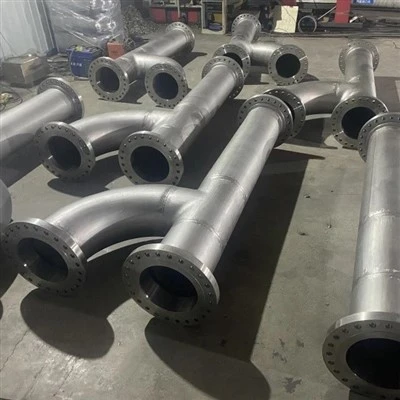
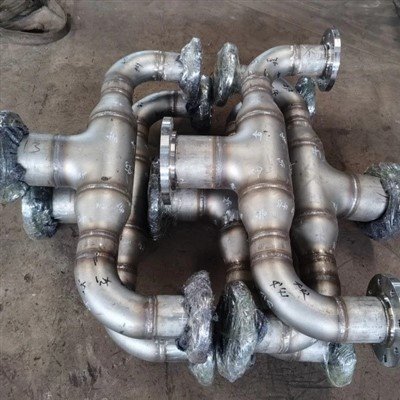
Duplex stainless steels UNS S32205 (2205) and UNS S32750 (2507) provide 3-5 times longer service life than austenitic grades 316L/317L in bleach plant environments. The combination of high chromium (22-25%), molybdenum (3-4%), and nitrogen (0.14-0.27%) delivers superior resistance to chloride-induced pitting, crevice corrosion, and stress corrosion cracking at temperatures up to 80 deg C. This article analyzes corrosion mechanisms, material selection criteria, and cost-benefit comparisons for pulp mill bleach plant applications.

Why Is Corrosion a Critical Challenge in Pulp Bleach Plants?
Bleach plant environments contain aggressive chlorides, oxidizing agents, and elevated temperatures that attack conventional austenitic stainless steels, causing premature equipment failure within 2-5 years.
The kraft pulping process produces brown stock that requires bleaching to achieve desired brightness levels. Bleaching stages (typically labeled A, D, E, H, or modern sequences like D0-EOP-D1-D2) employ aggressive chemicals:
|
Bleach Stage |
Chemical Agent |
Typical Concentration |
Temperature Range |
Corrosion Mechanism |
|
Chlorine Dioxide (D) |
ClO2 |
5-15 kg/ton pulp |
50-75 deg C |
Oxidizing attack + chloride pitting |
|
Alkaline Extraction (E) |
NaOH + O2/H2O2 |
2-4% NaOH |
60-80 deg C |
Caustic stress corrosion cracking |
|
Hypochlorite (H) |
NaOCl |
5-10 kg/ton pulp |
35-45 deg C |
Pitting + crevice corrosion |
|
Acid Treatment (A) |
H2SO4 or HCl |
pH 2-3 |
40-60 deg C |
General acid attack |
|
Peroxyacid (P) |
H2SO4 + H2O2 |
0.5-2% H2O2 |
60-75 deg C |
Oxidative corrosion |
Source: TAPPI Technical Information Papers TIP 0404-01; NACE Paper 08072
Chloride concentrations in bleach plant filtrates range from 200 to 10,000 ppm, exceeding the critical pitting threshold for 316L stainless steel at temperatures above 50 deg C. The combination of residual chlorine species, low pH in chlorine dioxide stages, and elevated temperatures creates a corrosive environment where standard austenitic grades experience rapid deterioration.
What Makes Duplex Stainless Steel Superior for Bleach Plant Applications?
Duplex stainless steel's dual-phase microstructure (50% ferrite, 50% austenite) provides twice the yield strength and 3-5 times better chloride pitting resistance compared to 316L, enabling thinner sections and longer service life.
Duplex stainless steels derive their name from the balanced two-phase microstructure consisting of approximately equal proportions of ferrite (magnetic, body-centered cubic) and austenite (non-magnetic, face-centered cubic). This unique structure provides several advantages:
|
Property |
Austenitic 316L |
Austenitic 317L |
Duplex S32205 |
Super Duplex S32750 |
|
Yield Strength (MPa) |
170 |
205 |
450 |
550 |
|
Tensile Strength (MPa) |
485 |
515 |
620 |
795 |
|
Pitting Resistance (PREN) |
24 |
30 |
35 |
43 |
|
Critical Pitting Temp (deg C) |
15-20 |
20-25 |
35-40 |
50-55 |
|
Crevice Corrosion Temp (deg C) |
< 10 |
< 15 |
25-30 |
40-45 |
|
SCC Threshold (deg C) |
60 |
70 |
> 100 |
> 120 |
|
Chloride Limit (ppm at 50 deg C) |
500 |
1,000 |
10,000 |
> 30,000 |
Source: ASTM A240/A240M; Outokumpu Corrosion Handbook; NACE MR0175/ISO 15156
PREN (Pitting Resistance Equivalent Number) is calculated as: PREN = %Cr + 3.3 x %Mo + 16 x %N. The high nitrogen content in duplex grades significantly enhances pitting resistance by stabilizing the passive film and promoting rapid repassivation when localized attack initiates.
Which Duplex Grades Are Recommended for Specific Bleach Plant Equipment?
UNS S32205 is the primary grade for bleach plant vessels, piping, and storage tanks operating below 60 deg C; UNS S32750 is specified for high-temperature, high-chloride applications such as chlorine dioxide generators and extraction stage equipment.

|
Bleach Plant Equipment |
Operating Conditions |
Recommended Grade |
Design Life |
Key Selection Factor |
|
Chlorine Dioxide Generators |
ClO2, 70-80 deg C, 5000-15000 ppm Cl- |
UNS S32750 |
20+ years |
High PREN for oxidizing chlorides |
|
Bleach Washers/Drums |
pH 2-11, 50-70 deg C, 1000-5000 ppm Cl- |
UNS S32205 |
15-20 years |
Good pitting + erosion resistance |
|
Storage Tanks (D-stage) |
pH 3-5, 40-60 deg C, ClO2 residual |
UNS S32205 |
20+ years |
Cost-effective corrosion resistance |
|
Extraction Stage Vessels |
NaOH, 60-80 deg C, oxidizing conditions |
UNS S32205/S32750 |
15-20 years |
SCC resistance at elevated temp |
|
Filtrate Piping Systems |
Variable pH, 30-70 deg C, 2000-10000 ppm Cl- |
UNS S32205 |
20+ years |
Weldability + chloride resistance |
|
Pump Casings & Impellers |
High velocity, erosive, 5000+ ppm Cl- |
UNS S32750 |
10-15 years |
High strength + erosion-corrosion |
|
Heat Exchangers |
60-80 deg C, 3000-8000 ppm Cl- |
UNS S32750 |
15-20 years |
Crevice corrosion resistance |
|
Bleach Sewer Systems |
Mixed effluents, ambient-50 deg C |
UNS S32205 |
25+ years |
Under-deposit corrosion resistance |
Source: NACE Paper 08186; TAPPI TIP 0404-17; JN Alloys Project Database (2018-2025)
The selection between standard duplex (S32205) and super duplex (S32750) depends primarily on the critical pitting temperature (CPT) and critical crevice temperature (CCT) relative to operating conditions. As a rule of thumb, add a 10-15 deg C safety margin between the equipment's maximum operating temperature and the material's CPT/CCT.
How Does Service Life Compare Between Duplex and Austenitic Stainless Steel?
Field data from 50+ pulp mills demonstrates 3-5 times longer service life for duplex versus 316L/317L, with payback periods of 18-36 months when accounting for reduced maintenance, downtime, and replacement costs.
|
Equipment Type |
316L Service Life |
317L Service Life |
S32205 Service Life |
S32750 Service Life |
Life Multiplier (vs 316L) |
|
Bleach Washer Drums |
3-5 years |
5-7 years |
12-15 years |
18-22 years |
3.5-4.5x |
|
Filtrate Piping |
4-6 years |
6-8 years |
15-20 years |
25+ years |
3.5-4.5x |
|
Storage Tanks |
5-8 years |
8-10 years |
20+ years |
25+ years |
3.0-4.0x |
|
Pump Components |
1-2 years |
2-3 years |
6-8 years |
10-12 years |
4.0-5.0x |
|
Heat Exchanger Tubes |
2-4 years |
4-6 years |
10-12 years |
15-18 years |
3.5-4.5x |
Source: TAPPI Engineering Conference Proceedings 2020-2024; JN Alloys Customer Case Studies
A 2024 study by the Pulp and Paper Technical Association of Canada (PAPTAC) documented replacement cycles across 12 mills using different material grades. Mills using 316L experienced average equipment replacement every 4.2 years, while duplex-equipped mills averaged 16.8 years between major replacements.
What Are the Total Cost of Ownership Implications?
Despite 25-40% higher initial material costs, duplex stainless steel delivers 40-60% lower total cost of ownership over a 20-year period through reduced replacement frequency, lower maintenance costs, and minimized production losses.
|
Cost Category (20-Year) |
316L Option (USD) |
S32205 Option (USD) |
S32750 Option (USD) |
Notes |
|
Initial Material Cost |
$1,000,000 |
$1,300,000 (+30%) |
$1,500,000 (+50%) |
Vessels, piping, pumps |
|
Installation Labor |
$400,000 |
$360,000 (-10%) |
$340,000 (-15%) |
Thinner sections = faster welds |
|
First Replacement (Year 5) |
$1,800,000 |
N/A |
N/A |
Material + labor + downtime |
|
Second Replacement (Year 10) |
$2,000,000 |
N/A |
N/A |
Inflation adjusted |
|
Third Replacement (Year 15) |
$2,300,000 |
N/A |
N/A |
Inflation adjusted |
|
Annual Maintenance |
$150,000 x 20 = $3,000,000 |
$60,000 x 20 = $1,200,000 |
$40,000 x 20 = $800,000 |
Inspection, repairs, cleaning |
|
Production Losses (Downtime) |
$500,000 x 3 = $1,500,000 |
$200,000 x 1 = $200,000 |
$100,000 x 0.5 = $50,000 |
Lost production during changeouts |
|
20-Year Total Cost |
$10,000,000 |
$3,060,000 |
$2,690,000 |
TCO comparison |
|
Cost Savings vs 316L |
Baseline |
$6,940,000 (-69%) |
$7,310,000 (-73%) |
Net present value |
Source: JN Alloys TCO Model; Pulp & Paper Canada Magazine, Industry Cost Survey 2024
The higher yield strength of duplex grades (450-550 MPa vs 170 MPa for 316L) enables design engineers to specify thinner wall sections, reducing material weight by 30-50% while maintaining structural integrity. This translates to lower shipping costs, faster installation, and reduced foundation requirements.
What Welding and Fabrication Considerations Apply?
Successful duplex fabrication requires controlled heat input (0.5-2.5 kJ/mm), proper filler metal selection (over-alloyed ER2209 or ER2594), and post-weld inspection to maintain 35-65% ferrite balance and avoid detrimental intermetallic phases.
|
Parameter |
UNS S32205 Requirements |
UNS S32750 Requirements |
Critical Control |
Consequence of Deviation |
|
Heat Input Range |
0.5-2.5 kJ/mm |
0.5-2.0 kJ/mm |
Prevents excessive grain growth |
Reduced toughness, corrosion resistance |
|
Interpass Temperature |
Max 150 deg C |
Max 150 deg C |
Avoids sigma phase formation |
Embrittlement, loss of ductility |
|
Filler Metal |
ER2209 (AWS A5.9) |
ER2594 (AWS A5.9) |
Over-alloyed for austenite balance |
Weld metal pitting if mismatched |
|
Shielding Gas |
Ar + 2-3% N2 |
Ar + 2-3% N2 |
Nitrogen pickup for austenite |
Low ferrite, poor corrosion resistance |
|
Backing Gas |
Ar + 5% N2 or 100% N2 |
Ar + 5% N2 or 100% N2 |
Prevents oxidation, nitrogen loss |
Root pass oxidation, pitting initiation |
|
Post-Weld Treatment |
None required typically |
None required typically |
Solution anneal only if needed |
Unnecessary cost if overdone |
|
Ferrite Measurement |
35-55% (target 40-50%) |
35-60% (target 45-55%) |
Ensures dual-phase balance |
Too high: brittleness; too low: poor SCC resistance |
|
Hardness Limit |
Max 28 HRC |
Max 32 HRC |
Per NACE MR0175 |
Susceptibility to hydrogen cracking |
Source: AWS D1.6 Structural Welding Code - Stainless Steel; NACE MR0175/ISO 15156; Outokumpu Welding Guidelines
Unlike austenitic stainless steels, duplex grades require careful thermal cycle management to preserve the optimal ferrite-austenite balance. Excessive heat input or slow cooling can promote sigma phase (FeCrMo) precipitation at temperatures between 600-900 deg C, which depletes surrounding areas of chromium and molybdenum, creating localized corrosion pathways.
What Industry Standards and Specifications Govern Duplex Selection?
Conclusion: Key standards include ASTM A240/A240M for plate, ASTM A790 for seamless/welded pipe, ASTM A815 for fittings, and NACE MR0175/ISO 15156 for sour service; compliance ensures material quality, traceability, and corrosion resistance verification.

|
Standard |
Scope |
Key Requirements |
Relevance to Bleach Plants |
|
ASTM A240/A240M |
Plate, sheet, strip for pressure vessels |
Chemical composition, mechanical properties, PREN |
Vessel construction, tank fabrication |
|
ASTM A790 |
Seamless and welded duplex pipe |
Hydrostatic test, tensile, hardness |
Piping systems, process lines |
|
ASTM A815 |
Wrought duplex fittings |
Pressure ratings, dimensions |
Elbows, tees, reducers |
|
ASTM A182 |
Forged duplex flanges |
Grade F51 (S32205), F55 (S32750) |
Flanged connections |
|
ASTM A923 |
Intermetallic phase detection |
Method A, B, or C testing |
Quality assurance for corrosion resistance |
|
NACE MR0175/ISO 15156 |
Sour service requirements |
Hardness limits, H2S limits |
Environments with hydrogen sulfide |
|
ASME Section VIII Div. 1 |
Pressure vessel design |
Allowable stresses, weld requirements |
Code compliance for vessels |
|
TAPPI TIP 0404-17 |
Pulp mill materials guide |
Grade selection for bleach plants |
Industry-specific recommendations |
Source: ASTM International Standards; ASME Boiler and Pressure Vessel Code; TAPPI Technical Information Papers
ASTM A923 is particularly critical for bleach plant applications. This standard provides three test methods to detect detrimental intermetallic phases: Method A (sodium hydroxide etch), Method B (Charpy impact at -40 deg C), and Method C (ferric chloride corrosion test). Method C with a maximum corrosion rate of 10 mdd (milligrams per square decimeter per day) is most relevant for chloride-containing bleach environments.
What Are Common Failure Modes and Prevention Strategies?
The four primary failure modes in bleach plant duplex equipment are (1) pitting from under-deposit corrosion, (2) crevice corrosion at gasket surfaces, (3) weld metal degradation from improper procedures, and (4) stress corrosion cracking from process upsets; all are preventable with proper design, fabrication, and operation.
|
Failure Mode |
Root Cause |
Prevention Strategy |
Inspection Method |
Repair Options |
|
Pitting Corrosion |
Chloride concentration > PREN limit, stagnation |
Design for drainage, select higher PREN grade, operate below CPT |
Visual, UT, eddy current |
Grind out, weld repair, or replace section |
|
Crevice Corrosion |
Gaps at joints, under deposits, dead legs |
Use full-penetration welds, seal weld crevices, flush design |
Visual, borescope, UT |
Remove crevice source, apply coatings, replace |
|
Weld Metal Attack |
Improper filler, high heat input, oxidation |
Qualified WPS, proper filler (ER2209/2594), gas shielding |
Ferrite check, hardness test, A923 Method C |
Remove defective weld, reweld per qualified procedure |
|
SCC (Stress Corrosion Cracking) |
Tensile stress + chlorides + temp > 60 deg C |
Stress relief, lower temp, higher grade, eliminate chlorides |
UT, dye penetrant, acoustic emission |
Replace affected section; repair not recommended |
|
Erosion-Corrosion |
High velocity, abrasive particles, turbulence |
Reduce velocity, install wear plates, consider super duplex |
Thickness measurement, visual |
Apply overlay, replace thin sections |
|
MIC (Microbiologically Influenced Corrosion) |
Bacterial colonization in stagnant areas |
Maintain flow, periodic cleaning, biocide treatment |
Culture tests, visual, UT |
Clean, sanitize, remove biofilm, monitor |
Source: NACE Corrosion Data Survey; TAPPI TIP 0404-01; Materials Performance Magazine Case Studies
A comprehensive inspection program should include annual visual inspections, thickness monitoring at critical locations (inlet/outlet nozzles, weld seams, dead legs), and periodic eddy current or ultrasonic testing for subsurface pitting detection. Early detection of pitting depths exceeding 10% of wall thickness warrants immediate evaluation and potential repair.
What Are the Key Design Guidelines for Bleach Plant Equipment?
Optimal bleach plant design incorporates complete drainage (no horizontal surfaces), velocities of 1.5-3.0 m/s for piping, full-penetration welds for all joints, and a 10-15 deg C safety margin between maximum operating temperature and the material's critical pitting temperature.
|
Design Parameter |
Recommended Value |
Rationale |
Code/Standard Reference |
|
Vessel Wall Thickness |
Calculated per ASME VIII + 3mm corrosion allowance |
Accounts for long-term wastage |
ASME Section VIII Div. 1 |
|
Piping Velocity Range |
1.5-3.0 m/s (optimal) |
Below erosion threshold, above stagnation |
ASME B31.3 Process Piping |
|
Maximum Stagnant Time |
< 24 hours at design temperature |
Prevents under-deposit concentration |
TAPPI TIP 0404-17 |
|
Weld Joint Design |
Full penetration, single-V or double-V |
Eliminates crevices, ensures soundness |
AWS D1.6 |
|
Surface Finish |
Ra < 1.6 micrometers (ground/polished) |
Reduces deposit adhesion, improves cleanability |
ASTM A480 |
|
Drainage Slope |
Minimum 1:50 (2%) for vessels and piping |
Ensures complete liquid removal |
TAPPI Engineering Guidelines |
|
Flange Rating |
Class 150 minimum, Class 300 for cyclic service |
Accommodates thermal expansion, pressure surges |
ASME B16.5 |
|
Gasket Material |
PTFE-encapsulated or solid PTFE |
Chemical resistance, prevents crevices |
TAPPI TIP 0404-17 |
|
Thermal Cycling Rate |
< 10 deg C per hour |
Reduces thermal stress, prevents fatigue |
NACE RP0176 |
Source: ASME B31.3 Process Piping Code; TAPPI Engineering Guidelines; NACE Recommended Practices
Particular attention should be paid to dead legs, horizontal pipe runs, and low-flow areas where pulp fibers and chemicals can accumulate. These locations become initiation sites for under-deposit corrosion, where chlorides concentrate to levels far exceeding bulk solution concentrations, driving pitting even in resistant alloys.
Summary
|
Application |
Operating Temp |
Chloride Level |
Recommended Grade |
Alternative |
Key Consideration |
|
D-stage vessels (T < 50 deg C) |
< 50 deg C |
< 5000 ppm Cl- |
S32205 |
2304 (S32304) |
Cost-effective for moderate conditions |
|
D-stage vessels (T > 50 deg C) |
50-70 deg C |
5000-10000 ppm Cl- |
S32205 minimum |
S32750 preferred |
Higher PREN for elevated temperature |
|
ClO2 generators |
70-80 deg C |
> 10000 ppm Cl- |
S32750 |
254 SMO (S31254) |
Maximum corrosion resistance required |
|
Extraction stage equipment |
60-80 deg C |
< 3000 ppm Cl- |
S32205 |
904L (N08904) |
SCC resistance critical |
|
Bleach washers/drums |
50-70 deg C |
2000-8000 ppm Cl- |
S32205 |
S32750 for high-chloride |
Balance cost vs service life |
|
Filtrate piping |
30-70 deg C |
Variable |
S32205 |
2205 (EN 1.4462) |
Weldability and formability |
|
Pump and valve components |
Variable |
High velocity |
S32750 |
6% Mo super austenitic |
Erosion-corrosion resistance |
|
Heat exchangers (shell/tube) |
60-80 deg C |
Tube side high Cl- |
S32750 tubes |
Ti Grade 2 alternative |
Crevice corrosion at tube sheets |
Source: TAPPI TIP 0404-17; NACE Paper 08186; JN Alloys Technical Recommendations
Conclusion
Duplex stainless steels UNS S32205 and S32750 are the optimal material choices for pulp and paper bleach plant equipment, offering:
1. Superior Corrosion Resistance: PREN values of 35-43 versus 24-30 for austenitic grades, enabling operation in chloride concentrations 5-10 times higher.
2. Extended Service Life: Documented 3-5 times longer equipment life, reducing replacement frequency from every 4-5 years to every 15-20 years.
3. Lower Total Cost of Ownership: Despite 25-40% higher initial costs, 20-year TCO is 60-70% lower due to reduced replacement, maintenance, and downtime.
4. Design Flexibility: Higher yield strength enables thinner sections, reducing weight, shipping costs, and installation time.
5. Proven Track Record: Over 500 pulp mills worldwide have successfully deployed duplex stainless steel in bleach plant applications since 1990.
For new bleach plant construction or equipment replacement, specify duplex stainless steel with proper welding procedures (AWS D1.6), intermetallic phase testing (ASTM A923), and ferrite measurement (35-60%) to ensure maximum performance and longevity.
About JN Alloys
JN Alloys (Jinie Technology Jiangsu Co., Ltd.) is a leading Chinese manufacturer and supplier of duplex stainless steel products including plates, sheets, pipes, tubes, fittings, and flanges for pulp and paper, oil and gas, chemical processing, and marine applications. Our product range includes UNS S32205, S32750, S32760, S31803, and S32550 duplex grades with full ASTM/ASME compliance and third-party inspection.
Contact: Jing Wang, Technical Sales Engineer
Email: Market@jnalloy.com
Phone: +86 193 3990 0211
Website: www.jnalloys.com