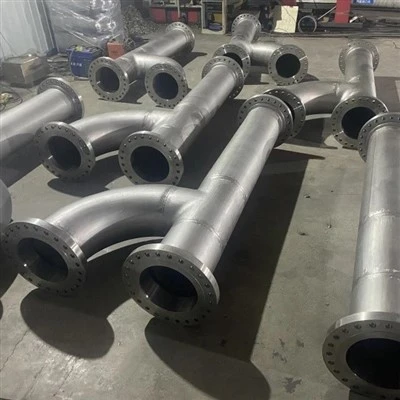
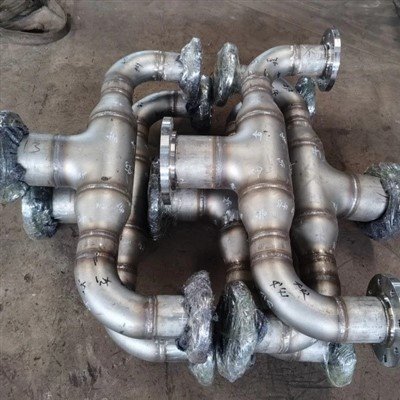
Duplex S32205 plate, also known as 2205 stainless steel, is a material that combines the best features of austenitic and ferritic stainless steels.

At our factory specializing in stainless steel and nickel alloy products, we produce S32205 plates to ASTM A240 and ASME SA240 standards with full traceability. This article gives a clear look at the real advantages and disadvantages of duplex S32205 plate so you can decide if it fits your project.
Advantages of Duplex S32205 Plates
Approximately Twice the Strength of Standard Stainless Steel
S32205 plates have a minimum yield strength of 65 ksi (450 MPa) and a tensile strength of 95 ksi (655 MPa). For comparison, common 316L stainless steel has a yield strength of only about 30 ksi (205 MPa). This means you can use a thinner S32205 plate to achieve the same load-bearing capacity as a much thicker 316L plate.
Using less material reduces weight and lowers fabrication costs. For example, a pressure vessel made from S32205 can have walls nearly half as thick as one made from 316L, making the vessel lighter, easier to transport, and cheaper to support structurally.
Outstanding Resistance to Chloride Stress Corrosion Cracking
Chloride stress corrosion cracking (SCC) is a silent killer for standard austenitic stainless steels like 304 and 316. When these steels are exposed to chlorides (common in seawater, de-icing salts, and chemical brines) at temperatures above 60°C, tiny cracks can form and grow until the component fails suddenly. S32205 plates are highly resistant to chloride SCC due to their dual-phase structure.
In coastal structures, chemical plants, and swimming pool equipment, S32205 plates provide reliable long-term service where 316L would crack within months or years. This resistance alone has made S32205 the go-to material for marine heat exchangers, desalination plant piping, and offshore platform equipment.
Superior Pitting and Crevice Corrosion Resistance
The pitting resistance equivalent number (PREN) for S32205 is typically 33–35, calculated as PREN = %Cr + 3.3×%Mo + 16×%N. With 22% chromium, 3% molybdenum, and 0.15% nitrogen, S32205 performs significantly better than 316L (PREN ≈ 25) in chloride-containing environments.
Seawater handling systems, firewater lines on ships, and chemical storage tanks all benefit from this enhanced resistance. S32205 plates can safely handle up to about 10,000 ppm chlorides at moderate temperatures, while 316L would start pitting at much lower concentrations.
Cost-Effective Compared to Higher-Nickel Alloys
Nickel is one of the most expensive alloying elements. S32205 contains only 5% nickel, whereas 316L contains 10–14% nickel, and high-performance alloys like Hastelloy or Inconel contain 40–70% nickel. Because S32205 uses less nickel, its base price is typically 20–40% lower than 316L on a per-pound basis-and when you factor in its higher strength, the overall project cost often becomes even more attractive.
If you need a certain mechanical performance, the cost per unit of strength for S32205 is much lower than for austenitic grades. This makes S32205 an economical choice for large-scale projects such as storage tanks, bridges, and pressure vessels.
Good Weldability and Fabricability with Proper Procedures
Unlike early duplex grades that were difficult to weld without losing corrosion resistance, S32205 can be welded successfully using common processes such as GTAW (TIG), SMAW (stick), and GMAW (MIG). With proper filler metal and controlled heat input, the weld metal and heat-affected zone maintain a balanced austenite-ferrite ratio and good properties.
Your existing welding equipment can handle S32205, provided you follow the recommended procedures. No need for special furnaces or exotic techniques-just disciplined control of interpass temperature (below 300°F/150°C) and heat input. Post-weld heat treatment is generally not required, saving time and money.
Higher Thermal Conductivity and Lower Thermal Expansion
S32205 plates have about 30% higher thermal conductivity than 316L, meaning heat transfers through the material more efficiently. At the same time, S32205 has a coefficient of thermal expansion similar to carbon steel-approximately 15% lower than 316L.
Lower thermal expansion also means less differential movement when S32205 components are welded to carbon steel structures, simplifying design and reducing fatigue risks.

Disadvantages of Duplex S32205 Plates
Limited Service Temperature Range
While S32205 performs excellently at ambient and moderate temperatures, it cannot be used for long-term service above approximately 300°C (572°F). At higher temperatures, the material undergoes phase transformations-specifically, the formation of sigma phase, a brittle intermetallic compound that severely reduces toughness and corrosion resistance.
If your application involves continuous temperatures above 300°C, such as in furnace components or high-temperature exhaust systems, you must choose a different alloy-typically an austenitic stainless steel like 310S or a nickel-based superalloy. For temperatures below 300°C, S32205 remains perfectly suitable.
Reduced Toughness at Sub-Zero Temperatures
S32205 has a ductile-to-brittle transition temperature (DBTT) around -50°C (-58°F). Below this temperature, the ferrite phase in the duplex structure can become brittle, making the material susceptible to impact failure. In contrast, fully austenitic stainless steels remain tough down to cryogenic temperatures.
Do not specify S32205 for cryogenic service such as liquid natural gas (LNG) storage, liquid nitrogen piping, or Arctic-grade equipment below -50°C. For such conditions, use 304L, 316L, or special cryogenic nickel steels.
Requires Strict Welding Control and Skilled Operators
Although S32205 is weldable, it is not as forgiving as 304L or 316L. Welding too slowly or with too much heat input can cause the formation of unwanted phases that reduce pitting resistance and mechanical properties. Additionally, improper filler metal selection or insufficient nitrogen shielding can upset the critical 50/50 austenite-ferrite balance.
What this means for your shop: You need trained welders who understand duplex metallurgy. You also need accurate temperature monitoring to keep interpass temperatures below 300°F (150°C). Many fabricators require qualification testing to verify that their welding procedures produce acceptable material. This adds time and cost compared to welding standard stainless steels.
Availability and Lead Times Can Be Longer
S32205 plates are a specialty product, not a commodity like 304 or 316. While larger distributors stock common thicknesses, unusual sizes, thin gauges, or large quantities may require mill production with lead times of 12–20 weeks. During global supply chain disruptions, duplex grades often become harder to source than standard austenitic grades.
If your project requires S32205, order well in advance and maintain safety stock. Work with reputable suppliers who have direct mill relationships. For urgent repairs, keep an inventory of common sizes or establish a consignment stock agreement.
Higher Initial Material Cost Than 304L or 316L on a Per-Pound Basis
While S32205 is cheaper per pound than high-nickel alloys, it is still more expensive than standard 304L and 316L stainless steels. Depending on market conditions, S32205 plates typically cost 20–50% more per pound than 316L. This higher upfront cost can discourage budget-conscious buyers who only look at material price per pound rather than lifecycle cost.
Important counterpoint: When you account for S32205's higher strength, longer service life due to corrosion resistance, and reduced maintenance, the total cost of ownership often favors S32205. However, for short-term, non-critical applications in mild environments, the cheaper 304L may be the better economic choice.
Limited Formability Compared to Austenitic Grades
The higher strength of S32205 comes with lower ductility. While 316L can be bent, stretched, and deep-drawn with relative ease, S32205 plates require greater force and have smaller safe bending radii. Excessive cold forming can induce martensite formation or cracking, especially if the material is not in the solution-annealed condition.
For tight radius bends or complex formed parts, preheat the plate slightly and use larger punch radii. Always consult the manufacturer's forming limits. If your design requires severe forming, consider using an austenitic grade instead, or plan to solution anneal after forming.

Conclusion
Duplex S32205 plates offer a compelling package of high strength, chloride corrosion resistance, and cost-effectiveness for applications operating between -50°C and 300°C. They excel in marine environments, chemical processing, desalination plants, and oil & gas facilities where standard stainless steels fail due to pitting or stress corrosion cracking.
However, S32205 is not a universal solution. Avoid it for high-temperature service above 300°C, cryogenic conditions below -50°C, or applications requiring extreme formability. For those niches, austenitic stainless steels or nickel-based alloys remain the better choice.