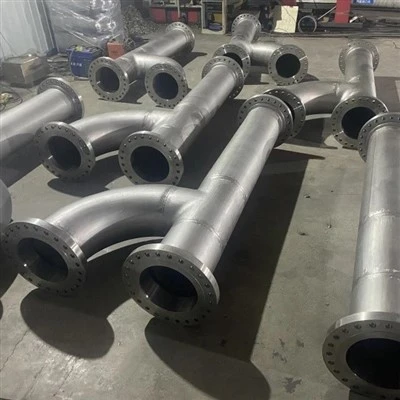
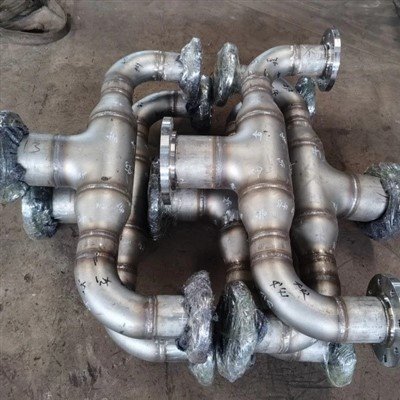
Duplex 2205 and Super Duplex 2507 are both dual-phase (ferrite + austenite) stainless steels that deliver a performance combination unavailable from any single-phase alloy: the strength of ferritic steel with the corrosion resistance of austenitic steel. They are the materials of choice across oil and gas, desalination, chemical processing, and marine infrastructure.

The distinction is a matter of degree - and it matters enormously in aggressive environments. 2205 (PREN ~35) handles most industrial corrosion challenges effectively. 2507 (PREN ~43) crosses the critical PREN 40 threshold that the industry uses to define suitability for severe seawater, high-chloride, and high-temperature corrosion service. The upgrade comes at a 40–60% material cost premium - but in the right environment, it pays for itself many times over.
|
The Core Upgrade Question: Upgrade from 2205 to 2507 when your environment involves: (1) continuous seawater immersion, (2) chloride concentration above 10,000 ppm combined with temperatures above 60 °C, (3) FGD scrubbers or brine concentrators, (4) offshore / subsea service governed by NORSOK or DNV standards, or (5) when maximum pressure design efficiency (thinner walls) is a priority. In all other cases, 2205 delivers excellent performance at significantly lower cost. |
Understanding Duplex Stainless Steel: The Basics
If you are new to duplex stainless steels, this section explains the concept in plain language. If you are already familiar with the technology, proceed to Section 2 for the comparative data.
What Does 'Duplex' Mean?
Ordinary stainless steels - like 304 and 316 - have a purely austenitic (face-centred cubic) crystal structure. This gives them excellent toughness and formability, but their strength is relatively moderate and their resistance to a specific form of corrosion called stress corrosion cracking (SCC) in hot chloride environments is a known weakness.
Duplex stainless steels are engineered to maintain approximately 50% austenite and 50% ferrite (body-centred cubic) at all times. This two-phase microstructure - the word 'duplex' literally means 'double' - provides three advantages simultaneously:
Strength: Ferritic steel is inherently stronger than austenitic steel. A duplex grade has roughly twice the yield strength of a comparable austenitic grade.
Corrosion resistance: The chromium, molybdenum, and nitrogen content in duplex grades provides PREN values far above standard austenitic steels.
SCC resistance: The ferrite phase interrupts stress corrosion crack propagation pathways that occur in pure austenitic steels, making duplex grades dramatically more resistant to SCC in hot chloride environments.
|
Think of it this way:
Standard 316L stainless has a PREN of approximately 25. Duplex 2205 achieves PREN ~35. Super Duplex 2507 reaches PREN ~43. Each step up represents a material that can withstand significantly more aggressive environments before corrosion becomes a problem |
What Is the 'Super' in Super Duplex?
The term 'Super Duplex' designates duplex grades with a PREN exceeding 40 - the industry-accepted threshold for reliable resistance in seawater and other highly aggressive chloride environments. Inconel alloys exceed this too, but at much higher cost. Super Duplex 2507 hits the sweet spot: PREN 43, far higher strength than 316L, and a material cost that remains much lower than nickel superalloys.
The key compositional upgrades in 2507 versus 2205 are: chromium increased from ~22% to ~25%, molybdenum increased from ~3% to ~4%, and nitrogen nearly doubled from ~0.17% to ~0.28%. These three changes, combined with the PREN formula (PREN = %Cr + 3.3 × %Mo + 16 × %N), account for the jump from PREN 35 to PREN 43.
Chemical Composition: Where the Difference Begins
Every performance difference between 2205 and 2507 originates in chemistry. The table below maps each alloying element to its functional role, showing precisely how 2507's enhanced composition translates to improved performance.
Table 1: Chemical Composition - Duplex 2205 vs Super Duplex 2507 (ASTM A240 / EN 10088)
|
Element |
2205 (%) |
2507 (%) |
Functional Role |
Key Difference |
|
Chromium (Cr) |
21.0 – 23.0 |
24.0 – 26.0 |
Forms Cr2O3 passive film; primary oxidation and corrosion shield |
2507 has ~14% more Cr; stronger passive film in aggressive media |
|
Nickel (Ni) |
4.5 – 6.5 |
6.0 – 8.0 |
Stabilises austenite phase; enhances toughness and ductility |
2507 higher Ni improves phase balance and corrosion resistance |
|
Molybdenum (Mo) |
2.5 – 3.5 |
3.0 – 5.0 |
Blocks pitting and crevice corrosion in chloride environments |
2507 Mo content up to 5%; the primary PREN upgrade driver |
|
Nitrogen (N) |
0.14 – 0.20 |
0.24 – 0.32 |
Solid-solution strengthener; boosts PREN and austenite stability |
2507 has 60%+ more N; dramatically raises both PREN and yield strength |
|
Iron (Fe) |
Balance |
Balance |
Base matrix metal |
Comparable balance; proportions adjusted for phase equilibrium |
|
Manganese (Mn) |
2.0 max. |
1.2 max. |
Deoxidiser; Mn competes with Ni for austenite stabilisation |
2507 limits Mn more strictly to preserve corrosion performance |
|
Silicon (Si) |
1.0 max. |
0.8 max. |
Deoxidiser; aids oxidation resistance |
Tighter Si limit in 2507 maintains cleaner microstructure |
|
Carbon (C) |
0.030 max. |
0.030 max. |
Low C minimises chromium carbide precipitation at grain boundaries |
Identical limit; both grades are low-carbon to optimise weldability |
|
PREN (calculated) |
~35 |
~43 |
PREN = %Cr + 3.3x%Mo + 16x%N; key pitting resistance metric |
2507 PREN exceeds the industry 40+ threshold for critical seawater service |
|
The PREN Formula - Explained Simply:
PREN = %Chromium + (3.3 x %Molybdenum) + (16 x %Nitrogen). Each element contributes to the alloy's ability to resist pitting corrosion. Molybdenum has a 3.3x multiplier because it is highly effective at blocking chloride attack - which is why doubling Mo from 3% to 4% in 2507 contributes ~3.3 additional PREN points. Nitrogen has a 16x multiplier; the near-doubling of N in 2507 (from ~0.17% to ~0.28%) contributes ~1.8 additional points. Combined, these changes push 2507 from PREN 35 to PREN 43 - across the critical 40-point industry threshold. |
Mechanical Properties: Strength That Enables Smarter Design
One of the most commercially significant advantages of upgrading to 2507 is its higher strength. Because pressure vessel and piping wall thickness is calculated from yield strength, a stronger material can deliver the same pressure containment with less metal - reducing weight, weld volume, and total fabrication cost.
Table 2: Mechanical Properties - Duplex 2205 vs Super Duplex 2507 (Annealed Condition)
|
Property |
2205 (min.) |
2507 (min.) |
Standard |
Engineering Implication |
|
Tensile Strength (UTS) |
620 MPa (90 ksi) |
795 MPa (115 ksi) |
ASTM A790 / A276 |
2507 is ~28% stronger in tension; enables thinner-wall designs, saving weight and cost |
|
Yield Strength (0.2% offset) |
450 MPa (65 ksi) |
550 MPa (80 ksi) |
ASTM A790 / A276 |
2507 yields ~22% higher; critical for high-pressure design calculations |
|
Elongation at Break (min.) |
25% |
15% |
ASTM A790 / A276 |
2205 is more ductile; 2507 trades some elongation for higher strength |
|
Hardness (Rockwell C, max.) |
28 HRC |
32 HRC |
ASTM E18 |
2507 harder; better wear resistance but requires sharper tooling for machining |
|
Impact Energy (Charpy, -40 °C) |
> 80 J |
> 50 J |
ASTM A370 |
Both grades tougher than standard austenitic grades; 2205 marginally better at low temp |
|
Density |
7.82 g/cm³ |
7.80 g/cm³ |
ASTM |
Virtually identical; negligible difference in weight calculations |
|
Modulus of Elasticity |
200 GPa (29 Msi) |
200 GPa (29 Msi) |
ASTM E111 |
Identical stiffness; deflection calculations are the same for both grades |
|
Max. Continuous Service Temp. |
315 °C (600 °F) |
300 °C (572 °F) |
ASME / NACE |
Both grades limited at elevated temp due to sigma phase embrittlement risk; not for high-temp service |
Practical example: A pressure vessel designed for 100 bar internal pressure using 2205 might require a 20 mm wall. The same vessel in 2507 could be designed at 16 mm wall - reducing material volume by 20%. At 2507 prices, this partially offsets the alloy premium while delivering a lighter, more compact structure.
Corrosion Resistance: The Critical Performance Gap

Pitting Resistance - Understanding PREN in Practice
PREN is calculated, not measured directly, but it is highly predictive of real-world pitting behaviour. The Critical Pitting Temperature (CPT) - the temperature above which pitting initiates in a standardised chloride test - correlates directly with PREN:
Duplex 2205 (PREN ~35): CPT approximately 35–40 °C in 10% FeCl3 solution (ASTM G48 Method A)
Super Duplex 2507 (PREN ~43): CPT approximately 50–55 °C in the same test
This 15 °C difference in CPT may appear modest in a laboratory test, but in engineering practice it represents the difference between a material that survives seawater service and one that does not - because real seawater in tropical and subtropical regions operates at 25–35 °C, with heat exchangers and process equipment pushing surface temperatures well above ambient.
Corrosion Performance by Environment
Table 3: Corrosion Resistance by Environment - Duplex 2205 vs Super Duplex 2507
|
Environment / Corrosion Type |
2205 Rating |
2507 Rating |
Recommendation & Notes |
|
General atmospheric (inland) |
Excellent |
Excellent |
Either grade suitable; 2205 is cost-effective for mild atmospheric service |
|
Coastal / marine atmosphere |
Good – Very Good |
Excellent |
2507 preferred; PREN 43 vs 35 provides decisive edge against airborne chloride pitting |
|
Seawater immersion (ambient) |
Moderate – Good |
Very Good – Excellent |
2507 strongly preferred for continuous immersion; 2205 susceptible to crevice attack in seawater |
|
Seawater at elevated temp. (> 25 °C) |
Poor |
Good |
Upgrade to 2507 required; warm seawater dramatically accelerates pitting on 2205 |
|
Chloride solutions (process streams) |
Good |
Excellent |
2507 preferred; higher PREN and Mo content resist crevice attack in concentrated chloride |
|
Dilute sulfuric acid (< 5%) |
Moderate |
Good – Very Good |
2507 recommended; Mo and higher Cr provide improved resistance to reducing acids |
|
Phosphoric acid (moderate conc.) |
Moderate |
Good |
2507 preferred for phosphoric acid scrubbers and fertiliser plant equipment |
|
Stress Corrosion Cracking (SCC) in chlorides |
Very Good |
Excellent |
Both far superior to 316L; duplex microstructure intrinsically resists SCC; 2507 edge in hot brine |
|
Hydrogen Induced Cracking (HIC) |
Good |
Good |
Both grades perform well; specify NACE MR0175 / ISO 15156 for sour (H2S) service qualification |
|
Crevice corrosion (under gaskets/flanges) |
Moderate – Good |
Good – Excellent |
2507 preferred wherever crevice geometry is present in corrosive media; PREN 43 is critical threshold |
|
The Seawater Rule of Thumb:
If your equipment will be in direct contact with seawater - especially in immersed, creviced, or heated conditions - do not specify 2205. The PREN gap between 2205 (35) and the industry seawater threshold (40) is too narrow for reliable long-term service. Specify 2507 as minimum, or consider titanium Grade 2 for extreme seawater environments where even 2507 may have limitations. |
Physical and Thermal Properties
Physical and thermal properties govern equipment design details - thermal expansion allowances, heat transfer efficiency, cathodic protection system design, and suitability for cryogenic or high-temperature service.
Table 4: Physical and Thermal Properties - Duplex 2205 vs Super Duplex 2507
|
Physical / Thermal Property |
2205 |
2507 |
Engineering Significance |
|
Thermal Conductivity (at 20 °C) |
19 W/m·K |
14 W/m·K |
Both conduct heat better than 316L (13.4 W/m·K); 2205 marginally better for heat exchanger duty |
|
Coefficient of Thermal Expansion (20–100 °C) |
13.0 µm/m·°C |
13.0 µm/m·°C |
Identical expansion; same design approach for both grades; ~30% lower than 316L (16 µm/m·°C) |
|
Specific Heat Capacity (at 20 °C) |
500 J/kg·K |
470 J/kg·K |
Comparable thermal mass; minor consideration in thermal cycling designs |
|
Electrical Resistivity (at 20 °C) |
0.85 µΩ·m |
0.80 µΩ·m |
Both resistances are similar; relevant for cathodic protection current calculations |
|
Magnetic Behaviour |
Ferromagnetic |
Ferromagnetic |
Both grades are weakly magnetic due to dual ferrite-austenite structure; not suitable for non-magnetic applications |
|
Phase Ratio (Ferrite : Austenite) |
~50:50 |
~50:50 |
Balanced duplex structure provides the best combination of strength and corrosion resistance for both grades |
|
Cryogenic Toughness (below -50 °C) |
Limited / Not Recommended |
Limited / Not Recommended |
Neither duplex grade is suitable for cryogenic service; use 316L or 304L below -50 °C |
|
Important Limitation - Temperature Range:
Neither 2205 nor 2507 should be used above 315 °C (600 °F) in continuous service. Above this temperature, a harmful phase called sigma phase (a brittle intermetallic compound) can precipitate at ferrite-austenite boundaries, causing severe embrittlement. Below -50 °C, both grades lose impact toughness. For high-temperature service above 300 °C, consider austenitic grades (310S, 800H) or nickel alloys. For cryogenic service below -50 °C, specify 304L, 316L, or 9% nickel steel. |
Standards, Specifications, and Compliance
Correct material specification is not bureaucratic formality - it is a contractual, regulatory, and safety obligation in every critical application. The table below maps both grades to their governing international standards.
Table 5: Applicable Standards and Specifications - Duplex 2205 vs Super Duplex 2507
|
Standard / Specification |
2205 |
2507 |
Product Form / Scope |
|
ASTM (Sheet / Plate / Strip) |
A240 / UNS S32205 |
A240 / UNS S32750 |
Flat rolled product for pressure vessels, tanks, and structural fabrication |
|
ASTM (Seamless Pipe) |
A790 |
A790 |
Pressure piping systems, process lines, and subsea flowlines |
|
ASTM (Bar & Rod) |
A276 |
A276 |
Machined components, pump shafts, valve stems, and fasteners |
|
ASME Boiler & PV Code (Sec. II) |
SA-240 / SA-790 |
SA-240 / SA-790 |
Pressure-bearing components in ASME-coded pressure vessels and piping systems |
|
EN / DIN Equivalent |
EN 1.4462 / X2CrNiMoN22-5-3 |
EN 1.4410 / X2CrNiMoN25-7-4 |
European standard for international procurement and CE-marked equipment |
|
UNS Designation |
S32205 (also S31803) |
S32750 |
Universal Numbering System; S32205 is the updated tighter chemistry of S31803 |
|
NACE MR0175 / ISO 15156 |
Qualified (with limits) |
Qualified (with limits) |
Sour service (H2S-containing oil and gas); hardness and temperature limits apply to both grades |
|
AWS Filler Metal (Welding) |
ER2209 (AWS A5.9) |
ER2594 (AWS A5.9) |
Over-alloyed fillers ensure correct phase balance in the weld deposit |
|
DNV / NORSOK (Offshore) |
M-630 / MDS D47 |
M-630 / MDS D64 |
Norwegian offshore standard; 2507 specified for subsea and severe seawater exposure |
|
API 6A / 17D (Oil & Gas Equipment) |
Acceptable (FF class) |
Preferred (FF/HH class) |
2507 meets the highest material class requirements for wellhead and Christmas tree equipment |
A Note on S31803 vs S32205
Grade 2205 is supplied under two UNS designations: the older S31803 (broader chemistry window, including lower nitrogen minimum) and the newer, tighter S32205 (minimum 0.14% N, minimum 3% Mo). Always specify S32205 - the tighter chemistry ensures the PREN of approximately 35 that engineering calculations depend on. S31803 with minimum nitrogen can yield PREN as low as 31, falling into a performance gap that may be inadequate for the intended service.
Material Traceability and Mill Certificates
All duplex stainless steel should be supplied with a full Material Test Report (MTR) documenting chemical composition, mechanical test results, heat/lot number, and NACE MR0175 hardness compliance where applicable. For offshore and nuclear-adjacent applications, third-party inspection (TPI) and Positive Material Identification (PMI) testing should be specified at goods receipt.
Fabrication and Welding

Key Fabrication Considerations
Both grades share similar fabrication characteristics - and important differences from standard austenitic steels:
Work hardening: Duplex grades work harden faster than 316L; tooling must be sharp and feed rates consistent to avoid built-up edge on cutting tools.
Forming: Cold forming requires higher forces than austenitic grades; intermediate annealing may be required for severe deformation.
Hot forming: Conducted at 1050–1150 °C for both grades; quench immediately after hot forming to avoid sigma phase precipitation. Do not hot form below 950 °C.
Machining: 2507 requires slower cutting speeds and more frequent tool changes than 2205 due to higher hardness; use carbide tooling with flood coolant.
Welding - The Most Critical Fabrication Step
Welding duplex stainless steel incorrectly is the single most common cause of premature corrosion failures in service. The goal is to maintain the 50:50 ferrite-austenite phase balance in the weld metal and heat-affected zone.
Filler metal: Use ER2209 (AWS A5.9) for 2205 and ER2594 for 2507. Both fillers are over-alloyed relative to the base metal - higher Ni content promotes austenite reformation in the cooling weld deposit.
Interpass temperature: Maximum 150 °C for both grades. Allowing the weld to cool too slowly promotes sigma phase and secondary austenite formation, reducing corrosion resistance at the weld.
Heat input: Target 0.5–2.5 kJ/mm. Too low = excessive ferrite; too high = sigma phase. Both are detrimental.
Shielding and purge gas: Use Ar + 2–3% N2 for both shielding and root purge to prevent nitrogen loss from the weld pool. Nitrogen loss in 2507 welds dramatically reduces PREN.
Post-weld treatment: Post-weld heat treatment (PWHT) is not required and is generally avoided - it risks sigma phase formation. Instead, conduct solution annealing at 1040–1120 °C followed by rapid quench only when phase imbalance is detected by ferrite measurement.
|
Weld Quality Verification:
After welding, verify ferrite number (FN) using a calibrated ferritescope (target: FN 30–65 for both grades per AWS D1.6). Conduct ASTM A923 Method C (electrochemical) or Method A (etch test) to confirm absence of sigma phase and intermetallic precipitation in the HAZ. In critical applications (offshore, chemical processing), corrosion testing per ASTM G48 on production welds is strongly recommended. |
Industry Application Guide: When to Upgrade?
The table below answers the core question of this guide with industry-specific clarity. 'UPGRADE' signals in amber indicate applications where 2205 has documented limitations and 2507 is the correct - or required - specification.
Table 6: Industry Application Guide - Duplex 2205 vs Super Duplex 2507
|
Application / Industry |
Use 2205 |
Upgrade to 2507 |
Technical Reason for Decision |
|
Oil & Gas - Onshore Production |
|||
|
Produced water handling (low salinity) |
✓ Preferred |
Produced water with chlorides < 50,000 ppm and temp < 60 °C; 2205 PREN 35 is adequate |
|
|
High-salinity produced water (> 100,000 ppm Cl, > 60 °C) |
UPGRADE |
Warm concentrated brine exceeds 2205 pitting threshold; 2507 PREN 43 mandatory |
|
|
Gas compression scrubbers (H2S + CO2) |
✓ Qualified |
2205 meets NACE MR0175 for typical sour gas compositions within temperature limits |
|
|
Oil & Gas - Offshore & Subsea
|
|||
|
Topside piping in splash zone |
UPGRADE |
Intermittent seawater exposure in warm climates creates crevice attack risk on 2205 |
|
|
Subsea manifold and flowline fittings |
UPGRADE |
DNV-OS-F101 and NORSOK MDS D64 mandate 2507 or higher for subsea seawater-wetted components |
|
|
Heat exchanger tubes (seawater-cooled) |
UPGRADE |
Seawater velocity > 1.5 m/s with temp > 30 °C demands PREN > 40; 2507 meets threshold |
|
|
Umbilical tubing and control lines |
UPGRADE |
External seawater exposure + internal production chemicals; 2507 specified in NORSOK and API 17E |
|
|
Chemical Processing & Desalination
|
|||
|
Pressure vessels (mild chloride service) |
✓ Preferred |
Cost-effective for dilute chloride, phosphoric acid, and general chemical service below 60 °C |
|
|
Desalination (RO pressure vessels & piping) |
✓ Preferred |
2205 is the established standard for SWRO system piping and pressure vessels; good CAPEX balance |
|
|
Desalination brine concentrators (> 60,000 ppm) |
UPGRADE |
High-salinity brine at elevated temperature; 2507 or titanium required for brine concentrator heat exchangers |
|
|
FGD scrubber absorbers (power plants) |
UPGRADE |
HCl + H2SO4 + chloride combination in hot scrubber liquor exceeds 2205 capabilities; 2507 is industry standard |
|
|
Structural, Marine & Infrastructure
|
|||
|
Bridge hangers and tension rods |
✓ Preferred |
Excellent strength-to-weight ratio; 2205 PREN 35 adequate for road deicing salt exposure |
|
|
Jetty and berth piling (splash zone) |
UPGRADE |
Continuous seawater splash in tropical climates exceeds 2205 tolerance; 2507 extends service life significantly |
|
|
Pulp and paper digesters |
✓ Preferred |
White liquor and pulp bleaching environments; 2205 is the established standard for kraft pulp equipment |
|
|
The Non-Negotiable Upgrade Scenarios:
In five scenarios, upgrading from 2205 to 2507 is not optional - it is dictated by standards or documented service failures: (1) Subsea and offshore seawater-wetted components per NORSOK / DNV. (2) FGD scrubber absorber internals in power generation. (3) Brine concentrator heat exchangers in desalination. (4) Seawater lift pump casings and impellers. (5) Topside piping in permanent splash-zone exposure in tropical marine environments. In these applications, specify 2507 from the outset. |
Cost Analysis: Is the Upgrade Worth It?
Table 8: Cost Comparison - Duplex 2205 vs Super Duplex 2507
|
Cost Factor |
2205 |
2507 |
Notes |
|
Raw material - sheet (indicative 2025) |
USD 6–9 / kg |
USD 9–14 / kg |
~40–60% premium for 2507; driven by higher Mo, Ni, and N content |
|
Wall thickness reduction potential (vs 2205) |
Base |
-20% to -25% |
Higher yield strength allows thinner-wall design; partially offsets material cost premium |
|
Fabrication & machining cost delta |
Base |
+10 to +15% |
2507 is harder and more work-hardening; slower machining speeds, more tool wear |
|
Typical service life in seawater service |
5–15 years* |
25–40+ years |
*Estimate; 2205 in continuous seawater may suffer pitting within years; 2507 significantly extends service life |
|
Total Cost of Ownership (TCO) in severe service |
Higher (maintenance) |
Lower (lifecycle) |
2507 premium typically recovered within 3–7 years through avoided failures and maintenance costs |
|
Vs. 316L stainless (reference comparison) |
~2x 316L price |
~3x 316L price |
Both duplex grades command a significant premium over 316L; justified by superior performance |
The 40–60% raw material premium of 2507 over 2205 is the most visible cost difference - but rarely the most important one when total asset lifecycle economics are evaluated. Three factors frequently tip the TCO calculation in favour of 2507:
Wall thickness reduction: 2507's higher yield strength (550 MPa vs 450 MPa) allows wall thickness reductions of 15–22% in pressure-governed designs, partially recovering the material cost premium in the same heat.
Avoided failure costs: A single chloride-induced pitting failure requiring emergency repair or equipment replacement in an offshore or chemical processing environment typically costs USD 500,000 to several million - dwarfing the additional cost of specifying 2507 from the outset.
Extended inspection intervals: 2507's higher corrosion resistance margin allows operators to extend inspection intervals in many jurisdictions, reducing operational expenditure over the asset life.
Recommendation: Conduct a formal TCO analysis - not a purchase price comparison - when evaluating 2205 vs 2507. In any environment where 2205 is operating near its corrosion resistance limit, the economics almost always favour 2507.
Upgrade Decision Matrix
Use this matrix for rapid alloy selection. Amber 'UPGRADE' cells indicate conditions where 2507 is technically required or strongly recommended based on industry standards and documented service performance. Always validate against site-specific data and engage a corrosion engineer for safety-critical decisions.
Table 7: Upgrade Decision Matrix - Duplex 2205 vs Super Duplex 2507
|
Decision Factor |
Stay with 2205 |
Upgrade to 2507 |
Rationale |
|
Chloride concentration < 5,000 ppm, ambient temp |
✓ |
2205 PREN 35 is adequate; upgrade adds cost without performance benefit |
|
|
Chloride > 10,000 ppm AND temp > 60 °C |
UPGRADE |
Combined aggressor effect; only PREN > 40 (2507) provides reliable protection |
|
|
Continuous seawater immersion (any temperature) |
UPGRADE |
2205 subject to pitting and crevice attack in immersed seawater service; 2507 is minimum grade |
|
|
Maximum strength required to minimise wall thickness |
UPGRADE |
2507 UTS 795 MPa vs 620 MPa; ~28% stronger, enabling thinner walls and weight savings in pressure design |
|
|
Budget is primary constraint; environment is mild |
✓ |
2205 costs 20–40% less than 2507; adequate for non-aggressive applications with PREN < 40 sufficient |
|
|
FGD scrubber, brine concentrator, or acid service |
UPGRADE |
Industry-standard specification for these environments; 2205 failures documented in these services |
|
|
Offshore / subsea standard compliance required |
UPGRADE |
NORSOK, DNV, and API subsea standards specify 2507 as minimum material class; 2205 does not qualify |
|
|
SCC resistance in hot chloride > 80 °C |
UPGRADE |
Both duplex grades outperform 316L for SCC, but 2507 provides additional margin above 80 °C |
|
|
Cryogenic service (below -50 °C required) |
Neither grade |
Neither grade |
Both duplex grades lose toughness below -50 °C; specify 316L, 304L, or nickel alloys for cryogenic service |
Frequently Asked Questions (FAQ)
Yes. Dissimilar welding of 2205 to 2507 is routinely performed using ER2594 filler metal (the over-alloyed 2507 filler), which ensures adequate alloying in the weld deposit to protect the 2507 side of the joint. The weld should be qualified per ASME Section IX or ISO 15614-1, and the critical pitting temperature of the weld deposit should be verified per ASTM G48 in corrosive service applications.
Yes, but lead times and minimum order quantities are longer than for 2205. 2507 is readily available in sheet, plate, bar, seamless pipe, tube, and fittings. Welded pipe in 2507 is also available but requires careful specification of the welding procedure qualification. For bespoke forgings or thick-wall components, expect extended lead times of 8–20 weeks; plan accordingly in project schedules.
In most corrosion-resistance applications, yes - and with significant performance improvement. The design differences to note are: (1) duplex grades are weakly magnetic, which matters in some medical or electronic environments; (2) duplex grades should not be used below -50 °C where 316L continues to perform; (3) the higher yield strength of duplex grades requires recalculation of allowable stresses per the applicable pressure code (ASME or EN). Direct dimensional substitution (same wall thickness) results in an over-designed, heavier component - the correct approach is to recalculate wall thickness based on the duplex yield strength.
The most documented failure mode of 2205 in seawater is crevice corrosion initiation under gaskets, under marine fouling deposits, and within threaded connections. Once a crevice initiates, the local chemistry shifts to a low-pH, high-chloride environment that overwhelms 2205's PREN 35 resistance. 2507's PREN 43 provides a substantially larger safety margin against this mechanism. These failures reinforced the NORSOK and DNV requirement for PREN > 40 in seawater-wetted applications.
Use Positive Material Identification (PMI): portable X-ray fluorescence (XRF) spectrometers can detect molybdenum, chromium, nickel, and nitrogen, instantly distinguishing 2205 from 2507 based on composition. For nitrogen measurement specifically, combustion-based chemical analysis or GDMS is more accurate than XRF. Always cross-check the delivered MTR (mill certificate) heat chemistry against the UNS S32750 composition limits in ASTM A240.
Conclusion
Duplex 2205 is not an inferior grade - it is an outstanding material that outperforms 316L in virtually every demanding application. It is the correct specification for the vast majority of corrosive industrial environments where cost efficiency and reliability must both be achieved.
Super Duplex 2507 is the answer when 2205 is not enough: when the environment is aggressive enough to test the PREN 35 boundary, when offshore or subsea standards mandate PREN > 40, when maximum mechanical efficiency demands the highest yield strength available in a corrosion-resistant stainless alloy, or when the lifecycle cost of a potential failure in service vastly exceeds the material cost premium.
The upgrade question should be answered not by material price, but by service environment, regulatory requirements, and total cost of ownership over the design life of the asset. In the right application, specifying 2507 is not an upgrade in cost - it is a reduction in risk.
|
Our Expert Recommendation:
Start with 2205 as your baseline duplex specification. Upgrade to 2507 whenever your environment triggers the PREN 40 threshold - seawater immersion, warm concentrated chlorides, FGD service, offshore standards compliance, or high-pressure design where wall thickness reduction has economic value. Our technical team provides free specification support, including PREN calculations, ASTM G48 corrosion test data, and weld procedure recommendations for both grades in your specific service environment. |