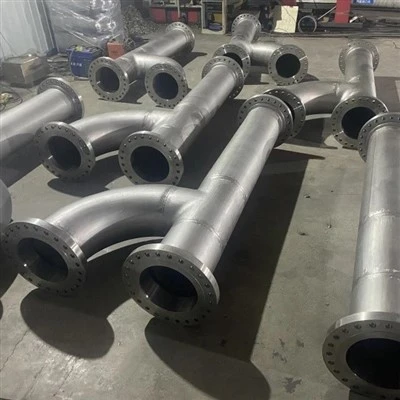
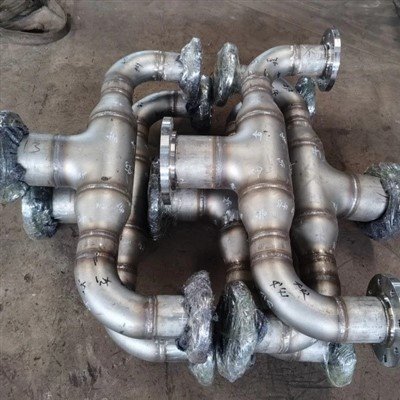
While SS316 is the industry standard for general corrosion resistance, 254SMO is a high-end "6-moly" austenitic stainless steel. This article delineates their key differences, highlighting why SMO 254 may be the superior choice for high-performance needs.

SMO 254 and SS316: Chemical Composition
254SMO contains significantly higher levels of chromium, nickel, molybdenum, and nitrogen compared to 316 stainless steel.
While 316 stainless steel typically contains 16-18% chromium, 10-14% nickel, and 2-3% molybdenum, 254SMO (UNS S31254) features an enhanced composition of 19.5-20.5% chromium, 17.5-18.5% nickel, 6-7% molybdenum, and 0.18-0.25% nitrogen.
The nitrogen addition in 254SMO is particularly crucial, as it enhances strength without compromising ductility while significantly improving resistance to localized corrosion.
SMO 254 and SS316: Corrosion Resistance
254SMO offers dramatically superior resistance to pitting and crevice corrosion in aggressive chloride environments compared to 316 stainless steel.
The standard 316 grade performs adequately in mild environments but suffers from pitting corrosion in seawater, chemical processing, and high-chloride applications. 254SMO, with its high molybdenum and nitrogen content, maintains integrity in environments where 316 would fail catastrophically.

This performance difference is quantifiable through the Pitting Resistance Equivalent Number (PREN), where 316 scores approximately 24-26 while 254SMO achieves 42-45, representing nearly double the resistance to localized attack.
SMO 254 and SS316: Mechanical Properties
254SMO exhibits approximately 50% higher yield strength and tensile strength than 316 stainless steel while maintaining comparable ductility.
The minimum yield strength of 316 stainless steel is typically 170 MPa (25 ksi), whereas 254SMO delivers a minimum yield strength of 300 MPa (43.5 ksi).
The superior strength-to-weight ratio makes 254SMO particularly valuable in marine hardware, heat exchangers, and structural components where space and weight constraints exist.
SMO 254 and SS316: Fabricability
SMO 254 is more challenging to machine and requires specialized welding techniques compared to the readily fabricable SS316.

Due to its high work-hardening rate and absence of sulfur, SMO 254 demands slower cutting speeds and robust tooling, potentially increasing fabrication time. Welding SMO 254 necessitates matching fillers like AWS ERNiCrMo-3 to preserve corrosion resistance, whereas SS316 welds easily with standard methods and exhibits good formability.
Despite these challenges, SMO 254's fabricability is manageable with proper expertise, and its overall performance justifies the effort in critical projects.
SMO 254 and SS316: Cost and Applications
SMO 254 is more expensive than SS316 but provides greater value in specialized applications requiring extreme durability.
The higher cost of SMO 254 stems from its premium alloying elements, often 2-3 times that of SS316, yet it delivers cost savings through extended lifespan and reduced downtime.
SS316 suits general uses like food processing, marine hardware, and architectural elements, while SMO 254 is preferred for pulp and paper mills, desalination plants, and oil platforms where aggressive corrosion demands uncompromising material performance.
At our factory, we specialize in producing high-quality SMO 254 products for your specifications-contact us.