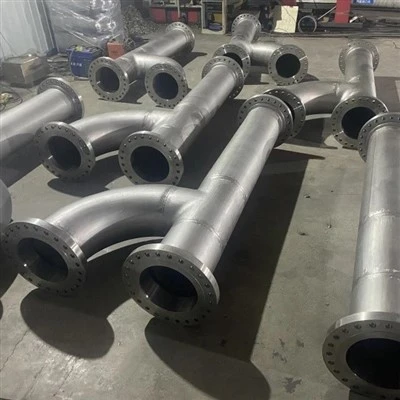
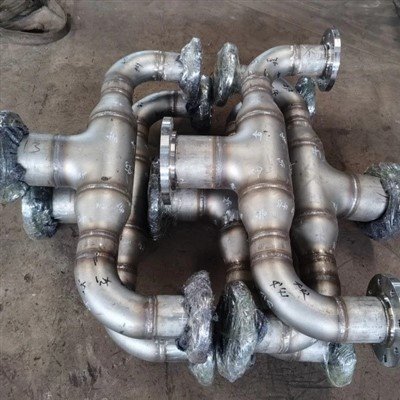
When facing highly aggressive and corrosive environments, engineers frequently turn to the HASTELLOY® family of nickel-chromium-molybdenum superalloys.
Two of the most prominent members of Hastelloy are HASTELLOY® C276 (UNS N10276) and HASTELLOY® C2000® (UNS N06200). While both are industry leaders in corrosion resistance, their specific chemical compositions result in different performances.

This comprehensive guide will detail the differences in chemistry, corrosion resistance, mechanical properties, and typical applications, helping you determine the superior alloy.
Hastelloy C2000 vs C276: Chemical Composition
The primary difference between C276 and C2000 lies in their chemical composition, which enhances resistance to specific corrosive media.
HASTELLOY C276 is often considered the industry benchmark for the Ni-Cr-Mo alloy class. Its composition is defined by a high concentration of nickel, molybdenum, and chromium, along with a critical addition of tungsten.

High Mo and W: The combined high content of molybdenum and tungsten is the secret to C276's phenomenal performance in reducing environments, such as hot, non-aerated mineral acids and wet chlorine gas. This combination also provides excellent resistance to pitting and crevice corrosion.
Low C and Si: C276 has extremely low carbon and silicon content, eliminating the risk of precipitation of harmful phases in the weld heat-affected zone (HAZ), making it virtually immune to intergranular corrosion after welding.
HASTELLOY C2000 was a "universal" alloy, engineered to provide outstanding performance across an even broader range of corrosive conditions-simultaneously attacking both reducing and oxidizing agents.

Higher Cr: C2000 boasts a notably higher chromium content compared to C276. Chromium is the primary element responsible for resistance to oxidizing media, such as nitric acid and ferric chlorides.
Cu Addition: The most defining difference is the deliberate addition of copper to C2000. This copper content significantly enhances its resistance to highly corrosive non-oxidizing acids, particularly in various concentrations of sulfuric acid and hydrofluoric acid.
Mo Composition: C2000 maintains a high molybdenum content, ensuring it retains C276's strong resistance to reducing environments.
|
Element (wt. %) |
HASTELLOY C276 (UNS N10276) |
HASTELLOY C2000 (UNS N06200) |
Primary Function in Alloy |
|
Nickel (Ni) |
Balance (~57%) |
Balance (~59%) |
Base metal; resistance to stress corrosion cracking |
|
Chromium (Cr) |
14.5 – 16.5 |
22.0 – 24.0 (Higher) |
Resistance to oxidizing media |
|
Molybdenum (Mo) |
15.0 – 17.0 |
15.0 – 17.0 |
Resistance to reducing media, pitting |
|
Tungsten (W) |
3.0 – 4.5 |
Max 0.5 |
Aids resistance to pitting/crevice corrosion |
|
Copper (Cu) |
Max 0.5 |
1.3 – 2.0 |
Enhanced resistance to H2SO4 and HF |
|
Iron (Fe) |
4.0 – 7.0 |
Max 3.0 |
General strength, cost factor |
Hastelloy C2000 vs C276: Corrosion Resistance

HASTELLOY C276 when facing:
Chloride Environments: C276 has excellent resistance to chloride-induced stress corrosion cracking, pitting, and crevice corrosion, making it a staple in marine, pulp and paper, and pharmaceutical applications.
Reducing Agents: Its high Mo and W content provides superior resistance in highly aggressive reducing conditions, such as:
- Wet chlorine gas
- Hypochlorite and chlorine dioxide solutions
- Formic and acetic acids.
Use C2000 When:
HASTELLOY C2000 is designed for environments that simultaneously demand both oxidizing and reducing resistance. It is often chosen when:
Mixed Acids are Present: The synergy of high Cr and high Mo makes C2000 perform better than C276 in broad environments.
Sulfuric Acid Service: Due to the deliberate copper addition, C2000 offers significantly improved performance over C276 in various concentrations and temperatures of sulfuric acid, a key requirement in many chemical plants.
Hydrochloric Acid: C2000 demonstrates superior resistance in certain concentrations of hydrochloric acid, especially when compared to C276 in specific hot, concentrated regimes.
Mechanical Properties, Fabrication and Cost

Mechanical and Physical Properties
Both C276 and C2000 are solid-solution strengthened and exhibit excellent mechanical properties, including high tensile strength and ductility. They maintain high strength at elevated temperatures.
Their densities are very similar, with C276 being approximately 8.89 g/cm^3 and C2000 being slightly lower at about 8.53 g/cm^3. Both alloys are also non-magnetic.
Weldability and Fabrication
Both C276 and C2000 possess excellent weldability. Like other nickel alloys, they can be readily welded using common techniques such as TIG, MIG, and shielded metal arc welding.
Critically, their low carbon content ensures that welding does not typically compromise their corrosion resistance properties in the heat-affected zone (HAZ), eliminating the need for post-weld solution annealing in many cases.
Cost
While the cost of alloys is subject to volatile raw material markets, particularly nickel, molybdenum, and chromium, HASTELLOY C2000 is generally more expensive than C276.
The reason for the premium on C2000 is twofold:
Higher Alloying: C2000 requires a higher and more complex alloying structure, specifically the carefully controlled addition of copper, which adds to the refining and material cost.
Increased Performance: The extra security C2000 offers against simultaneous oxidizing and reducing attacks often justifies the higher investment.
Hastelloy C2000 vs C276: Applications
|
HASTELLOY Alloy |
Applications |
Specific Environments |
|
C276 |
Chloride/Reducing Dominant Systems |
Pulp & Paper Digesters, Flue Gas Desulfurization (FGD) scrubbers, Wastewater Treatment, Chemical Reactors handling chlorides. |
|
C2000 |
Universal/Mixed-Acid Systems |
Sulfuric Acid Concentrators, Pharmaceutical Reactors using mixed solvents, General Chemical Processing where broad-spectrum resistance is needed. |
Conclusion
In summary, the difference between C276 and C2000 is not a matter of one being definitively "better."
Hastelloy C276 remains the proven, cost-effective choice for environments where reducing conditions and chlorides are the main threat.
Hastelloy C2000, with its boosted chromium and copper content, offers superior resistance in mixed-acid systems, particularly those involving high concentrations of sulfuric acid.