Every stainless steel shipment lives or dies at the customs desk on a six-digit number. Choose the wrong Harmonized System (HS) code for a pipe, fitting, or flange, and the consequences range from a delayed container to a retroactive duty assessment with penalties.
This guide sets out the HS codes that govern stainless steel pipe, tube, fittings, flanges, and forgings, explains how classification diverges from carbon steel, and shows how the 2026 U.S. Section 232 tariff structure now interacts with those codes. It is built as a working reference for procurement, customs brokerage, and compliance teams - not a substitute for a formal binding ruling on a specific product.

|
QUICK ANSWER • Stainless steel pipe, tube, and fittings are classified in HS Chapter 73 (articles of iron or steel), not Chapter 72. • Seamless stainless pipe: HS 7304.41 (cold-drawn/cold-rolled) or 7304.49 (other); welded stainless pipe up to 406.4 mm OD: HS 7306.40. • Stainless steel pipe fittings sit under HS 7307.21 (flanges), 7307.22 (threaded elbows/bends/sleeves), 7307.23 (butt-welding fittings), and 7307.29 (other). • Unfinished forged blanks that already show the shape of a finished fitting are classified under GRI 2(a) in the same 7307 subheading as the finished part, not as raw forgings. • The 6-digit HS code is universal; the 8–12 digit national tariff line (HTS in the U.S.) determines the actual duty rate and must be verified per destination country. |
What Is an HS Code, and Why Does It Govern Stainless Steel Trade?
An HS code is the 6-digit classification number, maintained by the World Customs Organization (WCO), that every customs authority in over 200 countries uses to identify a product, assess duty, and apply trade remedies. For stainless steel products it is not a bookkeeping detail - it is the single field that determines the duty rate, whether an anti-dumping order applies, and which import licenses or inspection regimes are triggered.
The HS structure is hierarchical: a 2-digit chapter, a 4-digit heading, and a 6-digit subheading are common worldwide. Individual countries then add 2–6 further digits - producing the 10-digit HTS code used in the United States, the 8-digit Combined Nomenclature (CN) code used in the EU, or the 12-digit codes several GCC states adopted in 2025 - to fix the exact duty rate and statistical category. The first six digits of a stainless steel flange or pipe are identical whether it clears customs in Houston, Rotterdam, or Dubai; only the tail digits differ.
Because Chapter 73 groups pipe, tube, and fitting products by shape and manufacturing method rather than by end use, correct classification depends on precise product facts: seamless or welded, outside diameter, wall thickness, and whether a fitting is finished or an unfinished forged blank. Getting those facts right before the commercial invoice is issued is the difference between a routine clearance and a customs hold.
Which HS Chapter Covers Stainless Steel Pipe, Tube, and Fittings?
Stainless steel pipe, tube, and fittings fall under HS Chapter 73 ("Articles of Iron or Steel"), not Chapter 72 ("Iron and Steel"), because Chapter 72 is reserved for primary and semi-finished mill products such as ingots, billets, flat-rolled coil, and bar. Once steel is worked into a tube, pipe, or fitting shape, it moves into Chapter 73.

Stainless steel bars and forging stock are classified under heading 7222 ("other bars and rods of stainless steel"), and stainless flat-rolled products (plate, sheet, strip) sit in headings 7219 and 7220. Forged pipe fittings, flanges, and finished pipe or tube, by contrast, are Chapter 73 products. The table below maps the headings a stainless steel piping supplier encounters most often.
|
HS Heading |
Product Description |
Stainless Steel Subheading |
Typical Product |
|
7304 |
Seamless tubes, pipes, and hollow profiles of iron (other than cast iron) or steel |
7304.41 (cold-drawn/cold-rolled); 7304.49 (other) |
Seamless stainless pipe for process piping, instrumentation tubing |
|
7305 |
Welded pipe, circular cross-section, OD exceeding 406.4 mm |
7305.31 / 7305.39 (welded, longitudinal seam) among others |
Large-diameter welded stainless line pipe |
|
7306 |
Other welded, riveted, or similarly closed tubes and pipes, circular cross-section, OD 406.4 mm or less |
7306.40 (stainless steel, welded) |
Standard-diameter welded stainless pipe (e.g., ERW) |
|
7307 |
Tube or pipe fittings (couplings, elbows, sleeves, flanges) of iron or steel |
7307.21 (flanges); 7307.22 (elbows/bends/sleeves); 7307.23 (butt-welding fittings); 7307.29 (other) |
Weld-neck flanges, elbows, tees, reducers, caps |
Sources: World Customs Organization Harmonized System Nomenclature; U.S. Harmonized Tariff Schedule, Chapter 73 (USITC); Projectmaterials HS code reference for pipes and fittings.
What Is the HS Code for Stainless Steel Seamless Pipe?
Seamless stainless steel pipe is classified under HS heading 7304, with 7304.41 covering cold-drawn or cold-rolled stainless tube and pipe and 7304.49 covering other (typically hot-finished) stainless seamless products. This is the code base most relevant to EETA's ASTM A312 and ASME B36.19M seamless pipe programs.
Heading 7304 is defined by manufacturing process, not by service: a seamless pipe destined for a chemical plant and one destined for an offshore riser share the same 6-digit code if the cold-working method and dimensions match. National tariff schedules then split 7304.41 and 7304.49 further by outside diameter and wall thickness band, which is where the actual duty rate and any antidumping or countervailing duty order attach. Buyers sourcing seamless stainless pipe from China, in particular, should confirm the applicable 10-digit U.S. statistical suffix against the current Federal Register orders before finalizing a purchase order, since certain diameter ranges have carried antidumping duties in past years.
What Is the HS Code for Stainless Steel Welded Pipe?
Welded stainless steel pipe with an outside diameter of 406.4 mm or less is classified under HS subheading 7306.40; welded stainless pipe above that diameter falls under heading 7305 instead. The 406.4 mm (16-inch) threshold is the single dimensional line that decides which heading applies, independent of wall thickness, pressure rating, or welding process (ERW, SAW, or double-submerged-arc).
This distinction routinely trips up new exporters who assume all welded pipe shares one code. In practice, a supplier's product catalog spanning 1-inch to 24-inch welded stainless pipe will straddle both 7306.40 (up to 16 inches) and heading 7305 (above 16 inches), and the commercial invoice, packing list, and customs entry must reflect that split by size, not by grade or project.
What Is the HS Code for Stainless Steel Pipe Fittings?
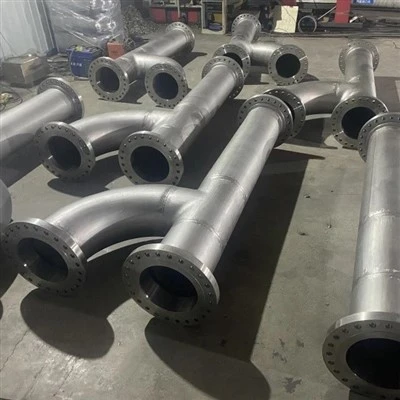
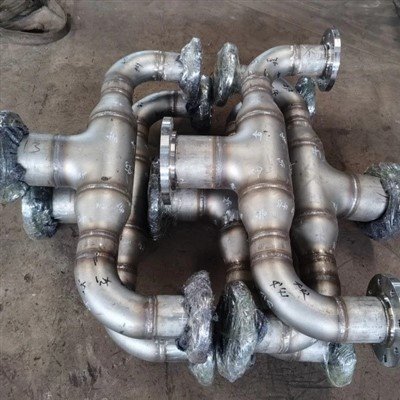
Stainless steel pipe fittings - flanges, elbows, tees, reducers, and caps - are classified under HS heading 7307, with the specific subheading determined by fitting type: 7307.21 for flanges, 7307.22 for threaded elbows, bends, and sleeves, 7307.23 for butt-welding fittings, and 7307.29 as the residual category for anything that does not fit those three. Duty rates on 7307 fittings commonly fall in the mid-single-digit percentage range before any Section 232 or country-specific surcharge is applied, though the exact figure depends on the importing country's tariff schedule.
|
Subheading |
Covers |
Notes for Exporters/Importers |
|
7307.21 |
Flanges of stainless steel |
Applies to finished slip-on, weld-neck, blind, socket-weld, lap-joint, and threaded flanges |
|
7307.22 |
Threaded elbows, bends, and sleeves of stainless steel |
Covers screwed/socket-weld fittings distinguished from butt-welding types |
|
7307.23 |
Butt-welding fittings of stainless steel |
Elbows, tees, reducers, and caps intended for butt-weld joints; the largest volume subheading for process piping |
|
7307.29 |
Other stainless steel tube or pipe fittings |
Residual ("basket") subheading; used only when a fitting does not fit 7307.21–.23 |
Sources: U.S. Harmonized Tariff Schedule, heading 7307 (USITC); UK Advance Tariff Ruling database (HMRC); WCO Harmonized System Explanatory Notes to heading 7307.
Two classification traps recur in this heading. First, cast fittings (7307.11–7307.19) are classified separately from wrought/forged stainless fittings (7307.21–7307.29) - a stainless investment-cast elbow and a forged stainless elbow are different subheadings even though both are "stainless steel elbows." Second, within 7307.21–7307.29, material grade (304 vs. 316 vs. duplex) does not change the 6-digit code; it only affects the description on the commercial invoice and, in some jurisdictions, the applicability of an antidumping order that is grade-specific.
What Is the HS Code for Stainless Steel Flanges Specifically?
A finished stainless steel flange - slip-on, weld-neck, blind, socket-weld, lap-joint, or threaded - is classified under HS subheading 7307.21, regardless of pressure class or face finish. An unfinished forged flange blank that already carries the recognizable shape and outline of the finished flange is classified in the same subheading under General Interpretive Rule (GRI) 2(a), which extends a heading to unfinished articles that have the essential character of the finished product.
This GRI 2(a) treatment is confirmed in published customs rulings: a U.S. Customs and Border Protection ruling on forged tube-fitting blanks held that forgings retaining the approximate shape of the finished fitting are classifiable as that fitting even before final machining, and a UK Advance Tariff Ruling reached the same conclusion for an open-die forged, semi-finished flange, classifying it under 7307.91 (the non-stainless flange subheading in that ruling) rather than as a generic forging. The practical rule for EETA's export documentation: if a forging is recognizably a flange or fitting shape, it belongs in 7307, not in the generic forgings heading, even if machining, drilling, or facing has not yet been performed.
What Is the HS Code for Stainless Steel Forgings and Forged Blanks?
A stainless steel forging that has been forged or stamped but does not yet resemble a specific finished article - a plain round or rectangular forged blank with no recognizable fitting shape - is classified under HS subheading 7326.19 ("other articles of iron or steel, forged or stamped, but not further worked"). Once that blank is worked into the recognizable shape of a flange or fitting, classification shifts to the corresponding 7307 subheading under GRI 2(a), as described above.
The dividing line is shape, not degree of finishing. Heading 7326.19 explicitly permits light operations - deburring, descaling, rough sandblasting, protective coating, or simple stamped markings - without moving the product out of the "forged, not further worked" category. What moves a forging into Chapter 73's fitting or flange headings is the presence of a bore, bolt-hole pattern, or shaped profile that identifies it as a specific piping component rather than raw forged stock.
Round or rectangular forged bar stock, no shaped profile: HS 7326.19.
Forged blank with the recognizable outline of a flange, elbow, or tee: HS 7307.21 / .22 / .23 (finished-article subheading) under GRI 2(a).
Forged and fully machined, bored, and faced flange: HS 7307.21.
How Does Stainless Steel Classification Differ from Carbon Steel?
Stainless steel and carbon (or other alloy) steel pipe, tube, and fittings share the same HS headings but sit in different subheadings, and that split - not the heading - is what most often determines the duty rate and whether an antidumping or countervailing duty order applies. Under heading 7307, for example, stainless fittings occupy subheadings 7307.21–7307.29, while non-stainless carbon and alloy steel fittings sit in the parallel 7307.91–7307.99 range.

This distinction is consequential because antidumping and countervailing duty orders on steel pipe and fittings are frequently scoped by exactly this stainless/non-stainless line, sometimes with the further qualifier of chromium and nickel content thresholds defined in the order itself. A shipment misdescribed as carbon steel fittings when it is in fact stainless - or vice versa - does not just risk a wrong duty rate; it risks classification as merchandise covered by an order the importer believed did not apply.
How Do 2026 U.S. Section 232 Tariffs Affect Stainless Steel HS Codes?
As of the April 2026 restructuring, U.S. Section 232 tariffs on steel and steel-derivative products are assessed on the full customs value of the entire product, not just the value of the steel content, and the applicable rate depends on which annex tier a given HTS code falls into. Products made wholly or almost wholly of steel - including commodity-grade stainless pipe, tube, and mill products classified under Chapter 72 and headings 7304–7306 - generally fall into the higher tier, while derivative articles with lower steel content by weight can qualify for a reduced tier or fall outside scope entirely.
Key mechanics for 2026 stainless steel shipments to the United States: (1) the HS/HTS code itself now determines the Section 232 tier, so accurate 6-digit classification directly controls the applicable surcharge; (2) derivative products with 15% or less steel content by weight were removed from scope in the June 2026 adjustment; (3) Section 232 duties do not stack with Section 301 or reciprocal country tariffs on the same steel content, though non-steel components of a mixed product may still be assessed separately; and (4) derivative articles made entirely from U.S.-melted-and-poured steel can qualify for a preferential rate, which is a factor increasingly relevant to buyers evaluating EETA's supply chain traceability documentation.
Because these tariff tiers are assigned by HTS code rather than by product name, two visually similar stainless flanges - one classified as a finished fitting under 7307.21 and one misclassified as generic forged stock under 7326.19 - can land in different Section 232 annexes with materially different landed costs. This is one more reason the shape-based distinction described in the flanges and forgings sections above is not a technicality; it is a direct driver of duty exposure.
What Are the Most Common Stainless Steel HS Misclassification Mistakes?
The recurring errors are dimensional, not conceptual: exporters generally know stainless fittings belong in Chapter 73, but misapply the diameter, finishing, or shape thresholds that separate one subheading from another. The list below reflects the mistakes that most often trigger a customs query or reclassification.

Treating all welded pipe as one code and ignoring the 406.4 mm outside-diameter split between heading 7306 and heading 7305.
Classifying a semi-finished forged flange blank under the generic forgings heading (7326.19) instead of the finished-article heading (7307.21) once it carries a recognizable flange shape.
Applying a cast-fitting subheading (7307.11–7307.19) to a wrought or forged fitting, or the reverse.
Assuming the HS 6-digit code alone sets the duty rate, without confirming the destination country's 8–12 digit national tariff line and any applicable trade remedy order.
Overlooking that stainless-specific antidumping or countervailing duty orders can apply to one subheading (e.g., 7307.23) and not its non-stainless counterpart (7307.93), even for visually identical fitting shapes.
Each of these mistakes is preventable with a documented classification file per SKU - product drawing, manufacturing process description, dimensional data, and the reasoning tying that data to a specific subheading - maintained before the first shipment, not reconstructed after a customs hold.
Frequently Asked Questions
Q: Is the HS code the same as the HTS code?
A: No. The HS code is the universal 6-digit WCO classification recognized worldwide. The HTS code is the U.S.-specific 10-digit extension of that HS code, adding the statistical and duty-rate detail unique to U.S. tariff schedules. Other countries append their own additional digits to the same 6-digit HS base.
Q: Does the stainless steel grade (304 vs. 316 vs. duplex) change the HS code?
A: Generally no, at the 6-digit level - grade does not change the subheading for pipe, tube, or fittings. It can, however, determine whether a grade-specific antidumping or countervailing duty order applies, and it should always appear on the commercial invoice and mill test report regardless of its effect on the HS code itself.
Q: Is a forged, unmachined flange classified as a forging or as a flange?
A: As a flange, under General Interpretive Rule 2(a), once the forging carries the recognizable shape and outline of a finished flange - even before drilling, facing, or bore machining. A plain forged blank with no shaped profile remains under the generic forgings heading, 7326.19, until it is worked into that recognizable shape.
Q: Do Section 232 tariffs apply on top of the base HS/HTS duty rate?
A: Yes, when the HTS code falls within a Section 232 annex. As of the 2026 restructuring, the Section 232 surcharge is calculated on the full customs value of the product and is layered on top of the base column-one duty rate for that HTS line, though it generally does not stack with Section 301 tariffs on the same steel content.
Q: Where can an importer verify the correct HS/HTS code before shipping?
A: Official government tariff databases - the USITC Harmonized Tariff Schedule search tool for U.S. imports, the destination country's customs authority portal, or a formal binding tariff ruling request - are the authoritative sources. This article is a reference starting point, not a substitute for that verification on a specific product and destination.