347 Stainless Steel
347 stainless steel is a niobium-stabilized chromium nickel austenitic stainless steel with corrosion resistance similar to 304/304L. This grade is usually used in the 800-1500°F temperature range. It is stabilized against chromium carbide precipitation by adding niobium. This addition leads to the formation of niobium carbides.
347 stainless steel has great resistance to intergranular corrosion after being exposed to this temperature range. This grade can resist oxidation up to 1500°F. It also has better creep and stress rupture properties than 304/304L. It also possesses good low-temperature toughness and is non-magnetic in the annealed condition.
Alloy 347 is a chromium-nickel stainless steel that has been modified by the addition of columbium and tantalum. The main benefit of this material is its strong resistance to intergranular corrosion. This type of corrosion can impact other austenitic stainless steels. It usually happens when these steels are exposed to temperatures between 800°F and 1500°F.
347 stainless steel has about the same general corrosion resistance as 302 alloy. Alloy 347 is generally used where corrosive conditions are severe, such as aircraft exhaust stacks, manifolds and ring collectors.
Mechanical & Physical Properties of Stainless Steel 347
|
Density |
0.289 lb/in3 |
|
Ultimate Tensile Strength |
92.8 ksi |
|
Yield Tensile Strength |
38.9 ksi |
|
Shear Modulus |
11,200 ksi |
|
Shear Strength |
64.5 ksi |
|
Fatigue Strength |
36 ksi |
|
Hardness Rockwell | Brinell |
B85 | 167 |
|
Elongation at Break Percentage |
45% |
|
Reduction of Area |
50% |
|
Modulus of Elasticity |
28,300 ksi |
|
Poisson's Ratio |
0.27 |
|
Machinability Percentage |
36% |
|
Melting Point |
2,550-2,600 °F |
|
Specific Heat |
1.1 x 10^-1 BTU/lb-°F |
|
Thermal Conductivity |
113 BTU-in/hr-ft^2-°F |
|
Electrical Conductivity |
2.4% IACS |
Forms of 347 Stainless Steel
We offer 347 stainless steel in many forms. All of these forms have great mechanical properties and resist corrosion. This makes them suitable for various industrial needs.
Bars: 347 stainless steel bars are mainly used for structural components, shafts, fasteners and machined parts. These bars are available in various shapes, including round, square and hexagonal.
Sheets and Plates: 347 stainless steel sheets and plates are great for uses like chemical processing equipment and heat exchangers. Their thin and flat form makes them easy to cut, bend and process into the required shape. Manufacturers make 347 stainless steel sheets thicker than regular sheets. They use these sheets in heavy-duty jobs like pressure vessels, heat shields, and boiler parts.
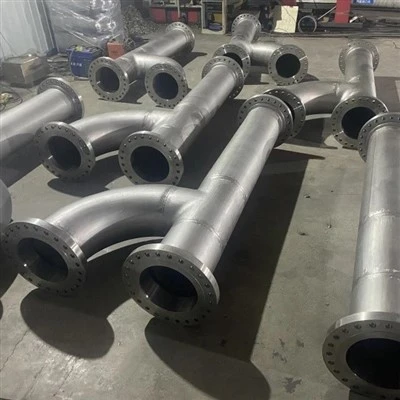
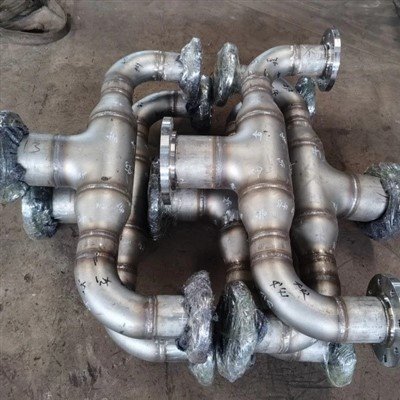
Tubes and Pipes: Tubes made of 347 stainless steel are commonly used in petrochemical, aerospace and power generation. They can transport liquids and gases under extreme conditions.
Round Bars: Round bars are commonly used in aerospace, construction, and mechanical parts. They have high strength and resist stress deformation.
Coil, Wire & Foil: These flexible and strong materials can be used in many ways. They are great for aerospace parts, wires, and even decorations.

Key Properties of 347 Stainless Steel
347 stainless steel stands out for its excellent corrosion resistance, comparable to Type 302. Adding niobium and tantalum stops chromium carbides from forming at the grain boundaries. This keeps the alloy resistant to intergranular corrosion, even at high temperatures. This makes it suitable for harsh environments where other materials might fail.
347 stainless steel excels in high-temperature applications. It provides great resistance to oxidation and scaling. This is true even in places with heating cycles from 800°F to 1650°F (427°C to 899°C).
This makes it a great choice for parts that face extreme heat. This includes parts used in power generation, aerospace, and petrochemical industries.
347 stainless steel is highly weldable and can be welded using common techniques without needing post-weld annealing. It also has good formability, making it easy to shape and fabricate into various components. This makes it a versatile material for a wide range of applications, from complex industrial machinery to consumer goods.