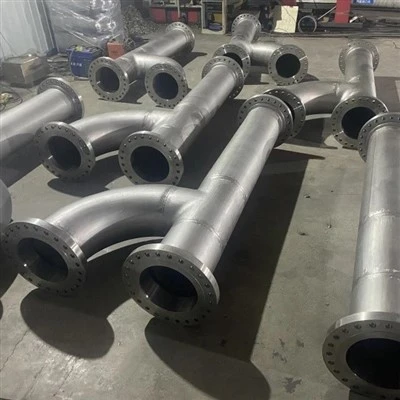
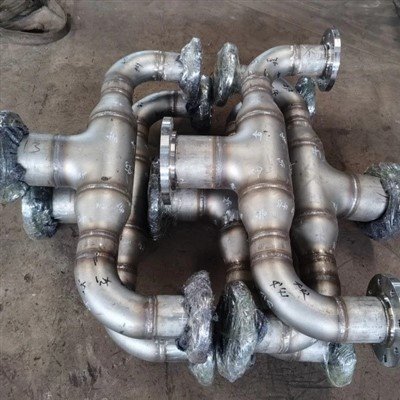
China Incoloy 800H Forging Supplier
As a dedicated supplier in the nickel alloy forged pipe fittings, we've spent years navigating the intricacies of high-performance materials like Incoloy 800H.
800H alloy, designated as UNS N08810, is a controlled-carbon variant of Incoloy 800, optimized with higher carbon content and aluminum-titanium additions for superior creep and rupture strength at temperatures above 1100°F (600°C). It excels in resisting oxidation, carburization, and sulfidation, making it a go-to choice for demanding environments.

Adhering to ASME B16.11, which governs socket-weld and threaded forged fittings, ensures these components meet stringent pressure ratings, dimensions, tolerances, and material standards.
In this blog post, I'll delve into the manufacturing process, detailed classifications of fittings, key applications, and comprehensive specification tables for Incoloy 800H forged fittings, drawing on industry standards for precision and reliability.
Incoloy 800H Forged Pipe Fittings Manufacturing Process
Manufacturing high-integrity Incoloy 800H forgings is a multi-stage process that demands strict control at every step to achieve the desired metallurgical structure and mechanical properties.

Step 1: Advanced Melting and Ingot Production: To achieve a high-purity, homogeneous ingot with low levels of impurities and gases, a double-melting process is typically employed.
This often involves Vacuum Induction Melting to create an electrode, followed by Electroslag Remelting. This process refines the grain structure and ensures precise control over the chemical composition, including the critical Ti/C ratio.
Step 2: Controlled Heating and Thermo-Mechanical Forging: The ingot is heated to a specific forging temperature under controlled conditions to prevent cracking and ensure uniform heat penetration.
The actual forging, often using processes like free forging or die forging, is conducted within a narrow thermal working window. Techniques like "two-upset and two-draw" with a total forging ratio greater than 6 are used to thoroughly break down the cast ingot structure, refine the grain, and optimize the microstructure for strength and density.
Step 3: Solution Annealing Heat Treatment: After forging, the component undergoes a solution annealing heat treatment followed by rapid quenching. This process dissolves secondary carbides back into the austenitic matrix, producing a homogeneous, single-phase structure. For Incoloy 800H, a coarser grain size is often targeted to optimize creep rupture strength.
Step 4: Machining and Quality Verification: The forgings are precision-machined to the final dimensions specified in ASME B16.11. Each fitting undergoes rigorous testing, including ultrasonic inspection for internal defects, liquid penetrant examination for surface flaws, and comprehensive mechanical and chemical analysis to confirm compliance with standards like ASTM B564.
Incoloy 800H Forged Fittings Classification and Specifications
ASME B16.11 classifies forged fittings by pressure class and end connection. Below are the primary types available in Incoloy 800H.
|
Fitting Type |
Primary Function |
Design Variants |
Critical Dimensions (Examples for 3000 & 6000 lbs) |
|
90° & 45° Elbows |
Changes direction of flow. |
90° & 45°; SW & Threaded. |
C-to-End (3000 lbs): 1/2"=15.5mm, 2"=38mm. C-to-End (6000 lbs): 1/2"=19mm, 2"=41mm. |
|
Tees (Equal & Reducing) |
Creates a 90° branch from a main run. |
Equal (all outlets same size); Reducing (branch size smaller). |
C-to-End (3000 lbs): 1/2"=15.5mm, 1-1/2"=32mm. C-to-End (6000 lbs): 1/2"=19mm, 1-1/2"=38mm. |
|
Couplings |
Connects two pipes. |
Full Coupling (connects two pipes); Half Coupling (branch connection). |
Socket Bore (3000 lbs): ~NPS + 1/16". Length per ASME B16.11 tables. |
|
Reducers |
Connects pipes of different sizes. |
Concentric (aligned centers); Eccentric (maintains BOP or TOP). |
Major dimensions: Outside diameters of both ends, overall length. |
|
Caps |
Seals the end of a pipe. |
Socket Weld & Threaded. |
Socket Depth/Thread Length: Per class and NPS. Overall height as per standard. |
|
Unions |
Allows for easy disconnection of piping. |
Three-piece design (nut, female, male ends). |
Key specs: Overall length, seat angle, nut dimensions. |
|
Crosses |
Creates a four-way connection. |
Equal (all outlets same); Reducing (one or more outlets different). |
C-to-End: Similar to tees but in four directions. Used cautiously in high-stress services. |
Incoloy 800H Forgings Specification and Equivalent Grade
Incoloy 800H forged fittings are manufactured to meet strict international standards. Their chemical and mechanical properties are outlined below:
Chemical Composition (Typical, wt%)
|
Element |
Ni |
Cr |
Fe |
C |
Mn |
Si |
Cu |
Al |
Ti |
S |
|
Content |
30.0-35.0 |
19.0-23.0 |
≥39.5 |
0.05-0.10 |
≤1.50 |
≤1.00 |
≤0.75 |
0.15-0.60 |
0.15-0.60 |
≤0.015 |
Mechanical Properties (Typical at Room Temperature)
|
Property |
Tensile Strength |
Yield Strength (0.2% Offset) |
Elongation |
Density |
Melting Point |
|
Value |
≥520 MPa |
≥205 MPa |
≥30% |
7.94 g/cm³ |
~1385 °C |
International Equivalent Grades
|
Standard |
UNS |
Werkstoff Nr. |
EN |
JIS |
AFNOR |
|
Incoloy 800H |
N08810 |
1.4958 / 1.4876 |
X5NiCrAlTi31-20 |
NCF 800H |
Z8NC33-21 |
Incoloy 800H Forged Pipe Fitting Applications
Incoloy 800H forged fittings are deployed in environments demanding resilience to extreme heat and corrosion.

In hydrocarbon processing, they handle cracking units and reformers, resisting carburization at elevated temperatures.
Heat-treat furnaces utilize them for baskets, trays, and fixtures, where the alloy's creep strength prevents deformation over prolonged cycles.
Power generation applications include superheater and reheater tubing in boilers, benefiting from oxidation resistance up to 1800°F (980°C).
In chemical and petrochemical plants, they excel in heat exchangers and condensers exposed to chloride stress-corrosion, while nuclear facilities leverage their stability in nitriding atmospheres.
Overall, these fittings ensure system integrity in sulfuric acid production, ethylene pyrolysis, and other aggressive media, reducing downtime and maintenance costs.