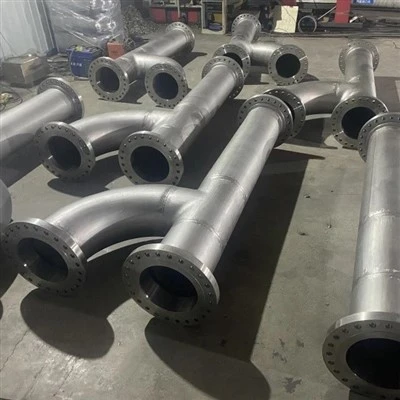
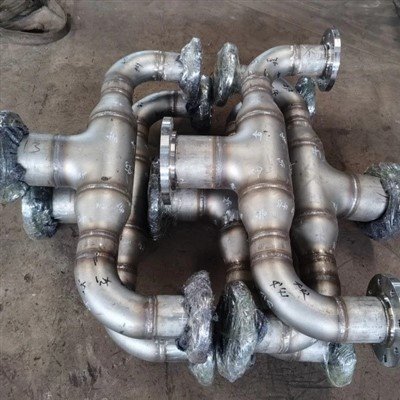
When specifying stainless steel or nickel alloy pipe for a chemical plant, oil & gas platform, or power generation facility, choosing between ASTM A312 and ASTM A358 is one of the first material-engineering decisions an engineer faces. Both are ASTM standards for austenitic stainless steel pipe. Both cover similar alloy grades and dimensions. Yet the differences between them are consequential: they govern how the pipe is made, how it is tested, what heat treatment is required, and ultimately how much it costs.

Getting this wrong means either over-specifying and paying too much, or under-specifying and accepting a pipe that fails in service.
All technical statements in this article are referenced to ASTM International standard documents. Always refer to the latest edition of the applicable standard for your specific project requirements.
What Is ASTM A312 and What Does It Cover?
[Source] ASTM A312/A312M-24a, Section 1.1: "This specification covers seamless, straight-seam welded, and heavily cold worked welded austenitic stainless steel pipe intended for high-temperature and general corrosive service."

The standard is designated "A312/A312M," where the "M" indicates the metric (SI) version. Unless the order specifies the "M" designation, inch-pound units are the default. The standard applies to pipe in NPS 1/8 through NPS 30 and covers a broad range of austenitic stainless grades, from the workhorse 304L and 316L to the more specialized grades used in high-temperature applications.
What Manufacturing Processes Does ASTM A312 Accept?
|
Process Type |
Description |
Heat Treatment |
Typical Application |
|
Seamless (SMLS) |
Pierced and extruded from a solid billet; no weld seam |
Solution annealed |
High-pressure, high-temperature critical service |
|
Straight-seam Welded (WLD) |
Hot-rolled or cold-rolled strip formed and welded along the longitudinal axis |
Solution annealed after welding |
General-purpose industrial piping |
|
Heavily Cold Worked (HCW) |
Welded pipe that is then cold worked (typically 15%+ cold reduction) to enhance strength and dimensional accuracy |
Solution annealed after cold working |
Thin-wall, high-strength applications |
What Are the Key Requirements of ASTM A312?
Chemical composition: Per ASTM A240 or referenced material specification. Carbon controlled for H-grade variants (TP304H, TP316H, TP321H, TP347H, TP309H, TP310H) to ensure high-temperature strength.
Heat treatment: All pipe - seamless, welded, and heavily cold worked - must be solution annealed at ≥1040°C (1900°F) followed by rapid cooling (water quench or equivalent). No pipe may be shipped in the un-annealed condition.
Hydrostatic test: Every length must be tested. Test pressure = 2S×t/D or 1,000 psi, whichever is lesser, for OD ≥48.26 mm. For OD >48.26 mm, test pressure per agreement. No leak may occur.
Mechanical tests: Transverse tension test and transverse or longitudinal guided bend test for welded pipe; tension test for seamless. Flattening test required for seamless ≤ NPS 3.
Optional NDE: Radiographic examination per ASME SA-435 or SA-577 may be specified as a supplementary requirement (S1 through S6 in the standard).
What Is ASTM A358 and How Is It Different from A312?
[Source] ASTM A358/A358M-24, Section 1.1: "This specification covers electric-fusion-welded austenitic chromium-nickel stainless steel pipe suitable for corrosive or high temperature service, or both, or for general applications."

The key word is "electric-fusion-welded." ASTM A358 pipe is made from flat-rolled plate or sheet that is formed into a cylinder and joined along its longitudinal axis using an electric fusion welding process - typically automatic submerged arc welding (SAW) or gas tungsten arc welding (GTAW) - with filler metal added in most passes. The weld is an integral part of the pipe's pressure boundary and must meet the same structural requirements as the base metal.
What Is the Fundamental Difference Between ASTM A312 and A358?
The single most important distinction: A312 includes seamless pipe and does NOT require filler metal in its welded product; A358 covers ONLY welded pipe and REQUIRES filler metal in all welding passes. This makes A358 inherently a "with-filler" product with a fully radiographed weld zone in Classes 1 and 3, while A312 welded pipe may use autogenous welding (no filler) and is tested primarily by hydrostatic pressure rather than radiographic examination.
|
Aspect |
ASTM A312 |
ASTM A358 |
|
Manufacturing |
Seamless + Welded (autogenous or with filler) + Heavy Cold Work |
Electric-fusion-welded ONLY; filler metal required |
|
NPS Range |
NPS 1/8 to NPS 30 |
NPS 8 to NPS 48 |
|
Weld Process |
Various (HFW, GTAW, laser, etc.) - no specific process mandated |
Electric-fusion welding (SAW/GTAW mandatory) |
|
Filler Metal |
Optional - autogenous welding permitted |
Required in all passes (Classes 1–5) |
|
NDE - Radiography |
Optional supplementary (S1) |
Standard for Class 1 & 3 (100%); Class 5 (spot); Classes 2 & 4 (none required) |
|
NDE - Hydrostatic |
Mandatory for all |
Mandatory for all |
|
Heat Treatment |
Solution annealed (mandatory for all pipe) |
Solution annealed required for Class 1; varies by class |
|
Grade Coverage |
Broad - standard + H-grades + many grades |
Focused - austenitic Cr-Ni grades including H-grades |
|
Economy |
Higher (especially seamless for small sizes) |
Lower for large sizes - welded is more cost-effective |
What Are the Five Classes of ASTM A358, and Which Should You Choose?
|
Class |
Welding Method |
Filler Metal |
Radiographic Examination |
Heat Treatment |
|
Class 1 |
Double-welded (both sides, full weld) |
Required - all passes |
100% radiography of entire weld |
Solution annealed after welding |
|
Class 2 |
Double-welded (both sides, full weld) |
Required - all passes |
No radiography required |
Per purchase order (often not required for low-temp service) |
|
Class 3 |
Single-welded - one side, full weld |
Required - root pass and filler |
100% radiography of entire weld |
Solution annealed after welding |
|
Class 4 |
Single-welded - one side, full weld; ID weld without filler metal |
Required - face side; ID weld may be autogenous |
100% radiography of entire weld |
Solution annealed after welding |
|
Class 5 |
Double-welded (both sides) |
Required - all passes |
Spot radiography (sampling basis) |
Solution annealed after welding |
[Source] ASTM A358/A358M-19 and -24, Table 1 - Classification of pipe by welding class and examination requirements.
When Should You Specify Each Class?
|
Service / Application |
Recommended Class |
Rationale |
|
High-pressure steam, boiler, nuclear |
Class 1 |
100% radiography + solution annealing = maximum integrity |
|
Chemical processing - general corrosive |
Class 2 |
Double-weld quality, no radiographic cost; economical |
|
High-temperature reformer, furnace |
Class 1 or 3 |
Solution annealing essential for weld zone stability at high temp |
|
Offshore platform - seawater |
Class 1 |
100% radiography + SSCC testing for H2S service |
|
Sour gas (H2S) pipeline |
Class 1 |
NACE MR0175 / ISO 15156-3 requires full weld examination |
|
Power plant - condensate, feedwater |
Class 1 or 3 |
Solution annealing restores corrosion resistance in weld zone |
|
Low-pressure drainage, HVAC |
Class 2 |
Full radiographic examination is unnecessary overhead |
|
Large diameter - desalination (CJP groove) |
Class 1 or 5 |
Class 5 spot radiography is practical for very large OD pipe |
Does ASTM A312 or A358 Require Post-Weld Heat Treatment?

Solution annealing after welding is the critical step that makes A312 welded pipe safe for corrosive service. Without it, the weld HAZ can become sensitized - chromium carbides precipitate at grain boundaries - leaving a narrow band adjacent to the weld that is depleted in chromium and vulnerable to rapid corrosion attack. This is why A312 welded pipe must always be supplied in the solution-annealed condition.
What Heat Treatment Is Required Under ASTM A358?
For ASTM A358, heat treatment requirements depend on the Class. Class 1 pipe (the most-examined class) MUST be solution annealed. For Classes 2, 3, 4, and 5, the heat treatment requirement is defined by the purchase order - meaning it may or may not be required depending on what the buyer specifies. This flexibility is why A358 Class 2 is the most economical choice for low-temperature applications where the additional cost of solution annealing is not justified.
In practice, most reputable manufacturers solution anneal all A358 pipe regardless of class, because the alternative - leaving the weld HAZ un-annealed - creates a corrosion risk that is difficult for the end-user to detect visually. For any service involving chlorides, acids, or temperatures above ~150°C, always specify solution annealing in the purchase order for A358.
What Non-Destructive Examination Is Required by Each Standard?
The most important NDE distinction: A312 requires hydrostatic testing of every length but treats radiographic examination as an optional supplementary requirement. A358 Class 1 mandates 100% radiographic examination of the entire weld as a standard requirement - not optional - making the weld zone of A358 Class 1 pipe substantially better characterized than a standard A312 welded pipe. For Class 2 and 4, no radiographic examination is required at all.
|
NDE Method |
ASTM A312 |
ASTM A358 Class 1 |
ASTM A358 Class 2 |
ASTM A358 Class 3 |
|
Hydrostatic Test |
Mandatory - every length |
Mandatory - every length |
Mandatory - every length |
Mandatory - every length |
|
Radiographic Exam (RT) |
Optional (Supplementary S1) |
100% mandatory |
Not required |
100% mandatory |
|
Ultrasonic Exam (UT) |
Optional (Supplementary S4) |
Not standard |
Not standard |
Not standard |
|
Eddy Current (ET) |
Optional (Supplementary S5) |
Not standard |
Not standard |
Not standard |
|
Tension Test (Transverse) |
Mandatory - welded pipe |
Mandatory |
Mandatory |
Mandatory |
|
Bend Test (Guided) |
Mandatory - welded pipe |
Mandatory |
Mandatory |
Mandatory |
|
Flattening Test |
Mandatory - SMLS ≤ NPS 3 |
Not specified |
Not specified |
Not specified |
[Source] ASTM A312/A312M-24a, Section 9 (Hydrostatic Test), Section 10 (Mechanical Tests); ASTM A358/A358M-24, Table 1 (Radiographic Requirements by Class); Section 9 (Tests).
When Is 100% Radiography Worth the Extra Cost?
Radiographic examination (RT) detects volumetric defects inside the weld - porosity, slag inclusions, lack of fusion, and cracks - that are invisible from the surface. It is required in A358 Class 1 and 3 because the electric fusion weld (typically SAW) involves multiple passes and significant heat input, creating conditions where such defects can form.
The cost premium for Class 1 vs. Class 2 A358 pipe is typically 10–25%, depending on OD and wall thickness. For most non-critical water, air, and low-pressure chemical service, this premium is not justified. For the following applications, specifying Class 1 is strongly recommended:
- Sour gas and H2S-containing service (NACE MR0175 / ISO 15156 applications)
- Boiler and high-pressure steam piping above ASME B31.3 Category D
- Offshore platform risers and process piping in seawater environments
- Nuclear and subatomic research facilities (ASME BPVC NQA-1 quality)
- Piping in radioactive or strongly oxidizing acid service where weld zone failure would be catastrophic
Which Grades Are Available Under Each Standard?
Both ASTM A312 and A358 cover the same austenitic stainless steel grades - including 304L, 316L, 321, 347, 904L, and the H-grade variants (TP304H, TP316H, TP321H, TP347H) for high-temperature service. The key difference is that A358 additionally covers several chromium-nickel alloy grades not always found in A312, including nickel alloy compositions for severely corrosive environments. Always check the applicable ASTM material specification (ASTM A240 for plate/sheet) and the purchase order to confirm the exact grade is covered by the pipe standard.

|
Grade / UNS |
Alloy Family |
Available Under A312 |
Available Under A358 |
Typical Service |
|
304L / S30403 |
Standard 18Cr-8Ni |
Yes |
Yes |
General food, pharma, water |
|
316L / S31603 |
18Cr-10Ni-2Mo |
Yes |
Yes |
Chemical, marine, pharmaceutical |
|
321 / S32100 |
Stabilized 18Cr-10Ni-Ti |
Yes |
Yes |
High-temp (up to ~870°C) |
|
347 / S34700 |
Stabilized 18Cr-10Ni-Cb |
Yes |
Yes |
High-temp; cyclic heating/cooling |
|
304H / S30409 |
High-carbon 18Cr-8Ni |
Yes |
Yes |
Boiler, high-temp steam (>°500°C) |
|
316H / S31609 |
High-carbon 18Cr-10Ni-2Mo |
Yes |
Yes |
High-temp pressure applications |
|
309S / S30908 |
22Cr-12Ni |
Yes |
Yes |
High-temp oxidation; furnace parts |
|
310S / S31008 |
25Cr-20Ni |
Yes |
Yes |
High-temp; burner nozzles; heat treatment |
|
904L / N08904 |
Super-austenitic 23Cr-25Ni-4Mo |
Yes |
Yes |
Phosphoric acid; chloride service |
|
254 SMO / S31254 |
6Mo super-austenitic |
Yes |
Yes |
Seawater; high-Cl⁻ environments |
|
Inconel 625 / N06625 |
Ni-Cr-Mo (A240 Plate) |
Yes (via referenced spec) |
Yes (via referenced spec) |
Sour gas; seawater; strong acids |
|
Hastelloy C-276 / N10276 |
Ni-Mo-Cr |
Yes (via referenced spec) |
Yes (via referenced spec) |
Aggressive reducing acids |
[Source] ASTM A358/A358M-24, Table 1 (Chemical composition requirements for each grade); ASTM A312/A312M-24a, Table 1. Grades are cross-referenced to ASTM A240/A240M.
What Size Ranges Does Each Standard Cover?
A358 starts where A312 ends: A358 covers NPS 8 to NPS 48 (large diameter), while A312 covers NPS 1/8 to NPS 30 (small to medium diameter). For pipe larger than NPS 30, A358 is the only ASTM option among these two standards. For pipe under NPS 8, A312 is the appropriate specification. For NPS 8–30, both overlap and the choice depends on pressure class, NDE level, and budget.
|
NPS Size Range |
Available Under ASTM A312 |
Available Under ASTM A358 |
Preferred Standard |
|
NPS 1/8 to NPS 1½ |
Yes (seamless + welded) |
No |
ASTM A312 |
|
NPS 2 to NPS 6 |
Yes (seamless + welded) |
No (A358 starts at NPS 8) |
ASTM A312 |
|
NPS 8 to NPS 24 |
Yes (seamless + welded) |
Yes (primary range) |
Both - see note below |
|
NPS 26 to NPS 30 |
Yes (seamless + welded) |
Yes |
Both - depends on class and NDE |
|
NPS 32 to NPS 48 |
No |
Yes (primary range) |
ASTM A358 |
For NPS 8–30, A312 is typically chosen for small quantities or when seamless is required. A358 becomes the preferred choice for large projects where the economy of welded manufacturing and the 100% radiographic examination of Class 1 provide the best value. Large diameter desalination plant piping, refinery process lines, and offshore platform risers are typical A358 applications in the NPS 8–30 range.
When Should You Specify ASTM A312 vs. ASTM A358 in a Real Project?
The A312 vs. A358 decision follows a simple logic: if you need seamless pipe, choose A312. If you need large-diameter pipe (NPS > 30), choose A358. If you need welded pipe in NPS 8–30 and want the highest weld zone integrity with 100% radiography, choose A358 Class 1. If you need welded pipe in NPS 8–30 for non-critical service at the lowest cost, choose A358 Class 2. In all cases, always specify solution annealing when the service involves corrosive media, high temperature, or chlorides.

|
Scenario |
Recommended Standard |
Rationale |
|
Small bore (NPS < 8), seamless required |
ASTM A312 Seamless |
A358 not available below NPS 8 |
|
Medium pressure, general chemical, standard service |
ASTM A312 Welded (SMLS or WLD) |
Versatile; solution annealed; widely stocked |
|
Large diameter (NPS 8–30), high-pressure, sour gas |
ASTM A358 Class 1 |
100% RT + solution annealing; highest integrity |
|
Large diameter (NPS 8–30), general service, budget sensitive |
ASTM A358 Class 2 |
Double-weld quality; no RT overhead |
|
Very large diameter (NPS 32–48) |
ASTM A358 (Class 1 or 5) |
A312 not available above NPS 30 |
|
High-temperature boiler/steam, NPS 8–30 |
ASTM A358 Class 1 or 3 |
Solution annealing critical for HAZ stability |
|
H2S / sour gas service (NACE / ISO 15156) |
ASTM A358 Class 1 |
100% RT mandatory for NACE compliance |
|
Desalination plant, large OD, seawater |
ASTM A358 Class 1 or 5 |
Economical for large project; 100% RT preferred |
|
Low-pressure drainage / HVAC |
ASTM A312 Welded or A358 Class 2 |
Over-specifying RT is unnecessary overhead |
|
Nuclear quality (NQA-1) |
ASTM A358 Class 1 + Supplementary S6 |
Class 1 RT + enhanced documentation |
How Does ASTM A778 Compare to Both Standards?
ASTM A778 covers welded but unannealed austenitic stainless steel tubular products for low and moderate temperature service where heat treatment is not required for corrosion resistance - making it a lower-cost alternative to both A312 and A358 for non-critical applications. It is NOT acceptable for corrosive, high-temperature, or sour-gas service where solution annealing is needed to restore the passive film in the weld zone. Always confirm the service temperature and corrosive environment before specifying A778.
|
Standard |
Heat Treatment |
Radiography |
NPS Range |
Best For |
|
ASTM A312 |
Solution annealed (mandatory) |
Optional (Supplementary S1) |
NPS 1/8 – 30 |
Seamless + general welded; versatile |
|
ASTM A358 Class 1 |
Solution annealed (mandatory) |
100% RT (mandatory) |
NPS 8 – 48 |
High-integrity welded; large OD |
|
ASTM A358 Class 2 |
Per PO (often not required) |
None required |
NPS 8 – 48 |
Economy; non-critical service |
|
ASTM A778 |
Unannealed (as-welded) |
Transverse tension + guided bend |
NPS 1 – 48 |
Low-temp; non-corrosive; non-critical |
[Source] ASTM A778/A778M-22: "Covers straight seam and spiral butt seam welded unannealed austenitic stainless steel tubular products intended for low and moderate temperatures and corrosive service where treatment is not necessary for corrosion resistance."
How Do You Verify Compliance and Read a Mill Test Report?
|
Required Document / Check |
ASTM A312 |
ASTM A358 Class 1 |
ASTM A358 Class 2 |
ASTM A778 |
|
EN 10204 3.1 MTC |
Mandatory |
Mandatory |
Mandatory |
Mandatory |
|
Chemical composition (heat analysis) |
Mandatory |
Mandatory |
Mandatory |
Mandatory |
|
Tensile / yield / elongation |
Mandatory |
Mandatory |
Mandatory |
Mandatory |
|
Heat treatment condition on MTC |
Mandatory (solution annealed) |
Mandatory (solution annealed) |
Per PO |
As-welded (not required) |
|
Hydrostatic test pressure |
Mandatory |
Mandatory |
Mandatory |
Mandatory |
|
Radiographic examination report |
Optional (if supplementary S1 ordered) |
Mandatory |
Not required |
Not applicable |
|
Transverse tension test report |
Mandatory (welded) |
Mandatory |
Mandatory |
Mandatory |
|
Guided bend test report |
Mandatory (welded) |
Mandatory |
Mandatory |
Mandatory |
|
PMI at receipt |
Recommended |
Recommended |
Recommended |
Recommended |
[Source] EN 10204:2004 (Metallic products - Types of inspection documents); ASTM A312/A312M-24a Section 9 and Section 10; ASTM A358/A358M-24 Table 1 and Section 9.
Frequently Asked Questions