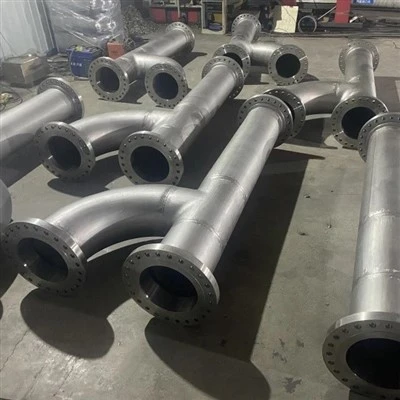
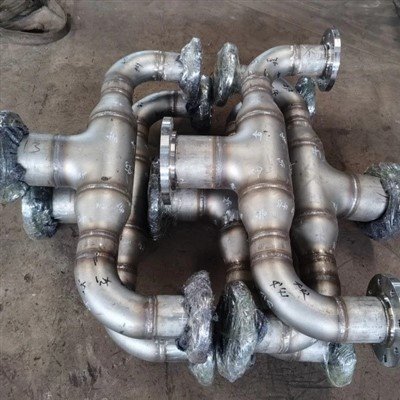
ASTM A182 F55 (UNS S32760), commonly referred to as a super duplex stainless steel. This alloy is specified under the ASTM A182 standard for forged or rolled alloy and stainless steel pipe flanges, fittings, and valves.
ASTM A182 F55 Chemical Composition
|
Element |
Composition Range (%) |
Function |
|
Chromium (Cr) |
24.0 - 26.0 |
Primary Corrosion Defender: Forms a robust, self-healing passive oxide layer (Cr₂O₃). This high Cr content is essential for resistance to oxidizing acids, pitting, and crevice corrosion. |
|
Nickel (Ni) |
6.0 - 8.0 |
Austenite Stabilizer & Toughness: Promotes the formation and stability of the austenite phase, balancing the microstructure and improving ductility and toughness. |
|
Molybdenum (Mo) |
3.0 - 4.0 |
Pitting & Crevice Corrosion Resistance: Synergizes with Cr and N to dramatically increase resistance to localized corrosion in chloride-containing environments. It strengthens the passive film in reducing conditions. |
|
Nitrogen (N) |
0.20 - 0.30 |
Critical Strengthener & Stabilizer: A powerful austenite former and solid-solution strengthener. It significantly boosts pitting resistance (measured by the Pitting Resistance Equivalent Number - PREN) and increases yield strength. |
|
Manganese (Mn) |
1.0 max |
Austenite Former & Process Control: Assists in austenite formation and acts as a deoxidizer during steelmaking. Levels are kept low to avoid formation of undesirable intermetallic phases. |
|
Copper (Cu) |
0.5 - 1.0 |
Enhances Corrosion Resistance: Improves resistance to sulfuric acid and other reducing acids. Can also provide mild antibacterial properties. |
|
Tungsten (W) |
0.5 - 1.0 |
Synergistic Booster: Works similarly to Mo, further enhancing stability against pitting and crevice corrosion, particularly in high-temperature applications. |
|
Carbon (C) |
0.030 max |
Intergranular Corrosion Control: Kept at a very low level to prevent the formation of chromium carbides during welding or heat treatment, which could deplete Cr in grain boundaries and lead to sensitization. |
|
Silicon (Si) |
0.80 max |
Deoxidizer: Used in the melting process. Higher levels can be detrimental to toughness and corrosion resistance. |
|
Phosphorus (P) |
0.035 max |
Impurity Control: Minimized to prevent embrittlement and negative effects on corrosion resistance. |
|
Sulfur (S) |
0.020 max |
Impurity Control: Minimized to improve ductility, toughness, and corrosion resistance, especially pitting resistance. |
|
Iron (Fe) |
Balance |
The base element of the alloy. |
F55 Material Characteristics

Extreme Corrosion Resistance: Superior to standard duplex and 316/317 austenitic grades, especially in chloride environments. Resistant to stress corrosion cracking (SCC), pitting, and crevice corrosion.
High Mechanical Strength: Typical room temperature yield strength is over 550 MPa (80 ksi), roughly double that of standard austenitic grades like 304 or 316. This allows for thinner walls and weight savings in pressure equipment.
Good Weldability: Requires careful procedures with matching super duplex filler metals (e.g., ER2594) and proper heat input control to maintain the balanced microstructure and properties in the weld zone.
ASTM A182 F55 PREN Value
The true power of F55 lies in the synergy of its elements, quantified by the Pitting Resistance Equivalent Number (PREN). The common formula for super duplex steels is
PREN = %Cr + 3.3x(%Mo + 0.5x%W) + 16x%N

For ASTM A182 F55:
Minimum PREN: 24 + 3.3*(3 + 0.5*0.5) + 16*0.2 = ~40
Typical/maximum PREN can exceed 42
A PREN > 40 definitively classifies it as a "super" duplex grade, indicating exceptional resistance to pitting and crevice corrosion in seawater and chloride media.
Furthermore, the precise balance of ferrite-stabilizers (Cr, Mo, Si) and austenite-stabilizers (Ni, N, Mn, Cu) is critical. The aim is to achieve a phase balance as close to 50/50 as possible after the final solution annealing and quenching heat treatment. An microstructure can compromise mechanical properties and corrosion resistance.
Disclaimer: The information provided is based on the ASTM A182 standard and is for educational purposes. For final material selection and specification, always consult the latest official ASTM standard specifications and engage with qualified materials engineers.