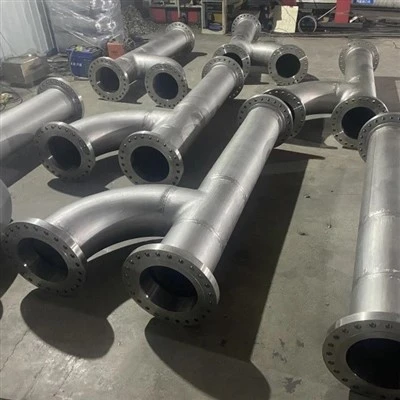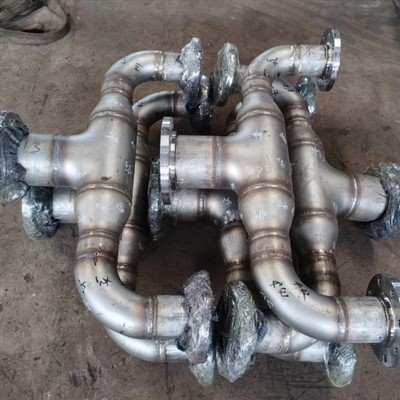
Alloy 31 (UNS N08031) is a higher-performance 6Mo super-austenitic stainless that beats 904L (UNS N08904) in strong oxidizing acids (especially nitric acid and aggressive mixed acids) and in chloride pitting/crevice service, because it carries more chromium (26-28 vs 19-23 percent), more molybdenum (6-7 vs 4-5 percent), and added nitrogen - giving it a PREN of about 48-52 versus 904L's 33-36.

Bottom line for budgeting: Alloy 31 costs roughly 1.6 to 2.5 times more than 904L per kilogram, but it is the correct, often life-saving upgrade wherever strong oxidizing acid, hot concentrated phosphoric acid, or severe chloride crevice corrosion rules out 904L. For mild sulfuric acid and moderate chloride duty, 904L remains the cost-effective choice.
What are Alloy 31 and 904L, and how do they differ?
Both are nickel-rich super-austenitic stainless steels, but Alloy 31 is a newer 6Mo+N grade with roughly 31 percent Ni, 27 percent Cr, 6.5 percent Mo, 1.2 percent Cu, and 0.2 percent N, while 904L is an older 4-5Mo grade with about 25 percent Ni, 21 percent Cr, and 1.5 percent Cu - the extra Cr, Mo, and N are what give Alloy 31 its edge.
|
Element (wt%) |
Alloy 31 (UNS N08031) |
904L (UNS N08904) |
|
Nickel |
30 - 32 |
23 - 28 |
|
Chromium |
26 - 28 |
19 - 23 |
|
Molybdenum |
6.0 - 7.0 |
4.0 - 5.0 |
|
Copper |
1.0 - 1.4 |
1.0 - 2.0 |
|
Nitrogen |
0.15 - 0.22 |
< 0.10 (low) |
|
Iron |
Balance |
Balance |
|
Type |
6Mo super-austenitic |
Super-austenitic (4-5Mo) |
Alloy 31: The 6.5 percent Mo plus 0.2 percent N plus high Cr is the '6Mo+N' corrosion package.
904L: Lower Mo and almost no nitrogen limit its resistance to oxidizing and chloride attack.
Why does Alloy 31 resist strong oxidizing acids better than 904L?
Alloy 31 resists strong oxidizing acids (notably nitric acid) better because its very high chromium (26-28 percent) plus nitrogen stabilize a tough passive film under oxidizing conditions, while 904L's lower chromium and lack of nitrogen give a weaker, less stable film in the same acid.
Oxidizing acids (such as nitric acid) attack by breaking down the passive oxide film; the alloy must continuously re-form it. Chromium and nitrogen are the elements that strengthen that film:
Chromium: High Cr gives a dense, adherent Cr2O3-based film that resists oxidizing attack.
Nitrogen: N (0.2 percent) further stabilizes the austenite and sharpens pitting resistance.
Molybdenum: Mo adds resistance to localized (pitting/crevice) attack even in oxidizing mixtures.
904L limit: 904L's ~21 percent Cr and near-zero N simply cannot match that film stability in strong oxidizers.
How big is the Pitting Resistance Equivalent (PREN) gap?
Alloy 31's PREN is about 48-52 versus 904L's 33-36 - a roughly 40-50 percent higher pitting-resistance index - which is why Alloy 31 tolerates far more severe chloride and oxidizing environments before pitting or crevice corrosion starts.
|
Alloy |
Typical PREN (Cr+3.3Mo+16N) |
Relative chloride/pitting resistance |
|
904L |
33 - 36 |
Moderate (sea water borderline) |
|
254SMO (reference) |
42 - 48 |
High |
|
Alloy 31 |
48 - 52 |
Very high (best of the austenitics) |
PREN = %Cr + 3.3 x %Mo + 16 x %N. Higher is better. The table shows Alloy 31 sits near the top of what wrought austenitic stainless can achieve, well above 904L and even above 254SMO in many measures.
How do they compare in nitric acid (a strong oxidizing acid)?
In nitric acid, Alloy 31 strongly outperforms 904L - 904L is not a nitric-acid alloy (it can be attacked even at moderate concentration/temperature), while Alloy 31 resists concentrated nitric acid far better because of its high chromium and nitrogen content.
|
HNO3 condition |
904L behavior (typical) |
Alloy 31 behavior (typical) |
|
Up to ~20 percent, ambient |
Fair |
Good |
|
40-65 percent, ambient-boiling |
Poor (attacked) |
Good to very good |
|
> 65 percent, elevated temp |
Not recommended |
Acceptable (verify per chart) |
|
Mixed oxidizing (HNO3 + HCl) |
Poor |
Much better |
The key point: where the process stream is oxidizing (nitric acid, nitration, mixed acid with oxidizer), 904L should be avoided and Alloy 31 (or a higher nickel alloy) specified. Always confirm with the alloy isocorrosion chart for the exact concentration and temperature.
How do they compare in phosphoric acid?
Both resist phosphoric acid well, but Alloy 31 wins at higher temperature and in impure ('wet process') phosphoric acid containing fluorides and chlorides, where 904L is marginal; for pure, dilute-to-moderate phosphoric acid at moderate temperature, 904L is usually adequate and cheaper.
Hot / impure H3PO4: Alloy 31 stays corrosion-resistant in hot, impure phosphoric acid (e.g., 50-85 percent at 100-150 degC) where 904L may exceed 0.5 mm/yr.
Moderate H3PO4: 904L handles pure phosphoric acid up to about 30-40 percent at moderate temperature economically.
Practical note: in phosphate-fertilizer plants, Alloy 31 or similar 6Mo+N grades are increasingly used for the most aggressive evaporator and acid-handling sections, while 904L covers the milder lines.
How do they compare in sulfuric acid?
For sulfuric acid, the two overlap in the dilute-to-moderate range, but 904L (with its 1.5 percent Cu) is classically the better-known sulfuric-acid alloy at lower concentrations, while Alloy 31 extends service to higher temperature and stronger oxidizing mixed acids; neither matches Alloy 20 or C276 in aggressive sulfuric service.
|
H2SO4 condition |
904L |
Alloy 31 |
|
Dilute (< 40 percent), ambient-50 degC |
Good (Cu helps) |
Good |
|
40-70 percent, elevated temp |
Marginal |
Better (oxidizing tolerant) |
|
Strong + oxidizing impurity |
Poor |
Better |
|
Versus Alloy 20 / C276 |
Beaten |
Still below C276 |
Rule: for straight sulfuric acid, 904L is the value choice in the dilute window; for sulfuric acid with oxidizing contaminants or higher temperature, move to Alloy 31, and for the most aggressive sulfuric service use Alloy 20 or Hastelloy C276.
How do they compare for chloride pitting and crevice corrosion?
Alloy 31 is dramatically more resistant to chloride pitting and crevice corrosion than 904L - its PREN of ~50 versus ~34 means it tolerates much higher chloride concentration, temperature, and crevice severity, making it the safer choice for seawater and brackish service.

904L: 904L has only borderline seawater resistance and is not generally recommended for stagnant or warm seawater.
Alloy 31: Alloy 31 handles seawater, desalination, and brackish water far better and resists crevice attack at higher temperatures.
Sweet spot: For critical seawater duty, Alloy 31 approaches the resistance of 6Mo grades like 254SMO and some nickel alloys but at lower cost than C276.
How do strength, temperature, and weldability compare?
Base filler - but Alloy 31's higher alloying makes post-weld cleaning and controlled heat input more important to preserve corrosion resistance.
|
Property |
Alloy 31 (N08031) |
904L (N08904) |
|
Yield strength (MPa) |
240 - 380 |
220 - 320 |
|
Tensile (MPa) |
580 - 760 |
490 - 620 |
|
Max useful temp (approx.) |
~450 degC |
~400 degC |
|
Weld filler |
ERNiCrMo-7 / matching, or 625-type |
ERNiCrMo-3 or matching 904L |
|
Sensitization risk |
Low (high Ni, stabilized) |
Low |
Both are fully austenitic, so they retain toughness at low temperature and do not need preheat. Interpass should be controlled and weld heat-tint cleaned, especially for Alloy 31 in oxidizing service.
How does price affect the choice?
Alloy 31 costs roughly 1.6 to 2.5 times more than 904L per kilogram, so it should be specified only where its extra chromium, molybdenum, and nitrogen are actually needed; 904L remains the value choice for milder acid and moderate chloride duty.
|
Material |
Relative price (2026, approx.) |
When to choose |
|
904L |
1.0x (baseline, ~USD 8-14/kg) |
Dilute H2SO4, mild chloride, moderate service |
|
Alloy 31 |
1.6 - 2.5x (~USD 14-30/kg) |
Strong oxidizing acid, hot phosphoric, severe chloride |
Decision rule: if 904L meets the corrosion envelope with margin, use it and save; if the stream is oxidizing, hot/impure phosphoric, or severe chloride, the Alloy 31 premium is cheap insurance against failure.
Which standards and product forms apply?
Alloy 31 is covered by ASTM B625 (plate), B649 (bar), B619/B622 (pipe/tube), and B366 (fittings) with ASME SB equivalents; 904L uses the same ASTM families (B625/B649/B677/B673/B366) - pick the form that matches the design and confirm N08031 / N08904 UNS on the MTC.
|
Standard |
Scope |
|
ASTM B625 / SB-625 |
Plate, sheet, strip (both alloys) |
|
ASTM B649 / SB-649 |
Bar and forging stock (both alloys) |
|
ASTM B619 / B622 / SB-622 |
Welded / seamless pipe-tube (Alloy 31) |
|
ASTM B677 / B673 / SB-673 |
Seamless / welded pipe (904L) |
|
ASTM B366 / SB-366 |
Wrought fittings (both alloys) |
|
ASTM B564 / SB-564 |
Forgings (both alloys) |
What are typical applications?
Alloy 31 targets the most aggressive chemical duties - strong oxidizing acid plants, hot impure phosphoric acid, and severe chloride service - while 904L covers the milder acid and moderate marine/pulp applications where its lower cost is justified.
|
Application |
Best alloy |
Reason |
|
Nitric / mixed oxidizing acid plants |
Alloy 31 |
High Cr + N resist oxidizers |
|
Hot impure phosphoric acid |
Alloy 31 |
Fluoride/chloride + temp tolerance |
|
Seawater / desalination (severe) |
Alloy 31 |
PREN ~50, crevice resistant |
|
Dilute sulfuric acid |
904L |
Cu addition, lower cost |
|
Pulp / bleaching, moderate chloride |
904L |
Adequate, cheaper |
|
FGD / scrubber (mild) |
904L or Alloy 31 |
Match severity |
Frequently asked questions
Alloy 31 is far better. Its 26-28 percent chromium and 0.2 percent nitrogen stabilize a tough passive film in oxidizing acids such as nitric acid, whereas 904L's lower chromium and near-zero nitrogen make it vulnerable; 904L is not a nitric-acid alloy.
How much more corrosion-resistant is Alloy 31 than 904L?
Measured by PREN, Alloy 31 is about 48-52 versus 904L's 33-36 - roughly 40-50 percent higher pitting resistance - so it tolerates far more severe chloride and oxidizing conditions.
Is Alloy 31 better than 904L in seawater?
Yes. 904L has only borderline seawater resistance and is not recommended for stagnant or warm seawater, while Alloy 31 (PREN ~50) resists seawater and crevice corrosion much better.
How much more expensive is Alloy 31 than 904L?
About 1.6 to 2.5 times the material cost per kilogram; it is justified only where its extra chromium, molybdenum, and nitrogen are needed.
Does Alloy 31 weld as easily as 904L?
Both weld well with matching or nickel-base filler (ERNiCrMo-7 / ERNiCrMo-3 family); Alloy 31 needs careful heat-input control and weld heat-tint cleaning to preserve its corrosion resistance.
When should I still use 904L instead of Alloy 31?
For dilute sulfuric acid, pure moderate-temperature phosphoric acid, and moderate chloride duty where 904L's lower cost is justified and its corrosion envelope is not exceeded.