|
For welding Alloy 20 to itself, the correct filler is ER320LR (GTAW/GMAW) or E320LR (SMAW) - a purpose-built, low-residual, capped-niobium version of the standard 320 filler developed specifically to stop the hot cracking that plain E320 caused.
ERNiCrMo-3 (Inconel 625-type filler, AWS A5.14) is not the default Alloy 20 filler - per Rolled Alloys' own fabrication guidance it is the recommended choice specifically for joining Alloy 20 to 316L, 317L, or Alloy 625 base metal, not for same-alloy Alloy 20 welds.
Interpass temperature should be kept at or below 100°C (212°F) across GTAW, GMAW, SMAW, and SAW processes, with 150°C (302°F) documented as acceptable only for genuinely unrestrained joints - looser figures circulating informally are practitioner reports, not the producer-published limit.
Alloy 20 is fully austenitic with no ferrite available to counteract hot cracking, so heat input control, low-residual filler chemistry, and interpass temperature discipline together do the job that ferrite does in lower-nickel stainless grades. |

Alloy 20 (20Cb-3, UNS N08020) was developed for sulfuric acid service, and its niobium stabilization and copper addition that make it excellent in that environment also make it genuinely more particular to weld than an ordinary austenitic stainless steel. Getting the filler metal and the interpass temperature wrong is the most common way a fabricator turns a straightforward pipe spool or vessel into a cracked, rejected weldment.
This article works through both decisions using Rolled Alloys' own fabrication bulletin for 20Cb-3 stainless as the primary technical source, alongside a documented refinery case study for the specific dissimilar-metal scenario where ERNiCrMo-3 filler actually belongs.
Why Does Alloy 20 Need Special Filler Metal Selection Instead of a Simple Composition Match?
Alloy 20 needs special filler selection because it is fully austenitic with no ferrite available to resist solidification cracking, and its own niobium stabilization - the same feature that protects it from sensitization in service - becomes a liability in the weld pool if the filler carrying it isn't refined to a tight, low-residual chemistry. Get either the residual-element control or the niobium level wrong, and the weld metal hot-cracks on cooling.
The ferrite escape hatch that Alloy 20 doesn't have
In common austenitic stainless steels under about 15% nickel, weld metal composition is adjusted - usually with slightly higher chromium and lower nickel - to form a small, deliberate amount of ferrite on solidification. That ferrite, measured magnetically and reported as a Ferrite Number (FN), physically disrupts the segregation of phosphorus, sulfur, silicon, and boron that would otherwise concentrate at grain boundaries and cause the weld to tear as it cools. Above roughly 20% nickel, Rolled Alloys' own fabrication bulletin states plainly that it is simply not metallurgically possible to form any measurable ferrite - and Alloy 20 runs 32-38% nickel. With the ferrite option off the table, the only way to prevent hot cracking is to control the harmful elements directly: use high-purity raw materials in the filler and keep phosphorus, sulfur, and silicon to a minimum.
Why niobium is a double-edged addition in the weld
Niobium in the base metal reacts preferentially with carbon to prevent chromium-carbide precipitation at grain boundaries during welding - the same stabilization mechanism used in 321 (titanium-stabilized) and 347 (niobium-stabilized) stainless, protecting Alloy 20 from sensitization and the intergranular corrosion that follows it. But niobium is also exactly the kind of low-melting-point-forming, segregation-prone element that promotes solidification cracking in a fully austenitic weld pool. Rolled Alloys' bulletin draws the contrast directly: the 2-3% niobium used in Inconel Filler Metal 82 (AWS ERNiCr-3) is beneficial in that alloy system, but the lower niobium level carried in an ordinary 20Cb-3-matching filler can be detrimental unless the rest of the chemistry is controlled. That is precisely the problem the ER320LR filler metal was engineered to solve.
Which Filler Metal Should You Use for Welding Alloy 20 to Itself?
For same-alloy Alloy 20 welds, the correct filler is ER320LR for GTAW and GMAW (AWS A5.9, UNS N08022) and E320LR for SMAW (AWS A5.4, UNS W88022) - not ERNiCrMo-3. These "LR" (low-residual) fillers were developed by Carpenter Technology specifically to solve a documented hot-cracking problem with the earlier, non-LR E320/ER320 consumables, and remain the matching, code-recognized filler for Alloy 20 to Alloy 20 joints.

The fix worked by tightening exactly the elements the mechanism above identifies as dangerous: ER320LR is melted to lower phosphorus, sulfur, and silicon than standard E320 weld metal, and its niobium content is deliberately capped lower and compensated for by refining to a lower carbon content, since the stabilization ratio (niobium relative to carbon) is what actually matters. The result, per Rolled Alloys, permits welding Alloy 20 stainless without the hot-cracking problems formerly associated with common E320 weld fillers - and the development work behind it was published and peer-reviewed in the welding literature in 1978.
|
Element |
Alloy 20 base metal (wt%) |
ER320LR filler wire (wt%) |
|
Nickel |
32.0 - 38.0 |
32.0 - 36.0 |
|
Chromium |
19.0 - 21.0 |
19.0 - 21.0 |
|
Molybdenum |
2.0 - 3.0 |
2.0 - 3.0 |
|
Copper |
3.0 - 4.0 |
3.0 - 4.0 |
|
Niobium (Nb/Cb) |
8xC min, 1.00% max |
8xC min, 0.40% max (capped lower) |
|
Manganese |
2.00% max |
1.5 - 2.0 |
|
Carbon |
0.07% max |
Refined lower to compensate for the tighter Nb cap |
Sources: Rolled Alloys Bulletin 205M, Section I (base metal specification) and Section I-C-1 (ER320LR/E320LR specified chemistry ranges); R.S. Brown and J.B. Koch, "Development of a Solidification Crack Resistant Weld Filler Metal for a Stabilized Fully Austenitic Alloy," Welding Journal, Vol. 57, No. 2, February 1978.
When Should ERNiCrMo-3 Be Used Instead?
ERNiCrMo-3 belongs in an Alloy 20 welding procedure specifically when joining Alloy 20 to Type 316L or 317L stainless steel, or to Alloy 625 base metal - not as a general-purpose upgrade for Alloy 20 to itself. Rolled Alloys' own dissimilar-metal-weld filler guidance assigns a different filler family to each combination, and getting this table right matters more than defaulting to the most corrosion-resistant-sounding option.
|
Joining Alloy 20 to: |
Recommended filler |
AWS classification |
|
Carbon steel*, 304L, 321, 347 |
Alloy 82 wire or Alloy 182 covered electrodes |
ERNiCr-3 (GTAW/GMAW) or ENiCrFe-3 (SMAW) |
|
316L, 317L, or Alloy 625 |
Alloy 625 wire |
ERNiCrMo-3 (GTAW/GMAW/SAW) or ENiCrMo-3 (SMAW) |
|
Duplex stainless (2205/2507-type) |
Alloy 59 wire |
ERNiCrMo-13 |
|
Other nickel alloys (C-276, C-22, Alloy 59, Nickel 200) |
Alloy C-276 or C-22 wire |
ERNiCrMo-4 or ERNiCrMo-10 |
|
Monel 400 |
No fully satisfactory filler; a mechanical joint should be considered |
Limited success reported with ENiCrMo-3 (2.4621) covered electrodes |
*Carbon steel must be ground to bright metal before welding with a nickel alloy filler - a mill finish is not acceptable, and all rust, hot-rolling scale, oil, and paint must be removed.
Source: Rolled Alloys Bulletin 205M, Section IX-K, Dissimilar Metal Welds. The bulletin notes this list is based primarily on welding knowledge rather than laboratory work, and that final selection should be approved by the end user with weld procedures qualified by the fabricator.
The Monel 400 row is worth reading carefully rather than skipping: Rolled Alloys is explicit that while a mechanical joint to Monel could be made using a high-nickel filler metal, the resulting weldment would lack the chloride corrosion resistance of either base metal - an honest limitation rather than a filler recommendation to paper over. When Alloy 625 filler is genuinely the right call - joining to 316L, 317L, or 625 base metal - it earns that role because its higher molybdenum and chromium content and inherently crack-resistant solidification behavior give a weld deposit that performs acceptably against both base metals' corrosion requirements, not because it is a universal replacement for the matching 320LR filler.
A documented field case: Alloy 20-to-316L pipe welding with ERNiCrMo-3
A published case study from a refinery alkylation unit in Selangor, Malaysia documents exactly this scenario in practice: joining ASTM B729 Alloy 20 seamless pipe to Type 316 seamless pipe using ERNiCrMo-3 for the GTAW root pass and ENiCrMo-3 for the SMAW fill and cover passes. The project's own controls - heat input held below 20 kJ/cm per pass and interpass temperature kept below 100°C - track closely with the general Alloy 20 welding limits discussed below, confirming that the same discipline applies whether the joint is same-alloy or dissimilar.
Source: "Case Study: The Dissimilar Welding of Alloy 20," metalspiping.com, documenting a SINOPEC alkylation-unit project.
What Interpass Temperature Should You Maintain When Welding Alloy 20?
Keep interpass temperature at or below 100°C (212°F) across GTAW, GMAW, SMAW, and submerged arc welding. Rolled Alloys' own fabrication bulletin states this as the preferred maximum for every arc welding process it covers, with 150°C (302°F) noted as potentially acceptable only for joints that are genuinely unrestrained - not as a routine allowance.
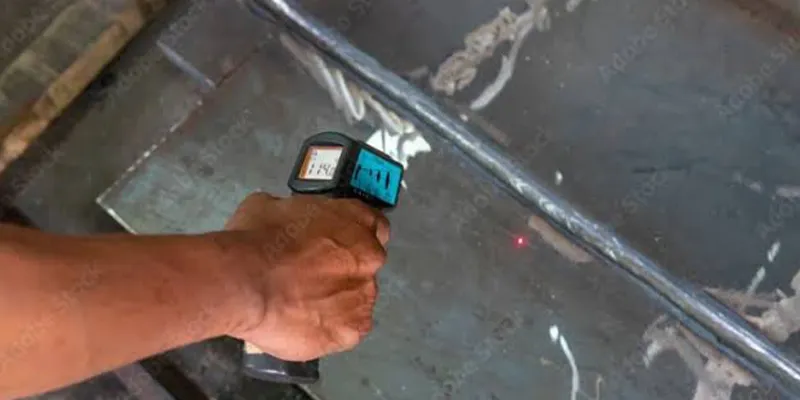
The mechanism is the same one that makes filler chemistry so important: with no ferrite available to disrupt segregation, a hot weld bead sitting on top of a hot previous pass gives phosphorus, sulfur, and niobium more time and a higher-temperature window to segregate to grain boundaries and initiate solidification cracking. Low interpass temperature is, in effect, the thermal half of the same fix that low-residual filler chemistry provides on the metallurgical side - neither one substitutes for the other.
|
Process |
Interpass temperature limit |
Notes |
|
GTAW |
≤100°C (212°F) preferred |
150°C acceptable only for unrestrained joints |
|
GMAW |
≤100°C (212°F) preferred |
150°C acceptable only for unrestrained joints |
|
SMAW |
≤100°C (212°F) preferred |
150°C acceptable only for unrestrained joints |
|
SAW |
<100°C |
Stated as a hard limit, not a "preferred" figure, in the source bulletin |
|
Dissimilar joint to 316L (ERNiCrMo-3), documented field project |
<100°C |
Matches the general Alloy 20 limit; project also held heat input <20 kJ/cm |
Source: Rolled Alloys Bulletin 205M, Section IX-B-2 (GMAW/SMAW) and Section IX-G-6 (SAW); metalspiping.com SINOPEC case study.
It's worth flagging honestly that informal, practitioner-reported numbers for Alloy 20 interpass temperature vary more widely in welding forums and secondary guides - figures as high as 175-177°C (roughly 350°F) show up in field anecdotes, and one online welding article citing an unspecified ASME source gives 93°C (200°F). None of these looser numbers appear in Rolled Alloys' own producer bulletin, which is the most detailed, code-referenced source available for this alloy's fabrication.
A welding procedure specification (WPS) should be qualified to the tighter, documented 100°C figure unless separate engineering justification and procedure qualification support a higher number for a specific, genuinely unrestrained joint.
How Should Heat Input Be Controlled Alongside Interpass Temperature?
Heat input should be kept as low as the joint allows for every process, controlled through travel speed and joint design rather than by raising welding current - and Rolled Alloys is explicit that increasing amperage to compensate for the nickel filler's sluggish flow is ineffective and counterproductive.
Heat input in kJ/mm is calculated as (voltage × amperage) ÷ (travel speed in mm/second × 1000). For SMAW, the bulletin specifies heat input below 1.5 kJ/mm in the flat position, with up to 2 kJ/mm accepted as sometimes necessary in the vertical position.
For submerged arc welding, heat input should stay below roughly 1.67 kJ/mm (42.5 kJ/inch). Among the four processes, SAW transfers the most heat into the workpiece for a given set of amperage, voltage, and travel speed; SMAW and GMAW with argon shielding are roughly equivalent; GTAW can put the least heat into the joint, which is one reason it is preferred for root passes.
Two specific welder habits are called out as counterproductive in the bulletin: raising current to improve the nickel filler's fluidity (it doesn't help, and just adds heat), and weaving the bead instead of running straight stringer passes (weaving creates excess heat and results in poor welds). Weld penetration is also genuinely lower in Alloy 20 than in 316L for the same parameters - the correct response is adjusting joint design and technique (more open bevel angles, controlled root gap) rather than pushing more arc energy into the joint.
Source: Rolled Alloys Bulletin 205M, Section IX-B-1 (heat input formula), Section IX-G-3 (SMAW heat input), Section IX-G-6 (SAW heat input), and Section IX-L-4 (heat input and distortion).
What Other Process Controls Matter for a Sound Alloy 20 Weld?
Beyond filler selection and thermal control, a handful of other controls determine whether an Alloy 20 weld holds its corrosion resistance in service rather than just passing a visual inspection.

Skip preheat. Rolled Alloys does not recommend preheating Alloy 20; cold material only needs to be warmed to room temperature (10°C minimum) to prevent moisture condensation in the weld area.
Shield and back-purge with 100% welding-grade argon (99.996% purity) for GTAW/GMAW root passes, with backing gas flow around 16.5-21 liters/minute; do not use 95% Ar/5% O2 or 75% Ar/25% CO2 shielding gas mixes.
Never use oxyfuel (oxyacetylene) welding or carbon-arc air gouging on Alloy 20 - both risk carbon pickup, which directly lowers corrosion resistance.
Guard against copper contamination from copper backing/chill bars, which can cause HAZ cracking; Rolled Alloys suggests nickel- or chromium-plating copper backing bars and checking for contamination with copper-indicator test paper.
Remove slag with stainless wire brushes only - never carbon steel wire brushes, which embed iron particles that can initiate pitting in chloride-containing service.
A post-weld stabilizing/stress-relief heat treatment (480-540°C) is optional, not mandatory - Alloy 20 fabrications are normally placed into service as-welded, and no corrosion-resistance loss is expected for stress-relief temperatures below 540°C.
Alloy 20 is ASME Section IX P-No. 45, and ASME Section VIII Division 1 and Section III cover its use in welded construction up to 427°C (800°F); allowable stress at a given temperature should be pulled from the current Code edition rather than an older bulletin.
Governing Specifications for Alloy 20 Base Metal and Weld Filler Metals
|
Item |
Specification |
|
Base metal - plate, sheet, strip |
ASTM B463 / A240; ASME SB-463 |
|
Base metal - seamless pipe and tube |
ASTM B729; ASME SB-729 |
|
Base metal - welded pipe / welded tube |
ASTM B464 / B468; ASME SB-464 / SB-468 |
|
Base metal - bar and wire |
ASTM B473; ASME SB-473 |
|
Base metal - forged fittings, valves, parts |
ASTM B462 / A182; ASME SB-462 / SA-182 |
|
Matching bare filler wire (GTAW/GMAW) |
ER320LR, UNS N08022 - AWS A5.9 / ASME SFA-5.9 |
|
Matching covered electrode (SMAW) |
E320LR, UNS W88022 - AWS A5.4 / ASME SFA-5.4 |
|
Dissimilar-joint filler to 316L/317L/625 |
ERNiCrMo-3, UNS N06625 (GTAW/GMAW) / ENiCrMo-3, UNS W86112 (SMAW) - AWS A5.14 / A5.11 |
|
Welding qualification |
ASME Section IX, P-No. 45 |
|
Sour-service qualification |
NACE MR0175 / ISO 15156, where applicable |
Frequently Asked Questions
Q: Can I use ERNiCrMo-3 to weld Alloy 20 to itself instead of ER320LR?
A: It is not the standard, code-recognized recommendation. ER320LR/E320LR were purpose-developed to solve Alloy 20's hot-cracking problem and remain the matching filler for same-alloy joints. Rolled Alloys' own dissimilar-metal-weld guidance reserves Alloy 625 wire (ERNiCrMo-3) specifically for joining Alloy 20 to 316L, 317L, or Alloy 625 base metal, not for Alloy 20-to-Alloy 20 welds; deviating from this without a qualified procedure and end-user approval isn't advisable.
Q: Why can't Alloy 20 use the ferrite trick that makes lower-nickel stainless steels easier to weld?
A: Ferrite can only form in the weld metal below roughly 15-20% nickel content. Alloy 20 runs 32-38% nickel, which is metallurgically too high to allow any measurable ferrite to form on solidification, so the crack-resisting mechanism ferrite provides in grades like 304L or 316L simply isn't available.
Q: What interpass temperature should I specify in my WPS for Alloy 20?
A: Rolled Alloys' fabrication bulletin specifies 100°C (212°F) maximum as the preferred limit across GTAW, GMAW, and SMAW, with 150°C (302°F) noted as potentially acceptable only for genuinely unrestrained joints. Submerged arc welding is held to a stricter, unqualified below-100°C limit in the same source.
Q: Does welding Alloy 20 require preheating?
A: No. Preheating is not recommended. The only thermal preparation needed is warming cold material to at least room temperature (10°C) to prevent moisture condensation in the joint before welding.
Q: Is a post-weld heat treatment required for Alloy 20?
A: No. Alloy 20 weldments are normally placed into service as-welded. An optional stress-relief treatment at 480-540°C can remove roughly 35-40% of welding stress in complex fabrications when needed, and no loss of corrosion resistance is expected for stress-relief temperatures kept below 540°C.
Q: What filler should be used to weld Alloy 20 to carbon steel or to Monel 400?
A: For carbon steel (ground to bright metal, free of scale, rust, oil, and paint) as well as 304L, 321, and 347, Alloy 82 wire or Alloy 182 covered electrodes are recommended. For Monel 400, no filler gives a fully satisfactory result - a mechanical joint should be considered, since even a successful weld would lack the chloride corrosion resistance of either base metal.