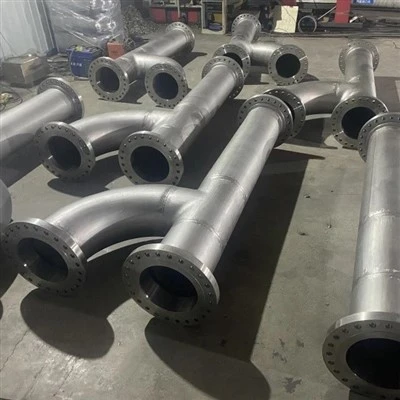
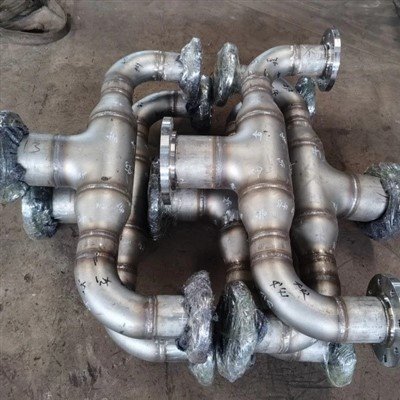
Finding the right material for pipe fittings, especially for tough jobs, is crucial. You might hear names like "A182 F347". What is it? Why is it important? This guide explains it clearly, using simple words.

What is A182 F347?
Think of A182 as a big rule book. It tells us how to make forged (shaped under high pressure or heat) parts for piping systems. F347 is a specific "recipe" inside that book for stainless steel.
- A182: The standard (rule book) for forged pipe fittings, flanges, valves, etc.
- F347: The specific type of stainless steel defined within the A182 standard.
So, A182 F347 is a high-grade stainless steel used to make strong, reliable forged pipe fittings.
Why Choose F347 Stainless Steel?
F347 belongs to the "300 series" stainless steels, known for being tough and resisting rust. But F347 has a special extra ingredient: Columbium (Niobium).
This extra ingredient gives F347 key benefits:
- Great Resistance to Rust and Corrosion: Like other 300 series steels (like 304 or 316), F347 fights rust well. It handles many chemicals, water, and food products safely.
- Super Strength at High Heat: This is F347's big advantage. Regular stainless steel (like 304) can get weak and crack when used very hot for long times. The Columbium in F347 helps it stay strong and resist this cracking much better. This makes it perfect for hot pipes.
- Works Well for Welding: F347 is designed to be welded easily without losing its strength or rust resistance around the welded area. This is very important for building safe pipe systems.
- Handles Stress Well: It performs reliably under pressure and stress, especially in hot conditions.
Where Do We Use A182 F347 Pipe Fittings?
Because it handles heat so well, you'll find A182 F347 fittings in places where pipes get very hot:
- Power Plants: Boilers, steam lines, turbines – anywhere high-temperature steam flows.
- Oil & Gas Refineries: Processing units, heaters, and pipes carrying hot oil or gas.
- Chemical Plants: Reactors, heaters, and pipes with hot or corrosive chemicals.
- Heat Exchangers: Units where heat moves from one fluid to another, often involving high temperatures.
- Aircraft & Aerospace: Certain engine parts and exhaust systems needing heat resistance.
- Food & Pharmaceutical: Where clean, corrosion-resistant pipes are needed for hot processes (though 316L is often used for lower temps).
Important Things to Know About A182 F347 Fittings
Not for Cryogenic (Very Cold): While great for heat, F347 isn't the best choice for extremely cold temperatures. Other steels handle deep cold better.
- Certification is Key: Always ask for a Mill Test Report (MTR) when buying A182 F347 fittings. This paper proves the material meets the A182 F347 rules. Look for the right chemical makeup and strength numbers.
- Positive Material Identification (PMI): On important jobs, many companies use a special test (PMI) to double-check the fitting is really F347 before installing it. Safety first!
- Heat Treatment: F347 fittings are usually "solution annealed" (heated and cooled quickly). This treatment makes the steel softer, easier to work with, and gives it the best rust resistance and strength.
- Grades: While F347 is common, you might also see F347H. The "H" means it's made for even higher temperature service with tighter rules on its chemical mix.
How is it Different from F321?
F321 is another popular stainless steel in the A182 standard, also with extra titanium for heat resistance. F347 (with Columbium) and F321 (with Titanium) are very similar cousins. They are often used for the same hot jobs. The choice between them sometimes depends on specific plant rules, what's available, or small differences in how they perform during very long heat exposure.
A182 F347 is a strong, stainless steel recipe used to make forged pipe fittings like elbows, tees, flanges. Its special ingredient makes it much stronger than regular stainless steel when pipes get very hot. This makes it perfect for steam lines, refineries, chemical plants, and other high-heat applications. Always check the certification (MTR) to ensure you get the real F347 material for safety and reliability.