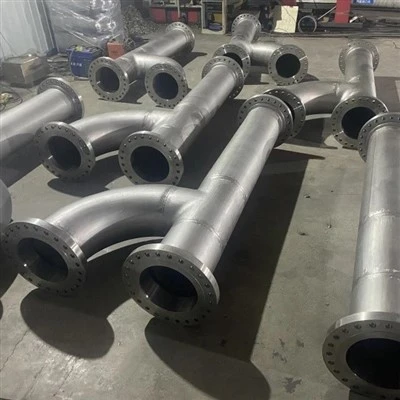
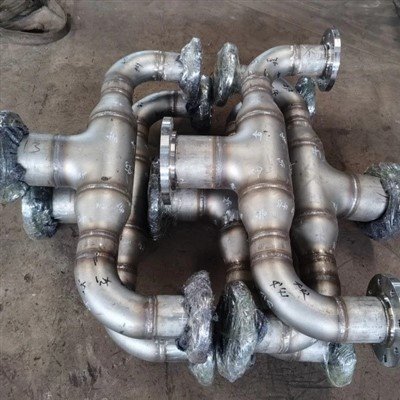
Refineries operate some of the most demanding high-temperature equipment in industry. Heater tubes, reformer piping, and heat exchangers routinely see temperatures between 425 and 870 degrees C. In these conditions, selecting the wrong material is not a matter of reduced efficiency - it is a matter of safety, regulatory compliance, and multi-million-dollar equipment longevity.

321 stainless steel (UNS S32100) is a titanium-stabilized austenitic grade specifically engineered to resist intergranular corrosion and maintain creep strength in the temperature range where standard 304 stainless steel fails. This article presents consolidated 321 stainless steel creep data - including stress rupture strengths, 1% creep limits, ASME allowable stresses, and comparative performance - to help engineers and procurement managers make informed material decisions for long-term refinery service.
|
Key Takeaways
321 stainless steel (UNS S32100) is titanium-stabilized for service in the 425-900 degrees C range, resisting intergranular corrosion in welded refinery components.
100,000-hour creep rupture strength: approximately 90 MPa at 600 degrees C and 50 MPa at 650 degrees C - sufficient for 20-year refinery design life.
ASME Section II-D (2023) allowable stress for 321: 117 MPa at 500 degrees C, 52 MPa at 600 degrees C, and 18 MPa at 700 degrees C.
321 outperforms 304 by 15-25% in creep rupture strength and is comparable to 347 below 650 degrees C.
Upgrade to 321H (higher carbon, coarse grain) when operating above 538 degrees C under sustained structural load. |
What Is 321 Stainless Steel and Why Is It Stabilized with Titanium?
|
321 stainless steel is a titanium-stabilized austenitic chromium-nickel stainless steel (UNS S32100, EN 1.4541) engineered to resist intergranular corrosion in the 425-900 degrees C range, making it the preferred grade for welded refinery components that cannot be post-weld annealed. |
Chemical Composition and Stabilization Mechanism. 321 belongs to the 18-8 austenitic family - the same base composition as 304 stainless steel - but with a critical addition: titanium. The titanium content must be at least five times the carbon content (Ti >= 5xC) to achieve full stabilization. This requirement is specified in ASTM A276, ASTM A479, and ASTM A240 standards.
In standard 304 stainless steel, prolonged exposure to temperatures between 425 and 815 degrees C causes chromium carbides (Cr23C6) to precipitate at grain boundaries. This depletes chromium from the surrounding metal, creating zones vulnerable to intergranular corrosion. In 321, titanium preferentially binds with carbon to form titanium carbides (TiC) distributed randomly throughout the grains - not at the boundaries. The chromium remains in solution, and the passive oxide layer stays intact.
Practical Implication. This stabilization is why 321 can be welded and placed into service in the carbide precipitation range without post-weld heat treatment (PWHT). For refineries, where large-scale solution annealing of welded assemblies is often impractical, this property is not merely advantageous - it is a design requirement.
Sources: ASTM A276/A276M-23 (Standard Specification for Stainless Steel Bars and Shapes); ATI 321/347/348 Technical Data Sheet; Carpenter Technology CarTech 321 Stainless Datasheet.
|
Element |
Content (wt%) |
Metallurgical Function |
|
Carbon (C) |
<= 0.08 |
Controlled low carbon for weldability |
|
Chromium (Cr) |
17.0 - 19.0 |
Corrosion resistance; passive oxide layer |
|
Nickel (Ni) |
9.0 - 12.0 |
Stabilizes austenitic structure |
|
Titanium (Ti) |
5x(C+N) min, 0.70 max |
Prevents chromium carbide precipitation |
|
Manganese (Mn) |
<= 2.00 |
Deoxidizer; improves hot workability |
|
Silicon (Si) |
<= 1.00 |
Improves oxidation resistance |
|
Phosphorus (P) |
<= 0.045 |
Impurity limit |
|
Sulfur (S) |
<= 0.030 |
Impurity limit |
|
Iron (Fe) |
Balance |
Base matrix |
Why Does Creep Matter in Refinery Service?
|
Creep is the dominant failure mechanism for pressure-retaining refinery components operating above 538 degrees C (1000 degrees F). A pipe or tube can rupture at only 40% of its room-temperature yield strength after 100,000 hours of service because creep deformation accumulates over time - and ASME design codes mandate creep-based allowable stresses for these temperatures. |

Definition. Creep is the slow, permanent deformation of a metal under sustained stress at elevated temperatures. Unlike sudden failure, creep progresses silently over years. The process occurs in three stages:
Primary creep: the material deforms rapidly but at a decreasing rate as strain hardening resists further deformation.
Secondary (steady-state) creep: the deformation rate becomes approximately constant - this is the longest phase and the basis for most engineering design data.
Tertiary creep: deformation accelerates rapidly, leading to necking and rupture. Design must keep components out of this stage.
Why Yield Strength Alone Is Insufficient. Refinery heater tubes, reformer piping, and heat exchanger bundles routinely operate at 538-870 degrees C under internal pressure. At these temperatures, the metal's yield strength is no longer the limiting factor - creep strength is. A tube that passes a hydrostatic test at ambient temperature can still fail after 10-15 years of high-temperature service if creep was not accounted for in the design.
High School-Level Analogy. An analogy for non-specialists: imagine bending a plastic ruler and holding it in position. It does not snap, but over hours it gradually takes a permanent set and never returns to straight. At refinery temperatures, steel behaves similarly under sustained load - it slowly stretches, thins, and eventually ruptures.
Source: ASME Boiler and Pressure Vessel Code, Section VIII Division 1 (2023 Edition); ScienceDirect - Resistant Alloy (refinery materials reference).
What Are the Key Creep Properties of 321 Stainless Steel?
|
321 stainless steel maintains a 100,000-hour creep rupture strength of approximately 90 MPa at 600 degrees C and 50 MPa at 650 degrees C. For 1% creep in 100,000 hours, the allowable stress drops to approximately 80 MPa at 600 degrees C and 50 MPa at 650 degrees C - values that support 20-year design life for refinery pressure components in the 538-816 degrees C range. |
The following tables consolidate creep data from multiple authoritative sources, including ASME Section II-D (2023), ATI Technical Data Sheets, Carpenter Technology datasheets, and published industry creep curves. Values represent annealed condition material.
Table 1. Average Creep Rupture Stress for 321 Stainless Steel (MPa)
|
Temperature |
1,000 h Rupture |
10,000 h Rupture |
100,000 h Rupture |
|
500 degrees C (932 degrees F) |
~270 MPa |
~240 MPa |
~200 MPa |
|
550 degrees C (1022 degrees F) |
~220 MPa |
~180 MPa |
~120 MPa |
|
600 degrees C (1112 degrees F) |
~180 MPa |
~130 MPa |
~90 MPa |
|
650 degrees C (1202 degrees F) |
~140 MPa |
~90 MPa |
~50 MPa |
|
700 degrees C (1292 degrees F) |
~70 MPa |
~50 MPa |
~15 MPa |
|
750 degrees C (1382 degrees F) |
~45 MPa |
~28 MPa |
~5 MPa |
|
800 degrees C (1472 degrees F) |
~30 MPa |
~10 MPa |
~5 MPa |
Table 2. Stress to Produce 1% Creep in 321 Stainless Steel (MPa)
|
Temperature |
1% Creep / 1,000 h |
1% Creep / 10,000 h |
1% Creep / 100,000 h |
|
538 degrees C (1000 degrees F) |
~155 MPa |
~117 MPa |
~75 MPa |
|
550 degrees C (1022 degrees F) |
~140 MPa |
~100 MPa |
~65 MPa |
|
593 degrees C (1100 degrees F) |
~100 MPa |
~75 MPa |
~48 MPa |
|
600 degrees C (1112 degrees F) |
~90 MPa |
~60 MPa |
~38 MPa |
|
649 degrees C (1200 degrees F) |
~60 MPa |
~40 MPa |
~19 MPa |
|
650 degrees C (1202 degrees F) |
~58 MPa |
~38 MPa |
~18 MPa |
|
704 degrees C (1300 degrees F) |
~35 MPa |
~22 MPa |
~9 MPa |
|
760 degrees C (1400 degrees F) |
~18 MPa |
~10 MPa |
~4 MPa |
Key Insight. The data shows a clear trend: for every 50 degrees C increase above 550 degrees C, creep rupture strength drops by approximately 40-50%. At 700 degrees C, the 100,000-hour rupture stress falls to only 15 MPa - meaning a tube designed for 20-year life at this temperature would need significantly thicker walls or a higher-grade alloy.
Sources: ASME Boiler and Pressure Vessel Code Section II-D (2023); ATI 321/347/348 Technical Data Sheet; Carpenter Technology CarTech 321 Datasheet; Corten Steels Alloy 321 Datasheet. Values are typical for solution-annealed material and should be verified with certified mill test reports (MTR) for code-compliant design.
How Does 321 Stainless Steel Compare to 304, 316, and 347 at High Temperatures?
|
321 stainless steel offers 15-25% higher creep rupture strength than 304 and is comparable to 347 below 650 degrees C. For refinery service requiring welded assemblies in the 425-870 degrees C range, 321 is the optimal balance of creep strength, corrosion resistance, weldability, and cost - superior to 304 for high temperature, and preferred over 316 for thermal cycling service. |
Table 3. Comparative Creep Rupture Strength at 100,000 Hours (MPa)
|
Temperature |
304/304L |
321 |
316/316L |
347 |
|
500 degrees C |
~170 MPa |
~200 MPa |
~175 MPa |
~210 MPa |
|
550 degrees C |
~100 MPa |
~120 MPa |
~105 MPa |
~130 MPa |
|
600 degrees C |
~70 MPa |
~90 MPa |
~75 MPa |
~95 MPa |
|
650 degrees C |
~35 MPa |
~50 MPa |
~40 MPa |
~55 MPa |
|
700 degrees C |
~12 MPa |
~15 MPa |
~15 MPa |
~18 MPa |
321 vs 304/304L. 304 and 304L are the baseline austenitic grades. They lack stabilization, so prolonged exposure in the 425-815 degrees C range causes chromium carbide precipitation and intergranular corrosion. 304L's low carbon (<=0.03%) slows sensitization but also reduces creep strength - ASME limits 304L to 425 degrees C (800 degrees F) for code applications. 321, with titanium stabilization, is rated to 816 degrees C (1500 degrees F).
321 vs 316/316L. 316 adds 2-3% molybdenum, which improves resistance to pitting and crevice corrosion in chloride environments. However, molybdenum does not significantly improve creep strength compared to titanium stabilization. For refinery service dominated by thermal cycling rather than chloride exposure, 321 is preferred. Where chloride corrosion is the primary concern (e.g., seawater-cooled exchangers), 316 is the better choice.
321 vs 347. 347 uses niobium (columbium) instead of titanium for stabilization. At temperatures above 650 degrees C, 347 provides 10-20% higher creep rupture strength than 321, and niobium carbides are more stable at very high temperatures. However, 321 offers better formability for deep-drawn parts and is typically 10-20% less expensive. For refinery heater tubes below 650 degrees C, 321 is the practical choice; for superheater tubes above 650 degrees C, 347 or 321H may be specified.
Sources: ASME Section II-D (2023) allowable stress tables; ATI 321/347/348 Technical Data Sheet; Nickel Institute Publication 9004 (High-Temperature Characteristics of Stainless Steels).
What Maximum Service Temperatures Can 321 Sustain in Refinery Service?

|
321 stainless steel is rated for continuous service up to 816 degrees C (1500 degrees F) and intermittent service up to 900 degrees C (1650 degrees F) under oxidizing conditions, with a safe scaling temperature of 871 degrees C (1600 degrees F). For ASME code applications, the maximum use temperature is 816 degrees C (1500 degrees F). |
|
Condition |
Max Temperature |
Notes |
|
Continuous service (oxidizing) |
816 degrees C / 1500 degrees F |
ASME code maximum; scaling-safe |
|
Intermittent service |
900 degrees C / 1650 degrees F |
Thermal cycling; shorter durations |
|
Safe scaling temperature |
871 degrees C / 1600 degrees F |
Above this, oxide scale grows rapidly |
|
ASME code max (Section VIII) |
816 degrees C / 1500 degrees F |
Pressure vessel design limit |
|
Sensitization-free range |
425-870 degrees C / 800-1600 degrees F |
Ti stabilization prevents Cr-carbide |
Environmental Considerations. These temperature limits assume oxidizing environments. In refinery service, sulfur-bearing gases under reducing conditions can significantly accelerate attack on austenitic stainless steels. In environments containing H2S or SO2 at temperatures above 650 degrees C, pilot testing is recommended before specifying 321, and higher-nickel alloys may be required.
Sources: AZoM - Stainless Steel High Temperature Resistance (ASM Metals Handbook reference); Carpenter Technology CarTech 321 Datasheet; ATI 321/347/348 Technical Data Sheet.
When Should You Upgrade from 321 to 321H for Creep Service?
|
Upgrade to 321H (UNS S32109) when operating temperatures exceed 538 degrees C (1000 degrees F) under sustained structural load. 321H has a higher carbon content (0.04-0.10%) and a coarse grain size (ASTM 7 or coarser), which together provide 10-20% higher creep rupture strength than standard 321 - critical for 20-year design life in refinery pressure equipment. |
|
Property |
321 (UNS S32100) |
321H (UNS S32109) |
|
Carbon content |
<= 0.08% |
0.04 - 0.10% |
|
Grain size requirement |
Not specified |
ASTM 7 or coarser |
|
ASME Section I (boilers) |
Not qualified |
Qualified |
|
ASME Section VIII Div. 1 |
Qualified |
Qualified |
|
ASME Section VIII Div. 2 |
Not qualified |
Qualified |
|
Max code temperature |
816 degrees C (1500 degrees F) |
816 degrees C (1500 degrees F) |
|
Typical premium |
Baseline |
+10-20% over 321 |
Metallurgical Rationale. The higher carbon in 321H increases creep strength through carbide precipitation strengthening - dissolved carbon forms fine carbides that pin grain boundaries and resist grain sliding, a key creep mechanism. The coarse grain size (ASTM grain size 7 or larger, meaning fewer, larger grains) further enhances creep resistance because grain boundary sliding is the dominant creep mechanism at refinery temperatures.
Procurement Recommendation. Order 321/321H dual-certified material when uncertain about future service requirements. Dual certification means the heat meets both 321 (C <= 0.08%) and 321H (C = 0.04-0.10%, grain size ASTM 7+) specifications. The MTR must explicitly state the grain size and solution-annealing temperature (>=1038 degrees C) to qualify for 321H ASME allowables.
API 530 Consideration. API 530 (Calculation of Heater Tube Thickness in Refineries) requires creep-rupture-based design for heater tubes. If your tube design temperature exceeds 538 degrees C and the component carries structural load (pressure or weight), 321H is mandatory. If the 321-grade component only needs high-temperature corrosion protection without significant load (e.g., furnace lining), standard 321 is sufficient.
Source: ASME Boiler and Pressure Vessel Code Section II-D (2023); API 530 (Calculation of Heater Tube Thickness in Petroleum Refineries); industry procurement guidelines for 321/321H dual certification.
What Refinery Components Commonly Use 321 Stainless Steel?
|
321 stainless steel is widely used in refinery heater tubes, heat exchanger tubing, FCC unit internals, catalytic hydrodesulfurization unit piping, amine unit components, sulfur recovery unit piping, reformer tubes, and expansion joints - essentially any component operating in the 425-870 degrees C range where welded assemblies cannot be post-weld annealed. |
|
Refinery Unit |
Typical Components |
Service Temp Range |
Why 321? |
|
Crude heater |
Tube supports, radiant section tubes |
500-870 degrees C |
Creep strength + Ti stabilization |
|
FCC unit |
Cyclone diplegs, slide valves, standpipes |
550-750 degrees C |
Thermal cycling resistance |
|
Reformer |
Piping, catalyst tubes, manifolds |
500-700 degrees C |
Creep + intergranular corrosion |
|
HDS unit |
Reactor internals, heat exchanger bundles |
350-450 degrees C |
H2S resistance + weldability |
|
Amine unit |
Rich/lean amine piping, exchangers |
100-150 degrees C |
Welded without PWHT |
|
Sulfur recovery |
Claus reaction furnace tubes |
300-650 degrees C |
Sulfidation + thermal stability |
|
Hydrogen plant |
Transfer lines, manifold piping |
400-800 degrees C |
Creep + oxidation resistance |
|
Distillation |
Column internals, tray support beams |
200-400 degrees C |
Intergranular corrosion resistance |
Sour Service Qualification. 321 is also NACE MR0175/ISO 15156 approved for sour service, making it suitable for refinery environments where H2S is present. This dual qualification - for both high-temperature creep and sour service - is a key reason 321 is a workhorse grade in downstream refining.
Sources: ScienceDirect - Resistant Alloy (refinery austenitic stainless steel applications); NACE MR0175/ISO 15156 (sour service qualification); Tesco Steel 321/321H Flanges datasheet.
How Do ASME Code Allowable Stresses for 321 Support Refinery Design?
|
ASME Section II-D (2023 edition) assigns 321 stainless steel allowable stresses of 117 MPa at 500 degrees C, 105 MPa at 550 degrees C, 52 MPa at 600 degrees C, 32 MPa at 650 degrees C, and 18 MPa at 700 degrees C for Section VIII Division 1 pressure vessel design. These values are derived directly from creep rupture data and define the maximum stress permitted in code-compliant refinery equipment. |

Table 4. ASME Section II-D (2023) Allowable Stresses for 321 Stainless Steel
|
Temperature |
Allowable Stress (MPa) |
Basis |
100,000h Rupture (est.) |
|
500 degrees C (932 degrees F) |
117 MPa |
Yield + tensile |
~200 MPa |
|
538 degrees C (1000 degrees F) |
~95 MPa |
Transition to creep |
~160 MPa |
|
550 degrees C (1022 degrees F) |
105 MPa |
Creep-controlled |
~120 MPa |
|
600 degrees C (1112 degrees F) |
52 MPa |
Creep-controlled |
~90 MPa |
|
649 degrees C (1200 degrees F) |
~35 MPa |
Creep-controlled |
~50 MPa |
|
650 degrees C (1202 degrees F) |
32 MPa |
Creep-controlled |
~50 MPa |
|
700 degrees C (1292 degrees F) |
18 MPa |
Creep-controlled |
~15 MPa |
|
750 degrees C (1382 degrees F) |
10 MPa |
Creep-controlled |
~5 MPa |
How Allowable Stresses Are Derived. Below approximately 538 degrees C, allowable stress is governed by the lower of yield strength divided by a safety factor or tensile strength divided by a safety factor. Above 538 degrees C, creep becomes the governing mechanism, and allowable stress is derived from creep rupture data - typically 100,000-hour rupture strength divided by a safety factor of approximately 1.5 to 3.0, depending on the code section. This transition point is why 321H (with its higher creep strength) becomes important above 538 degrees C.
Design Application. For ASME B31.3 process piping, similar allowable stresses apply. The designer uses these values in the standard wall thickness formula: t = P x D / (2S + 2P), where P is design pressure, D is outside diameter, and S is the allowable stress at the design temperature. As temperature increases and S drops, wall thickness must increase proportionally - or a higher-grade alloy must be selected.
Source: ASME Boiler and Pressure Vessel Code Section II-D (2023 Edition), Table 1A ( austenitic stainless steels); ASME B31.3 Process Piping Code.
What Are the Best Practices for Welding and Fabricating 321 in Refinery Service?
|
321 stainless steel can be welded by all common methods (TIG, MIG, submerged arc) using ER347 filler metal without post-weld heat treatment, because titanium stabilization prevents sensitization in the heat-affected zone. Use ER347 (not ER308 or ER321) filler metal to ensure the weld deposit is also stabilized against carbide precipitation. |
Filler metal selection: ER347 (niobium-stabilized) is the standard filler for 321 base metal. Titanium in ER321 filler is prone to oxidation during welding, resulting in inconsistent stabilization. ER347 provides reliable, oxidation-resistant stabilization in the weld deposit.
No PWHT required: 321 requires no post-weld solution annealing for intergranular corrosion resistance. This is the primary advantage over 304, which requires PWHT after welding in heavy sections to restore corrosion resistance.
Heat input control: Keep interpass temperature below 150 degrees C and use stringer beads rather than wide weave beads to minimize heat input. Excessive heat input widens the sensitization zone in the HAZ.
Procedure qualification: Qualify welding procedures to ASME Section IX. For high-temperature service above 538 degrees C, creep-rupture testing of the weldment may be required as a supplementary essential variable.
Post-weld cleaning: After welding, remove all slag, oxides, and heat tint by grinding or pickling. Heat tint on austenitic stainless steel reduces corrosion resistance in the affected area.
Cold Working and Hardening. 321 cannot be hardened by heat treatment - only by cold working. For refinery components requiring higher strength, cold-drawn bars or plates can be specified, but the designer must account for reduced ductility and verify that cold work does not compromise creep performance at service temperature (stress relaxation may occur).
Sources: ATI 321/347/348 Technical Data Sheet (welding recommendations); AWS A5.9 (bare welding electrodes); Tesco Steel 321/321H Flanges technical guide; ASME Section IX (welding procedure qualification).
How Does Long-Term Thermal Aging Affect 321 Stainless Steel?
|
321 stainless steel resists sigma-phase embrittlement better than higher-chromium grades like 310 or 316, but prolonged exposure above 650 degrees C for over 50,000 hours requires monitoring for creep damage, microstructural degradation, and potential sigma-phase precipitation. Regular non-destructive examination is essential for components approaching end of design life. |
|
Aging Risk |
Temperature Range |
Threshold |
Mitigation |
|
Sigma phase formation |
590-870 degrees C |
>50,000 h exposure |
321 less susceptible than 310/316; monitor |
|
Carbide coarsening |
>600 degrees C |
Long-term |
TiC is more stable than Cr-carbide |
|
Creep cavitation |
>538 degrees C under stress |
>100,000 h |
NDE: ultrasonic, replication |
|
Sensitization (reversed) |
425-815 degrees C |
Normally prevented by Ti |
Verify Ti/C ratio on MTR |
|
Grain growth |
>900 degrees C |
Prolonged exposure |
Controlled by mill annealing |
Sigma-Phase Embrittlement. Sigma phase is a hard, brittle intermetallic compound (FeCr) that can form in austenitic stainless steels during long exposure to temperatures between 590 and 870 degrees C. Grade 304 is nearly immune due to its lower chromium content. Grade 321 is less susceptible than 310 or 316 because titanium restricts chromium mobility, but very long exposures (>50,000 hours at >650 degrees C) can still cause precipitation. If sigma-phase embrittlement is detected, it can be dissolved by re-annealing at 1038 degrees C minimum - though this is rarely practical for in-service refinery equipment.
Inspection Recommendations. For refinery components approaching their design life, recommended NDE includes: ultrasonic thickness measurement (to track creep thinning), surface replication (to detect creep cavitation at grain boundaries), and hardness testing (to detect sigma-phase embrittlement, which increases hardness). API 530 and API 573 provide guidance on fired heater tube assessment and remaining life calculation.
Sources: AZoM - Stainless Steel High Temperature Resistance; API 530 (Heater Tube Thickness); API 573 (Fired Heater Inspection); NACE MR0103 (refinery material standards).
Frequently Asked Questions
What is the creep rupture strength of 321 stainless steel at 600 degrees C?
The 100,000-hour creep rupture strength of 321 stainless steel at 600 degrees C is approximately 90 MPa. For 10,000 hours, it is approximately 130 MPa, and for 1,000 hours, approximately 180 MPa. These values assume solution-annealed material and should be verified against certified mill test reports for code-compliant design.
Can 321 stainless steel be used above 800 degrees C?
321 stainless steel can be used intermittently up to 900 degrees C (1650 degrees F) for oxidation resistance. However, for ASME code pressure-bearing applications, the maximum use temperature is 816 degrees C (1500 degrees F). Above 800 degrees C, creep rupture strength drops to approximately 5 MPa at 100,000 hours, and a higher-grade alloy such as 310S or a nickel-based alloy (e.g., Inconel 600) is recommended for continuous load-bearing service.
What is the difference between 321 and 321H stainless steel?
321H (UNS S32109) has a higher carbon content (0.04-0.10% vs <=0.08% for standard 321) and requires a coarse grain size (ASTM 7 or coarser). These differences provide 10-20% higher creep rupture strength above 538 degrees C. 321H is qualified for ASME Section I (power boilers) and Section VIII Division 2, while standard 321 is limited to Section VIII Division 1. Order dual-certified 321/321H material when uncertain about future requirements.
Is 321 stainless steel suitable for sour service in refineries?
Yes. 321 stainless steel is NACE MR0175/ISO 15156 approved for sour service, making it suitable for refinery environments where hydrogen sulfide (H2S) is present. Its combination of high-temperature creep strength, intergranular corrosion resistance, and sour service qualification is a key reason it is widely specified in downstream refining, particularly in hydrodesulfurization units, amine units, and sulfur recovery units.
Should I choose 321 or 347 for high-temperature refinery service?
Choose 321 for refinery service below 650 degrees C where cost-effectiveness and formability are priorities. Choose 347 for service above 650 degrees C where maximum creep strength is critical, or in nuclear environments where titanium activation must be avoided. Both grades are titanium/niobium-stabilized and resist intergranular corrosion in the 425-870 degrees C range, but 347 provides 10-20% higher creep rupture strength at the cost of 10-20% higher price.
Conclusion
|
321 stainless steel remains a cornerstone material for refinery high-temperature service. With 100,000-hour creep rupture strengths of 90 MPa at 600 degrees C and 50 MPa at 650 degrees C, ASME code qualification to 816 degrees C, and NACE sour service approval, it delivers the combination of creep resistance, weldability, and corrosion protection that refinery pressure equipment demands. |
For engineers and procurement managers specifying materials for refinery service in the 425-870 degrees C range, 321 stainless steel offers a proven, code-compliant, and cost-effective solution. The key decision points are straightforward: use standard 321 below 538 degrees C; upgrade to 321H above 538 degrees C under sustained load; consider 347 above 650 degrees C for maximum creep strength; and step up to 310S or nickel alloys above 900 degrees C.
Need certified 321 or 321H stainless steel for your refinery project? Contact our technical team for material specifications, mill test reports, and ASME code-compliant supply of 321/321H stainless steel bars, plates, pipes, and flanges - backed by full traceability and NACE MR0175 certification.