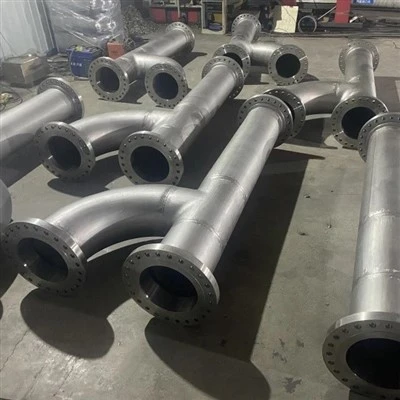
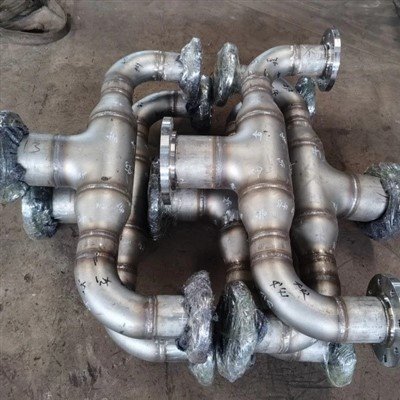
Stainless Steel 316L, a low-carbon austenitic alloy containing molybdenum, is widely used in corrosive environments across the chemical processing, marine, oil and gas, and pharmaceutical industries.

This article provides a detailed breakdown of 316L stainless steel pricing for pipes, tubes, and fittings.
ASME B16.9 WP316L Buttwelding Fittings Price
Prices are for seamless, solution-annealed, 100% PMI tested, and EN 10204 3.1 certified. Sch 10S & Sch 40S, ASTM A403 WP316L-S.
|
Fitting Type |
Size |
Approx. weight (kg/pc) |
Asia/India USD/pc |
Europe/USA USD/pc |
|
90° LR Elbow Sch 10S |
2″ (DN50) |
1.1 |
24 – 30 |
42 – 55 |
|
90° LR Elbow Sch 40S |
4″ (DN100) |
5.8 |
95 – 115 |
165 – 210 |
|
90° LR Elbow Sch40S |
8″ (DN200) |
28.5 |
420 – 510 |
720 – 890 |
|
Equal Tee Sch10S |
3″ (DN80) |
3.2 |
62 – 75 |
110 – 140 |
|
Equal Tee Sch40S |
6″ (DN150) |
18.5 |
280 – 340 |
480 – 590 |
|
Concentric Reducer Sch10S |
6″ × 4″ (DN150×100) |
6.8 |
110 – 135 |
190 – 240 |
|
Cap Sch40S |
10″ (DN250) |
22.5 |
320 – 390 |
560 – 690 |
|
Lap-Joint Stub End Type A (short pattern) |
12″ Sch40S |
28.0 |
380 – 460 |
660 – 820 |
316L Stainless Steel Prices
|
Product |
Asia/India (USD/kg) |
Europe ex-mill (USD/kg) |
USA ex-mill (USD/kg) |
|
316L cold-rolled coil 2–6 mm (2B/2E) |
3.60 – 4.10 |
5.40 – 5.80 |
5.80 – 6.40 |
|
316L hot-rolled plate 5–50 mm (No.1) |
3.50 – 3.90 |
5.30 – 5.70 |
5.70 – 6.20 |
|
Seamless pipe A312 TP316L Sch 10S |
6.20 – 7.80 |
9.50 – 11.50 |
10.50 – 13.50 |
|
Seamless pipe A312 TP316L Sch 40S |
6.50 – 8.20 |
10.00 – 12.00 |
11.00 – 14.00 |
|
Seamless pipe A312 TP316L Sch 80S |
7.00 – 8.80 |
10.80 – 13.00 |
12.00 – 15.00 |
|
Welded pipe A358 TP316L Sch 10S (from coil) |
5.40 – 6.60 |
8.50 – 10.00 |
9.50 – 11.50 |
Factors Influencing 316L Stainless Steel Prices
A. Raw Material Costs (60–70% of Total Price)
Nickel (Ni): Accounts for ~20% of 316L's content. LME nickel prices directly impact costs.
Molybdenum (Mo): Comprises 2–3% of the alloy. Volatile prices cause significant swings.
Chromium and Iron: Stable but subject to supply chain disruptions.

B. Manufacturing Processes and Specifications
Tolerance and Surface Finish: BA/2B finishes cost 5–8% more than No. 1 finishes.
Wall Thickness: Schedule 80/XXS tubes are 15–20% costlier than Schedule 5/10S due to material usage.
Certifications: ASME, ASTM, and PED-compliant products incur 8–15% premiums.
C. Market Demand and Regional Variations
Industry Cycles: Petrochemical and marine sectors drive 20–25% demand surges.
Regional Premiums: Coastal regions offer 3–5% lower prices due to logistics advantages.
D. Logistics and Tariffs
Import Duties: 7–25% for EU/US-bound shipments.
Freight Costs: 40HQ container rates add 2–3% to landed costs.
316 vs 316L Stainless Steel
Both 316 and 316L are molybdenum-alloyed austenitic stainless steels with virtually identical corrosion performance in most environments. The only intentional difference in the specifications is the maximum carbon content.

Chemical Composition
|
Element |
316 (% max or range) |
316L (% max or range) |
|
Carbon (C) |
0.080 max |
0.030 max |
|
Chromium (Cr) |
16.0 – 18.0 |
16.0 – 18.0 |
|
Nickel (Ni) |
10.0 – 14.0 |
10.0 – 14.0 |
|
Molybdenum (Mo) |
2.00 – 3.00 |
2.00 – 3.00 |
|
Manganese (Mn) |
2.00 max |
2.00 max |
|
Silicon (Si) |
0.75 max |
0.75 max |
|
Phosphorus (P) |
0.045 max |
0.045 max |
|
Sulfur (S) |
0.030 max |
0.030 max |
Carbon Difference
Weldability & Sensitization Resistance
316 (0.08% C max): When welded, especially in thicknesses >6 mm or in multi-pass welds, carbon can combine with chromium to form chromium carbides at grain boundaries. This causes sensitization and severe risk of intergranular corrosion in corrosive service.
316L (0.03% C max): Virtually immune to sensitization even without post-weld solution annealing. This is why 316L is the default choice for virtually all welded piping systems, vessels, and butt-welding fittings today.
Mechanical Properties at Room Temperature
|
Property |
316 |
316L |
|
Tensile Strength (MPa) |
515 min |
485 min |
|
Yield Strength (MPa) |
205 min |
170 min |
|
Elongation (% in 50 mm) |
40 min |
40 min |
|
Hardness (HRB max) |
95 max |
95 max |
In reality, almost all modern production of both grades easily exceeds 550 MPa tensile / 250–280 MPa yield, so the material is almost always dual-certified 316/316L.
Corrosion Resistance
General corrosion, pitting, crevice corrosion, and SCC resistance are identical in the solution-annealed condition.
After welding or in heat-affected zones, 316L is clearly superior.
In carbide-precipitation range service, only 316L should be used.
Price Difference
Raw material surcharge difference: typically only 30–80 EUR/MT higher for 316L.
Finished butt-welding fittings: 316L costs 0–5% more than straight 316, but >95% of global production is now supplied as dual-certified 316/316L at the 316L price.
Straight 316 is becoming a special order item and is rarely cheaper in practice.