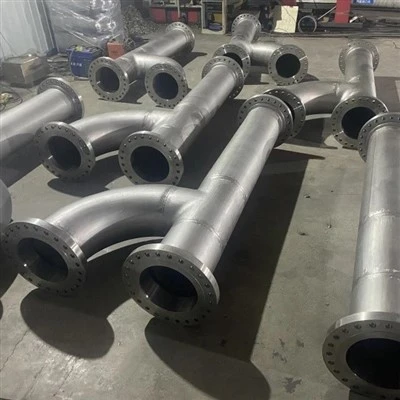
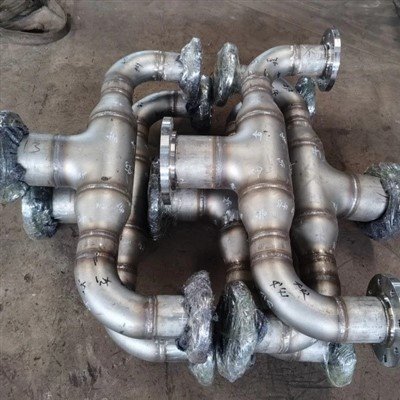
This article provides a professional analysis of 316L stainless steel flange pressure ratings, focusing on the ASME B16.5 standard, the influence of temperature on pressure capacity, and the critical data points.

What Is 316L Stainless Steel?
Before examining the pressure tables, we must define the material. Type 316L (UNS S31603) is the low-carbon variant of 316 stainless steel. While the "L" denotes a lower carbon content (0.03% maximum), which minimizes harmful carbide precipitation during welding, it also slightly alters the mechanical properties compared to standard 316.
From a pressure-bearing perspective, 316L is prized for its excellent creep-rupture strength and its ability to maintain structural integrity under thermal stress. In the ASME B16.5 standard-the "bible" of flange dimensions and ratings-316L is categorized under Material Group 2.2. This grouping is essential because the pressure-temperature ratings are determined by the material's yield and tensile strength at various heat intervals.
Understanding the ASME B16.5 Rating System
The "Pressure Rating" of a flange, often referred to as its "Class," is a dimensionless number that indicates the maximum allowable working pressure (MAWP) at a specific temperature. The standard classes are 150, 300, 400, 600, 900, 1500, and 2500.

It is a common misconception that the class number represents the pressure in PSI. For instance, a Class 150 flange does not simply hold 150 PSI. Instead, its pressure capacity is a variable function of temperature. As the temperature of the fluid increases, the allowable pressure decreases because the metal softens and its yield strength drops.
316L Flange Pressure-Temperature Rating Table
The following data represents the maximum allowable working pressure (in psig) for 316L stainless steel flanges across the most common classes, based on ASME B16.5 standards.
316L Stainless Steel Flange Pressure Ratings – Classes 150, 300 & 600
|
Temperature °F |
Class 150 (psig) |
Class 300 (psig) |
Class 600 (psig) |
|
-20 to 100 |
275 |
720 |
1,440 |
|
200 |
235 |
620 |
1,240 |
|
300 |
215 |
560 |
1,120 |
|
400 |
195 |
515 |
1,025 |
|
500 |
170 |
480 |
955 |
|
600 |
140 |
450 |
900 |
|
650 |
125 |
440 |
885 |
|
700 |
110 |
435 |
870 |
|
750 |
95 |
425 |
855 |
|
800 |
80 |
420 |
845 |
316L Stainless Steel Flange Pressure Ratings – Classes 900, 1500 & 2500
|
Temperature °F |
Class 900 (psig) |
Class 1500 (psig) |
Class 2500 (psig) |
|
-20 to 100 |
2,160 |
3,600 |
6,000 |
|
200 |
1,860 |
3,095 |
5,160 |
|
300 |
1,680 |
2,795 |
4,660 |
|
400 |
1,540 |
2,570 |
4,280 |
|
500 |
1,435 |
2,390 |
3,980 |
|
600 |
1,355 |
2,255 |
3,760 |
|
650 |
1,325 |
2,210 |
3,680 |
|
700 |
1,305 |
2,170 |
3,620 |
|
750 |
1,280 |
2,135 |
3,560 |
|
800 |
1,265 |
2,110 |
3,520 |
Note: Ratings for 316L are lower than 316 at temperatures exceeding 1000°F. Always consult the latest ASME B16.5 edition for exact design calculations.
Critical Analysis of the Pressure Data
1. The Temperature "Drop-Off"
Observe the Class 150 column. At room temperature, the flange is rated for 230 psig. However, if the system operates at 800°F, the rating plummets to 80 psig. This 65% reduction in capacity highlights why a "Class" rating is meaningless without a corresponding operating temperature.
2. High-Pressure Superiority
For high-pressure applications, such as hydrogen transport or offshore chemical injection, Class 1500 and 2500 are required. A 316L Class 1500 flange can withstand 3,000 psig at ambient temperatures, making it suitable for some of the most demanding environments in the oil and gas sector.
3. The Advantage of the Low Carbon Grade
While 316L has slightly lower pressure ratings than standard 316 at very high temperatures, it is often the persuasive choice for managers. Why? Because the pressure rating of the flange is only relevant if the weld is sound. The 316L grade prevents "intergranular corrosion," ensuring that the heat-affected zone (HAZ) of the weld maintains the same pressure-bearing integrity as the flange body itself.
Factors That Influence Real Pressure Capacity

Bolting and Gasket Selection
A flange's pressure rating is also limited by the hardware used to secure it. If you use low-strength carbon steel bolts on a 316L stainless flange, the bolts may stretch under pressure long before the flange reaches its ASME limit.
Similarly, the gasket type-whether it is a Spiral Wound Gasket, a Ring Type Joint (RTJ), or a simple PTFE sheet-dictates how well the pressure is contained. For high-pressure classes (Class 600 and above), an RTJ (Ring Type Joint) face is often preferred because the metal-to-metal seal is less likely to blow out than a flat gasket.
Flange Type and Stress Distribution
Not all flange shapes handle pressure equally.
Weld Neck Flanges: These feature a long tapered hub that provides a smooth transition of stress from the pipe to the flange. These are the gold standard for high-pressure 316L systems.
Slip-On Flanges: These are easier to install but have lower resistance to shock and vibration. In high-pressure cycling, a Slip-On may fail at a lower effective pressure than a Weld Neck of the same class.
Hydrostatic Testing
Every 316L flange must be capable of withstanding a hydrostatic test pressure. Per ASME standards, this is typically 1.5 times the pressure rating at 100°F, rounded to the next higher 25 psi increment.
For a Class 300 flange (600 psig rating), the hydro-test would be conducted at 900 psig. This ensures a safety margin for unforeseen pressure surges.