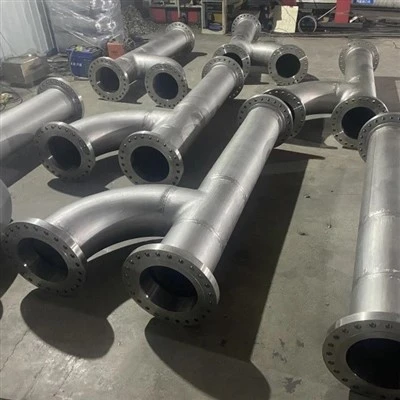
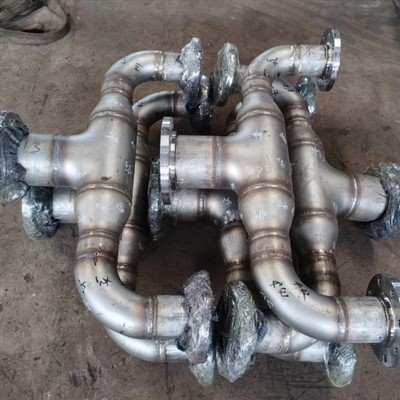
Unexpected staining after cleaning does not automatically mean defective 304L-but it should not be dismissed as cosmetic. First identify the cleaner and stop further exposure safely. Then distinguish removable contamination from pits, crevice attack, etching or cracks. Decide on cleaning, repair or replacement using measured damage and the component's service requirements, not color alone.

What should you do first when 304L shows attack after chloride cleaning?
Stop the cleaning operation, control chemical exposure under the site safety procedure, and preserve evidence before aggressive surface restoration.
Identify the cleaner from its safety data sheet, product label and batch record. Record the actual dilution, temperature, contact time, application method, rinse water and whether the surface dried before rinsing. Photograph affected and unaffected areas with a scale. These are proposed investigation steps, not a prescribed sequence from an ASTM standard.
If bleach or hypochlorite is involved, do not add acid, ammonia or another cleaner to neutralize it. Acid plus hypochlorite can release toxic chlorine gas. Suspected gas release requires the site emergency response, not further hands-on cleaning. Any draining, rinsing or chemical treatment must follow an approved procedure and the product's safety instructions.
Where it can be done safely without prolonging harmful exposure, retain representative cleaner, residue or rinse samples before removal. Do not keep hazardous chemicals on the equipment merely to preserve evidence. Isolate suspect pressure-boundary or product-contact parts for engineering or quality review when their condition is uncertain.
Does "chloride cleaning" describe one type of chemical exposure?
No. Chloride salts, hypochlorite bleach and hydrochloric acid create different exposures and must not be treated as interchangeable.
Chloride is an ion commonly present in salts and water. Hypochlorite is an oxidizing chemical used in bleach. Hydrochloric acid combines strong acidity with chloride. Their effects depend on concentration, temperature, time and local geometry. BSSA identifies both hypochlorite and hydrochloric acid as serious stainless steel corrosion hazards.
|
Exposure |
Why it matters to 304L |
What to establish |
|
Chloride-bearing water or residue |
Localized attack may occur, especially where salts accumulate or liquid is trapped |
Chloride concentration, temperature, evaporation, deposits and crevices |
|
Sodium hypochlorite / bleach |
Oxidizing sanitizer can cause pitting or crevice corrosion; prolonged contact increases concern |
Available/free chlorine basis, dilution, pH, contact time and rinse completeness |
|
Hydrochloric-acid cleaner |
Common 304 and 316 grades are not suitable choices for hydrochloric acid exposure |
Actual acid concentration, temperature and exposure extent |
|
Unknown or mixed cleaner |
The chemical mechanism and handling hazards are uncertain |
Safety data sheets, mixing history and laboratory identification as necessary |
Chemical comparison basis: BSSA guidance on hypochlorite, hydrochloric acid and stainless steel maintenance. A product name alone does not identify the concentration that reached the metal.
Why can 304L corrode even though it is stainless and low carbon?
304L resists corrosion through a thin passive surface film; the "L" limits carbon-related weld sensitization, not chloride attack.
Low-carbon grades reduce the risk of chromium-carbide-related loss of corrosion resistance in weld heat-affected zones. Chloride pitting and crevice resistance depend strongly on alloy chemistry and exposure. Molybdenum-containing 316L generally improves localized chloride corrosion resistance compared with 304L, but neither grade is universally corrosion-proof.
The practical distinction matters during a complaint investigation. A certificate confirming genuine 304L does not prove the cleaning process was compatible. Equally, corrosion after cleaning does not by itself prove the supplied material was the wrong grade. Check both material identity and the recorded exposure before assigning a cause.
How can you distinguish rust staining from actual metal damage?
Inspect the substrate after controlled removal of deposits: staining can sit on sound metal, while pits, etched areas and cracks are damage to the component itself.
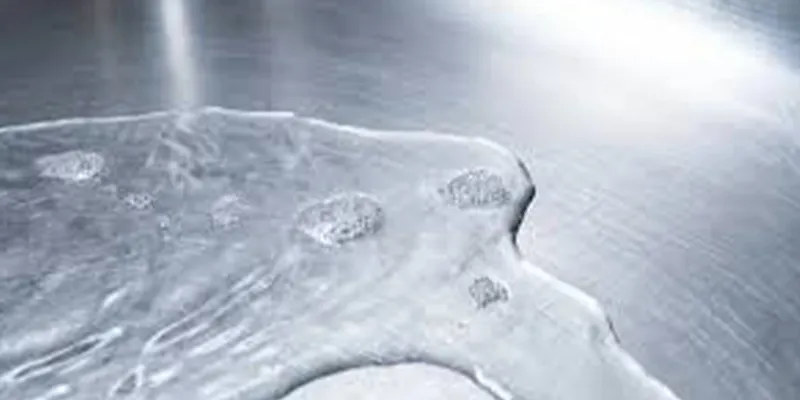
ASTM distinguishes external iron contamination from the stainless steel substrate and provides cleaning and cleanliness assessment practices. However, stain removal alone does not establish adequate remaining thickness or freedom from cracking. Use appearance to guide the investigation, not as a final acceptance test.
|
Observed condition |
Possible explanation-not a final diagnosis |
Next assessment |
|
Orange or brown staining that lifts during approved cleaning |
External iron contamination, corrosion products or contaminated runoff |
Inspect the cleaned substrate and use a suitable free-iron test if contamination is suspected |
|
Discrete cavities that remain after cleaning |
Pitting corrosion |
Map location and density; measure depth and assess remaining section |
|
Attack beneath a gasket, clamp or deposit |
Crevice corrosion or trapped cleaner |
Expose the interface safely and examine the full affected contact area |
|
Broad dull, rough or frosted surface |
Etching or distributed chemical attack |
Compare with an unaffected reference; assess roughness, dimensions and material loss |
|
Fine linear or branched indications |
Possible cracking, scratches or other discontinuities |
Hold for qualified examination; do not polish away the evidence |
|
Damage concentrated near welds |
Heat tint, contamination, geometry or metallurgical factors may contribute |
Review weld condition and cleaning history; use further examination as indicated |
This is an investigation matrix, not a photographic diagnosis. BSSA identifies pitting, crevice corrosion and possible elevated-temperature stress corrosion cracking in hypochlorite exposure; ASTM addresses exogenous iron and surface cleanliness.
Where should you inspect beyond the visibly stained patch?
Inspect wherever cleaner could collect, remain concentrated or escape rinsing-not only the most obvious stain.
The first inspection map should include weld toes, gasket edges, clamp contacts, lap joints, threaded connections, low points, drain pockets, dead legs and internal surfaces reached by the cleaner. Include adjacent surfaces affected by splash or runoff. This location list is a practical application of crevice and localized-corrosion mechanisms, not a fixed standard-mandated inspection extent.
Compare the cleaning footprint with the damage footprint. Droplet-shaped patches may suggest local contact; attack under a gasket may suggest retention; a weld-localized pattern may justify checking heat tint or fabrication history. These patterns are clues to test, not proof of root cause.
For tubing and vessels, the outside surface may not represent the bore. Use appropriate internal access or a borescope where necessary, and document surfaces that remain unexamined. An inaccessible region is an uncertainty to manage, not an automatic pass.
Which exposure records are most useful for finding the root cause?
The strongest evidence combines the cleaner chemistry with the actual time, temperature, wetting and rinsing history.

A nominally dilute solution can become more aggressive when left in a crevice or allowed to concentrate. BSSA advises minimizing temperature and contact time when dilute hypochlorite is used with 304 or 316 and thoroughly rinsing afterward. Hydrochloric-acid cleaners are a different case: BSSA warns against their use near stainless steel.
|
Variable |
Record to obtain |
Why it changes the interpretation |
|
Cleaner identity |
Product, safety data sheet, batch and active ingredients |
Separates salt exposure from oxidizing bleach or acidic attack |
|
Actual concentration |
Mixing record or measured solution composition |
A dilution error or undiluted splash can differ from the written procedure |
|
Temperature |
Metal and solution temperatures, including hot spots |
Higher temperatures can intensify attack and introduce additional cracking concern |
|
Time and drying |
Contact duration, pauses, overnight retention and wet/dry cycles |
Long contact and retained residues can create local exposure beyond the intended cycle |
|
Rinse quality |
Water source, flow, sequence and relevant chemical checks |
A clean-looking surface may still have inaccessible retained solution |
|
Surface and fabrication history |
Finish, weld condition, previous cleaning, tools and damage |
Helps distinguish pre-existing contamination from cleaning-induced attack |
Which tests can confirm contamination, pits or cracks?
Use different tests for chemistry, cleanliness and structural damage; no single passivation or appearance test answers all three questions.
The following is a proposed method-selection guide. A qualified inspection or laboratory team should select procedures, coverage and acceptance criteria for the actual component. The ASTM practices cited below are surface-treatment documents, not universal fitness-for-service rules.
|
Method |
Useful question |
Limitation |
|
Visual examination with magnification |
Where is attack and what pattern does it follow? |
Color and appearance cannot establish pit depth or exclude fine cracks |
|
Residue / rinse laboratory analysis |
Were chloride or other contaminants present? |
Sampling after rinsing may not represent the original exposure; methods and detection limits matter |
|
Applicable free-iron or passivation verification test |
Is there evidence of exogenous iron or ineffective surface treatment? |
Does not measure remaining wall or prove immunity to future chloride attack |
|
Profilometry, microscopy or pit-depth measurement |
How deep is accessible localized damage? |
Rough surfaces, narrow pits and complex geometry can limit measurement reliability |
|
Ultrasonic thickness mapping where applicable |
What section remains in the examined region? |
Probe footprint and geometry may miss very small pits; ordinary thickness readings are not a crack examination |
|
Qualified penetrant or other crack-sensitive examination |
Are relevant surface-breaking indications present? |
Access, preparation and procedure suitability matter; further sizing may be required |
|
Metallography / selected destructive examination |
What mechanism or subsurface condition explains disputed damage? |
Requires an agreed sample plan and may consume material |
ASTM A967 describes verification of passivation effectiveness, particularly removal of free iron and exogenous matter. Treat a passing result as evidence about that treatment-not as a pressure-boundary or hygiene clearance.
Can cleaning or passivation repair chloride pits?
No. Cleaning removes unwanted material and passivation treats the surface; neither replaces metal already lost to corrosion.
ASTM A380 describes removal of exogenous iron and enhancement of the passive film, while A967 addresses chemical passivation treatments and verification. These functions are different from restoring dimensions or eliminating a crack.
Superficial contamination on otherwise sound metal may be recoverable with a qualified cleaning and passivation route. Pits require a separate engineering decision. Controlled blending or refinishing may be possible only when the remaining section, geometry, surface finish and service requirements still comply. Do not grind pressure-retaining or precision surfaces without authorization.
Where surface restoration is approved, reassess dimensions and finish after material removal and repeat the specified cleanliness or passivation verification. In food, pharmaceutical or other hygienic service, structural adequacy alone may not resolve cleanability concerns. The owner's applicable product-contact specification must also be satisfied.
When should you clean, repair or replace the affected component?
Base the disposition on the confirmed damage and service requirements; there is no universal acceptable pit depth for every 304L product.
The matrix below is a conservative decision aid, not a code acceptance table. The responsible engineer or quality authority must apply the actual design basis, minimum required dimensions, corrosion allowance where applicable and owner requirements.
|
Confirmed condition |
Possible disposition |
Required basis |
|
Removable contamination; sound substrate demonstrated |
Approved cleaning, surface treatment if specified, then verification |
Documented examination coverage and cleanliness acceptance |
|
Shallow damage within authorized restoration allowance |
Controlled refinishing or repair, followed by re-examination |
Remaining dimensions, surface finish and service criteria all satisfied |
|
Deep pits, widespread attack or insufficient remaining section |
Engineering assessment, authorized repair or replacement |
Applicable design / assessment rules and measured extent |
|
Crack-like indications or leakage |
Hold from service pending prompt integrity review |
Qualified characterization and an approved disposition |
|
Unbounded or inaccessible damage |
Expand examination or replace where confidence cannot be established |
Explicit resolution of uncertainty-not a cosmetic judgment |
|
Recurring attack after corrected cleaning |
Reassess process, design and material selection |
Documented exposure conditions and a validated corrective action |
Would 316L, duplex or a nickel alloy prevent the same problem?
An alloy upgrade can improve resistance in a defined environment, but correcting an incompatible cleaner comes first.

316L benefits from molybdenum, and more highly alloyed stainless steels can provide greater resistance to localized chloride corrosion. However, BSSA warns that both common 304 and 316 grades are non-resistant choices for hydrochloric acid; even many stainless grades can pit in bleach. Do not treat 316L as a blanket cure.
|
Option |
Potential advantage |
Selection caution |
|
304L |
Suitable baseline where the full exposure and cleaning regime are compatible |
Low carbon does not provide immunity to chloride pitting |
|
316L |
Generally greater chloride pitting and crevice resistance than 304L |
Still vulnerable to aggressive bleach and hydrochloric-acid cleaning |
|
Higher-alloy stainless / duplex candidate |
Increased chromium, molybdenum and/or nitrogen can improve localized-corrosion resistance |
Select the exact grade against actual chemistry, temperature, fabrication and mechanical requirements |
|
Nickel alloy candidate, such as 625 or C-276 |
May be considered when stainless options do not meet the chemical duty |
Do not assume all nickel alloys behave alike; require alloy-specific compatibility evidence |
The stainless comparison follows composition-based guidance; PREN is a screening comparison for localized corrosion resistance, not a pass/fail predictor for an actual cleaning solution or a universal ranking across stainless and nickel alloys. Nickel-alloy suitability is not established by the stainless sources cited here and needs a separate selection review.
How should the cleaning process change to prevent repeat attack?
Validate the complete cleaning cycle on the actual material and geometry, including dilution, dwell time, rinsing and drying.
Remove hydrochloric-acid-based products from routine contact with 304L unless a competent specialist has specifically established an appropriate application. If a hypochlorite sanitation step is unavoidable, follow a validated compatible process with controlled concentration, temperature and contact time, then thorough rinsing. Never transfer a limit published for one grade or water system into a different cleaning duty without review.
For production, use clear chemical identification, controlled mixing, recorded cycle parameters and a release check. Avoid carbon-steel tools or other sources of iron contamination. Review crevices and drainage so that the intended rinse actually reaches the wetted surfaces. ASTM A380 emphasizes precautions against iron contamination and during rinsing.
Where the exposure is uncertain, representative coupons or a pilot cleaning trial can support process qualification. Match the actual finish, welds, crevices and maximum intended cycle conditions. A coupon result should support-not replace-assessment of the installed component. This is a proposed validation approach, not a claim of completed testing.
What records should a manufacturer and customer retain?
Retain a traceable evidence package that links the material, cleaning exposure, inspection findings and final disposition.
A useful package includes the component and heat identification, material certificate, product specification, as-delivered surface condition, fabrication history, cleaner records, photographs, sampling results, examination methods and coverage, measured damage, approved repair details and release authorization. This proposed record set supports a defensible technical review without presuming supplier or user fault.
When procuring a replacement, state the grade, product form, dimensions, surface finish, documentation and cleaning compatibility requirements explicitly. A polished appearance is not evidence of chemical compatibility. A persuasive supplier proposal explains how the product and fabrication route meet the application-not just how one alloy ranks on a general chart.
What are the short answers to common questions about 304L after cleaning?
Does rust prove the material was not 304L?
No. External iron contamination and corrosion products can stain genuine stainless steel. Verify identity and inspect the underlying surface before drawing that conclusion.
Is low-carbon 304L more resistant to chloride pitting than 304?
The main purpose of the low-carbon designation is improved resistance to sensitization-related weld corrosion. It is not a chloride-pitting upgrade comparable to adding molybdenum in 316L.
Can passivation fill pits or remove the need to measure damage?
No. Passivation addresses surface chemistry and contamination, not replacement of lost metal. Assess damage separately.
Is there one safe chloride ppm value for every cleaning process?
No universal limit is established by these sources. Chloride, free chlorine and hypochlorite are different reporting bases, and temperature, acidity, time and geometry change the risk.
Should a bleach-exposed part be treated immediately with acid?
No. Do not mix acid with bleach residues; toxic chlorine gas can form. Use the site-approved chemical removal and safety procedure.