|
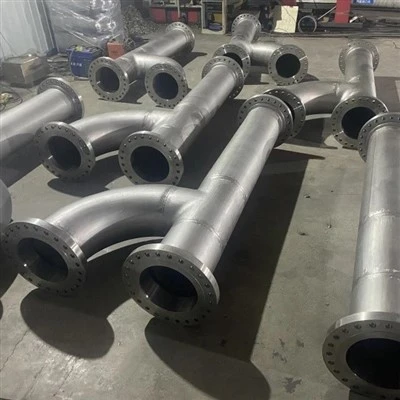
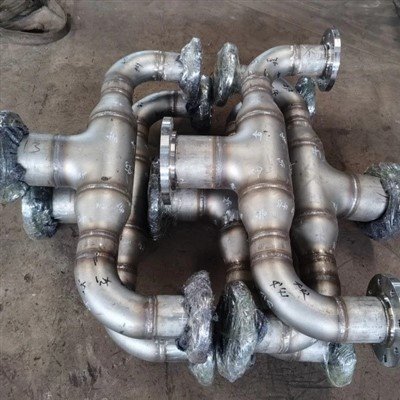
254 SMO (UNS S31254, ASTM A182 Grade F44) is a 6% molybdenum super-austenitic stainless steel with PREN ≥ 42.5, making it a reliable, weldable choice for SWRO membrane housing shells, end caps, and interconnecting piping in full-strength seawater and concentrate brine.
It outperforms 316L and 904L in chloride pitting resistance, is easier to weld than super duplex grades, and costs substantially less than titanium - positioning it as the practical mid-tier standard for high-pressure SWRO metallic components. |
What Is 254 SMO, and Why Is It the Benchmark Material for SWRO Membrane Housings?
254 SMO (UNS S31254, W.Nr. 1.4547, ASTM A182 Grade F44) is a 6% molybdenum super-austenitic stainless steel engineered specifically for chloride-saturated, high-pressure seawater service, which is why it has become a benchmark metallic option for SWRO membrane housing shells, end caps, and connecting piping.

The grade is built on a 20Cr-18Ni-6Mo-0.2N chemistry. That composition delivers a Pitting Resistance Equivalent Number (PREN) of 42.5 or higher, calculated as %Cr + 3.3×%Mo + 16×%N. For comparison, standard 316L stainless sits near a PREN of 26, meaning it is fundamentally undersized for full-strength seawater contact. 254 SMO closes that gap by roughly 60%, without moving into the more expensive and harder-to-weld duplex or nickel-alloy families.
Beyond corrosion resistance, nitrogen additions give 254 SMO a minimum yield strength around 300 MPa - nearly double that of standard 300-series austenitic grades. That extra strength allows thinner-walled housings and connecting pipe for the same pressure rating, which helps offset the alloy's higher per-kilogram material cost.
Why Do SWRO Membrane Housings Demand Such Extreme Corrosion Resistance?
Membrane housings combine three corrosion-accelerating conditions at once - near-saturation chloride concentration, sustained high pressure, and crevice-prone joint geometry - so any material with insufficient PREN will pit or crevice-corrode within months rather than decades.
Seawater feed typically carries roughly 35,000 ppm total dissolved chloride, and the reject/concentrate stream leaving the membrane elements can run 1.5–2 times more concentrated. Housings see this brine continuously, not intermittently, at operating pressures commonly in the 800–1,200 psi range for full seawater desalination trains.
Compounding the chemical load is geometry: O-ring seal grooves, flanged end-cap connections, and tie-rod penetrations all create tight crevices where oxygen depletion allows chloride ions to concentrate locally, dropping the effective pitting resistance of the metal at that spot well below its bulk PREN rating. This is why housing material selection is judged on crevice corrosion resistance, not just open-surface pitting resistance.
How Does 254 SMO's PREN Compare to Other Candidate Materials?
With a PREN of 42.5 or higher, 254 SMO decisively outperforms 316L (~24–26) and 904L (~34), sits close behind super duplex 2507 (~42–45), and remains well below titanium, which is essentially immune to chloride pitting in seawater.

|
Material |
UNS / Grade |
Typical PREN |
Min. Yield Strength |
Relative Material Cost |
SWRO Housing Suitability |
|
316L |
S31603 |
~24–26 |
170 MPa |
1.0x (baseline) |
Unsuitable for full-strength seawater; pitting within 1–2 years |
|
904L |
N08904 |
~34 |
220 MPa |
~2.0x |
Marginal; acceptable only in diluted or intermittent brine contact |
|
254 SMO |
S31254 / F44 |
≥42.5 |
300 MPa |
~2.5–3.0x |
Recommended benchmark for shells, end caps, and piping |
|
Duplex 2205 |
S32205 / F51 |
~35 |
450 MPa |
~2.2x |
Good strength; PREN margin thinner than 254 SMO for aggressive brine |
|
Super Duplex 2507 |
S32750 / F53 |
~42–45 |
550 MPa |
~3.0–3.5x |
Comparable corrosion resistance with superior strength; harder to weld |
|
Titanium Gr. 2 |
R50400 |
Immune to pitting |
275 MPa |
~4.0–5.0x |
Highest assurance; reserved for the most aggressive or weight-critical duty |
PREN values and cost multiples are directional industry planning figures for engineering comparison; confirm heat-specific chemistry against the certified mill test report before finalizing a specification.
Can 254 SMO Reliably Hold 1,000–1,200 psi Operating Pressure?
Yes. With wall thickness sized to ASME B31.3 or ASME Section VIII allowable stress values, 254 SMO's minimum 300 MPa yield strength provides ample margin at typical SWRO operating pressures, and its higher strength versus 316L permits thinner sections for the same pressure class.
SWRO trains generally operate feed pressure between 800 and 1,000 psi for seawater at 25°C, with system design pressure often rated to 1,200 psi to accommodate temperature and fouling margins. Because 254 SMO's design allowable stress is meaningfully higher than 316L's, a housing or pipe spool built in 254 SMO can use a thinner wall than an equivalent 316L component while still meeting the same pressure class - improving both material efficiency and weld heat input control during fabrication.
Design engineers should still verify allowable stress values against the current edition of ASME BPVC Section II Part D for the specific product form (plate, forging, or pipe), since minor chemistry variation between mill heats can shift the certified minimum yield within the ASTM A240/A182 range.
Is 254 SMO or Super Duplex 2507 the Better Choice for Membrane Housings?
For membrane housing shells and end caps, 254 SMO is generally the more practical choice due to its simpler, single-phase austenitic weldability; super duplex 2507 is preferable where maximum strength-to-weight ratio or resistance to chloride stress corrosion cracking under high mechanical stress is the governing design driver.

|
Selection Criterion |
254 SMO |
Super Duplex 2507 |
|
Pitting/crevice resistance |
PREN ≥ 42.5 |
PREN ~42–45 (comparable) |
|
Chloride SCC resistance |
Good |
Superior - duplex microstructure resists SCC better under high stress |
|
Weldability |
Single-phase austenite; more forgiving, wider process window |
Requires tight phase-balance control (40–60% ferrite/austenite) |
|
Strength-to-weight |
Moderate |
High - enables thinner sections at equal pressure rating |
|
Filler metal |
Over-alloyed ERNiCrMo-3 (Alloy 625) |
Matching or over-alloyed ER2594 |
|
Typical housing role |
Shells, end caps, interconnecting spools |
High-pressure forged end caps, tie-rods, thick-wall components |
In practice, many SWRO plant designs specify 254 SMO for the housing shell and interconnecting piping, where weld length is long and multi-pass welding is routine, while reserving super duplex forgings under ASTM A182 F53/F55 for thick end caps and flange components that see the highest localized stress.
How Does 254 SMO Compare to Titanium Grade 2 for Membrane Housing Shells?
Titanium Grade 2 offers essentially unlimited chloride pitting immunity, but at roughly four to five times the material cost of 254 SMO and a more specialized fabrication process - making 254 SMO the more cost-effective standard for most SWRO plants, with titanium reserved for the most aggressive first-pass seawater intakes or weight-critical offshore platforms.
Titanium's corrosion resistance comes from a stable, self-healing oxide film that is not susceptible to chloride-induced breakdown even at elevated temperature and high chloride concentration. That makes it the theoretical ceiling for SWRO housing material performance. However, titanium fabrication requires argon-shielded welding with trailing shields to prevent atmospheric contamination, along with specialized tooling for machining - both of which add lead time and cost beyond the base material premium.
For the majority of SWRO installations, 254 SMO delivers a service life exceeding 25 years in properly designed and welded systems, which is generally sufficient to match the design life of the membrane elements and pressure vessels themselves - making the incremental cost of titanium difficult to justify outside of niche applications.
What Welding and Fabrication Precautions Does 254 SMO Require?
254 SMO requires low heat input, tightly controlled interpass temperature, and an over-alloyed nickel filler metal such as ERNiCrMo-3 (Alloy 625) to prevent molybdenum segregation in the weld pool and preserve the fusion zone's corrosion resistance.

During solidification, molybdenum and other alloying elements can segregate toward the center of the weld bead, creating a locally depleted zone with lower PREN than the surrounding base metal. This makes the weld - not the base plate - the most common site of pitting failure in improperly welded 254 SMO components.
- Keep interpass temperature below approximately 100°C (212°F) to limit segregation and reduce hot cracking risk.
- Use an over-alloyed filler metal (ERNiCrMo-3 / Alloy 625) rather than matching composition filler, since the weld metal cannot rely on dilution from the base plate alone to reach target PREN.
- Apply low heat input, stringer-bead technique with GTAW/GMAW for root and hot passes to minimize the fusion zone's exposure to peak temperature.
- Complete post-weld cleaning and passivation per ASTM A967 to remove heat tint and restore a uniform passive oxide layer at and around the weld.
What Standards Govern 254 SMO Membrane Housing Components?
254 SMO components for SWRO service are specified primarily under ASTM A182 Grade F44 for forgings and flanges, ASTM A240 for plate, ASTM A312/A358 for pipe, and NACE MR0175/ISO 15156 where sour-service compatibility is also required.
|
Standard |
Scope |
Relevance to SWRO Housings |
|
ASTM A182 / Grade F44 |
Forged flanges, fittings, valves |
Housing end caps, flanged connections, forged nozzles |
|
ASTM A240 |
Plate, sheet, strip |
Rolled housing shells and fabricated vessel sections |
|
ASTM A312 / A358 |
Seamless and welded pipe |
Interconnecting high-pressure piping between housings |
|
ASTM A276 / A479 |
Bar |
Tie-rods, fasteners, shaft components |
|
ASTM A967 |
Chemical passivation |
Post-fabrication surface treatment for weld and heat-affected zones |
|
ASME B16.5 |
Pipe flanges and flanged fittings |
Flange dimensions and pressure-temperature ratings |
|
NACE MR0175 / ISO 15156 |
Materials for H2S-containing environments |
Applicable where source water or pretreatment introduces sulfide exposure |
Does 254 SMO Deliver a Better Total Cost of Ownership Than 316L or 904L?
Yes - despite a two-to-three-fold higher raw material cost compared with 316L steel, 254 SMO's resistance to seawater pitting eliminates the recurring housing replacement and unplanned downtime that dominate the lifecycle cost of undersized alloys in full-strength seawater.

316L components in continuous full-strength seawater contact commonly show pitting-driven failure within one to two years of service, forcing repeated replacement cycles, emergency procurement, and plant downtime. 904L extends that window but still carries meaningful pitting risk at the higher end of typical brine concentration and temperature. 254 SMO, correctly welded and passivated, is designed to match the multi-decade service life expected of the membrane pressure vessels themselves, converting a recurring maintenance cost into a one-time capital investment.
For procurement teams evaluating bids on a lowest-first-cost basis, this is the central argument for specifying 254 SMO rather than 316L or 904L on SWRO housing and connecting piping scopes: the higher unit price is recovered many times over by avoided replacement, labor, and desalination plant downtime costs across the project's operating life.
Frequently Asked Questions
Q: Is 254 SMO the same thing as 6Mo stainless steel?
A: Yes. "6Mo" is the generic industry shorthand for the super-austenitic stainless family built around roughly 6% molybdenum content, and 254 SMO (UNS S31254) is the most widely specified grade within that family.
Q: What PREN value is generally considered adequate for full-strength seawater?
A: Industry practice typically targets a PREN of 40 or higher for continuous full-strength seawater exposure at ambient-to-moderate temperature. 254 SMO's PREN of 42.5+ comfortably clears that threshold, which is why it is widely used for SWRO housings and piping.
Q: Can 254 SMO be limited to housing end caps while the shell is fiberglass (FRP)?
A: Yes, this is a common hybrid design. FRP shells reduce weight and cost for the cylindrical pressure vessel body, while machined 254 SMO or duplex end caps handle the higher-stress, corrosion-critical sealing interface - a configuration widely used in commercial SWRO skids.
Q: What filler metal should be specified for welding 254 SMO?
A: An over-alloyed nickel-based filler such as ERNiCrMo-3 (Alloy 625) is the standard recommendation, since it compensates for molybdenum segregation in the weld pool and keeps the fusion zone's corrosion resistance at or above base-metal level.
Q: Does 254 SMO require passivation after welding and machining?
A: Yes. Post-weld and post-machining passivation per ASTM A967 removes embedded iron, heat tint, and machining residue, allowing the chromium-rich passive oxide film to reform uniformly across the component, including the weld and heat-affected zones.