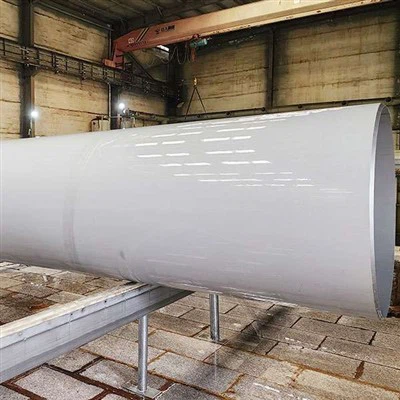
UNS N08904, also known as 904L, is a super austenitic stainless steel that has gained significant popularity in various industries due to its excellent corrosion resistance and mechanical properties. As a trusted supplier of UNS N08904, I often receive inquiries about its yield strength. In this blog post, I will delve into the concept of yield strength, explore the factors that influence the yield strength of UNS N08904, and provide some typical values for your reference.
Understanding Yield Strength
Before we discuss the yield strength of UNS N08904, it is essential to understand what yield strength means. Yield strength is a fundamental mechanical property of a material that represents the stress at which the material begins to deform plastically. In other words, it is the point at which the material no longer returns to its original shape after the applied stress is removed.
When a material is subjected to an external force, it initially undergoes elastic deformation, where the material returns to its original shape once the force is removed. However, as the applied stress increases, the material reaches a point where it starts to deform plastically, and this point is defined as the yield strength.
There are two common methods for determining the yield strength of a material: the offset method and the proportional limit method. The offset method is the most widely used method, where a specified offset strain (usually 0.2%) is applied to the stress-strain curve, and the corresponding stress is taken as the yield strength. The proportional limit method, on the other hand, determines the yield strength as the stress at which the stress-strain curve deviates from linearity.
Factors Affecting the Yield Strength of UNS N08904
The yield strength of UNS N08904 can be influenced by several factors, including:
Chemical Composition
The chemical composition of UNS N08904 plays a crucial role in determining its yield strength. UNS N08904 contains high levels of chromium (19 - 23%), nickel (23 - 28%), and molybdenum (4 - 5%), which contribute to its excellent corrosion resistance and mechanical properties. The presence of these alloying elements also affects the yield strength of the material. For example, nickel and molybdenum can increase the strength and hardness of the steel, while chromium enhances its corrosion resistance.
Heat Treatment
Heat treatment is another important factor that can significantly affect the yield strength of UNS N08904. The material can be heat-treated to achieve different microstructures and mechanical properties. For example, annealing can be used to relieve internal stresses and improve the ductility of the material, while quenching and tempering can increase its strength and hardness.
Cold Working
Cold working is a process in which the material is deformed at room temperature, such as rolling, forging, or drawing. Cold working can increase the yield strength of UNS N08904 by introducing dislocations and strain hardening the material. However, excessive cold working can also reduce the ductility of the material and make it more prone to cracking.
Grain Size
The grain size of UNS N08904 can also influence its yield strength. Generally, a finer grain size results in higher yield strength and better mechanical properties. This is because a finer grain size provides more grain boundaries, which act as barriers to dislocation movement and increase the resistance to plastic deformation.
Typical Yield Strength Values of UNS N08904
The yield strength of UNS N08904 can vary depending on the specific manufacturing process, heat treatment, and cold working conditions. However, typical yield strength values for UNS N08904 in the annealed condition are in the range of 240 - 290 MPa (35 - 42 ksi).
It is important to note that these values are only approximate and can vary depending on the specific application and requirements. For more accurate and detailed information about the yield strength of UNS N08904, it is recommended to refer to the material specifications provided by the manufacturer or consult with a materials engineer.
Comparison with Other Stainless Steels
To better understand the yield strength of UNS N08904, it is useful to compare it with other commonly used stainless steels. Here are some examples of other stainless steels and their typical yield strength values:
- Stainless Steel 310S / UNS S31008 / 1.4845: The yield strength of Stainless Steel 310S in the annealed condition is typically around 205 MPa (30 ksi).
- Stainless Steel 347 / UNS S34700 / 1.4550: The yield strength of Stainless Steel 347 in the annealed condition is usually in the range of 205 - 240 MPa (30 - 35 ksi).
- Stainless Steel 321 / UNS S32100 / 1.4541: The yield strength of Stainless Steel 321 in the annealed condition is typically around 205 MPa (30 ksi).
As can be seen from the comparison, UNS N08904 has a relatively higher yield strength compared to these commonly used stainless steels, which makes it a suitable choice for applications that require higher strength and better corrosion resistance.
Applications of UNS N08904
Due to its excellent corrosion resistance and mechanical properties, UNS N08904 is widely used in various industries, including:
Chemical Processing
UNS N08904 is commonly used in chemical processing equipment, such as reactors, heat exchangers, and storage tanks, due to its high resistance to a wide range of corrosive chemicals, including sulfuric acid, phosphoric acid, and chloride solutions.
Oil and Gas
In the oil and gas industry, UNS N08904 is used in offshore platforms, pipelines, and downhole equipment, where it is exposed to harsh environments, such as seawater and sour gas. Its excellent corrosion resistance and high strength make it a reliable material for these applications.
Food and Beverage
UNS N08904 is also used in the food and beverage industry, where it is required to meet strict hygiene and corrosion resistance standards. It is commonly used in equipment such as tanks, pipes, and valves for food processing and storage.
Conclusion
In conclusion, the yield strength of UNS N08904 is an important mechanical property that determines its suitability for various applications. The yield strength of UNS N08904 can be influenced by several factors, including chemical composition, heat treatment, cold working, and grain size. Typical yield strength values for UNS N08904 in the annealed condition are in the range of 240 - 290 MPa (35 - 42 ksi).


As a supplier of UNS N08904, I am committed to providing high-quality materials that meet the specific requirements of our customers. If you have any questions or need more information about the yield strength of UNS N08904 or other properties of the material, please feel free to contact us. We will be happy to assist you with your procurement needs and provide you with the best solutions for your applications.
References
- ASM Handbook, Volume 1: Properties and Selection: Irons, Steels, and High-Performance Alloys.
- ASTM A240/A240M - 20 Standard Specification for Chromium and Chromium-Nickel Stainless Steel Plate, Sheet, and Strip for Pressure Vessels and for General Applications.