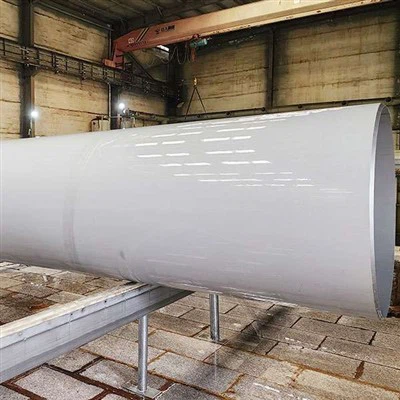
As a reliable supplier of UNS S30403, I am often asked about the tensile strength of this material. In this blog post, I will delve into the details of the tensile strength of UNS S30403, exploring what it is, why it matters, and how it compares to other stainless - steel alloys.
What is UNS S30403?
UNS S30403 is a low - carbon version of the well - known 304 stainless steel, which is also designated as AISI 304L. The “L” in 304L stands for “low - carbon,” and it contains a maximum of 0.030% carbon. This low - carbon content helps to prevent carbide precipitation during welding and heat treatment, which can lead to intergranular corrosion in standard 304 stainless steel.
UNS S30403 is an austenitic stainless steel, which means it has a face - centered cubic (FCC) crystal structure. This structure gives it excellent corrosion resistance, good formability, and high toughness. It is widely used in a variety of industries, including food processing, chemical, and construction, due to its combination of properties.
Understanding Tensile Strength
Tensile strength is a fundamental mechanical property of a material. It is defined as the maximum stress that a material can withstand while being stretched or pulled before necking (a reduction in cross - sectional area) or breaking. Tensile strength is typically measured in units of force per unit area, such as megapascals (MPa) or pounds per square inch (psi).
There are two main types of tensile strength: ultimate tensile strength (UTS) and yield strength. Ultimate tensile strength is the maximum stress the material can handle before failure. Yield strength, on the other hand, is the stress at which the material begins to deform plastically (permanently).


Tensile Strength of UNS S30403
The tensile strength of UNS S30403 can vary depending on several factors, including the manufacturing process, heat treatment, and the specific form of the material (e.g., sheet, bar, pipe). Generally, the ultimate tensile strength of UNS S30403 in the annealed condition is around 515 MPa (75,000 psi), and the yield strength is approximately 205 MPa (30,000 psi).
The elongation at break, which is another important mechanical property related to tensile strength, is typically around 40 - 60%. This high elongation indicates that UNS S30403 has good ductility, meaning it can be stretched or deformed significantly before breaking.
Factors Affecting the Tensile Strength of UNS S30403
Manufacturing Process
The way UNS S30403 is manufactured can have a significant impact on its tensile strength. For example, cold - working processes such as rolling or drawing can increase the strength of the material by introducing dislocations into the crystal structure. Cold - worked UNS S30403 can have an ultimate tensile strength of up to 758 MPa (110,000 psi) or even higher, depending on the degree of cold work.
Heat Treatment
Heat treatment can also alter the tensile strength of UNS S30403. Annealing, which involves heating the material to a high temperature and then slowly cooling it, is often used to relieve internal stresses and restore ductility. However, if the material is over - annealed or not annealed properly, it can result in a decrease in strength. On the other hand, some specialized heat treatments can be used to increase the strength of the material while maintaining its corrosion resistance.
Composition
Although UNS S30403 has a relatively consistent composition, small variations in the amounts of elements such as chromium, nickel, and carbon can affect its tensile strength. Chromium and nickel are the main alloying elements in 304 stainless steel, and they contribute to its corrosion resistance and strength. Higher levels of these elements can generally increase the tensile strength of the material, but they also need to be balanced to maintain other properties.
Comparison with Other Stainless - Steel Alloys
When comparing the tensile strength of UNS S30403 with other stainless - steel alloys, it is important to consider the specific application and requirements. For example, Stainless Steel 321H / UNS S32109 / 1.4878 has better resistance to intergranular corrosion at elevated temperatures compared to UNS S30403. In terms of tensile strength, 321H can have similar ultimate tensile strength values in the annealed condition, but it may have different performance under cold - working or high - temperature conditions.
Stainless Steel 316LN / UNS S31653 / 1.4406, 1.4429 is another popular stainless - steel alloy. It contains molybdenum, which enhances its pitting and crevice corrosion resistance. The tensile strength of 316LN is comparable to that of UNS S30403 in the annealed state, but it may have better performance in corrosive environments.
Stainless Steel 317 / UNS S31700 / 1.4449 has a higher molybdenum content than 304L and 316LN, which gives it even better corrosion resistance. Its tensile strength is also in a similar range to UNS S30403, but it is often preferred in more aggressive chemical environments.
Importance of Tensile Strength in Applications
The tensile strength of UNS S30403 is crucial in many applications. In structural applications, such as building frames or bridges, the material needs to be able to withstand the tensile forces exerted on it without failing. In the food processing industry, equipment made from UNS S30403 needs to have sufficient tensile strength to withstand the stresses during operation, such as the pressure of fluids or the force of mechanical agitation.
In the chemical industry, where the material may be exposed to corrosive substances, the combination of good corrosion resistance and appropriate tensile strength is essential. A material with low tensile strength may fail prematurely, leading to leaks or other safety hazards.
Contact Us for Your UNS S30403 Needs
If you are in the market for UNS S30403 and have specific requirements regarding its tensile strength or other properties, we are here to help. Our team of experts can provide you with detailed information about the material, including its mechanical properties, corrosion resistance, and suitability for your application. We can also offer customized solutions based on your needs.
Whether you need UNS S30403 in the form of sheets, bars, pipes, or other shapes, we can supply high - quality products at competitive prices. Contact us today to start a discussion about your UNS S30403 procurement and explore how we can meet your requirements.
References
- ASM Handbook, Volume 1: Properties and Selection: Irons, Steels, and High - Performance Alloys. ASM International.
- Stainless Steel: A Practical Guide. James R. Davis. ASM International.
- Materials Science and Engineering: An Introduction. William D. Callister, Jr. and David G. Rethwisch. Wiley.