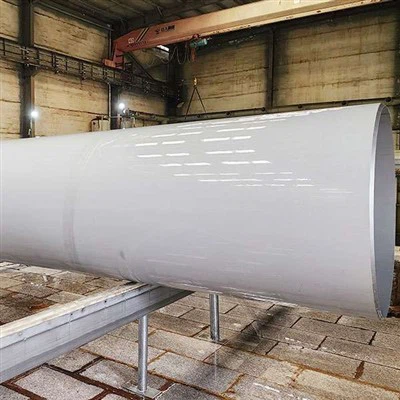
UNS N08367, a high-performance austenitic stainless steel, is renowned for its exceptional corrosion resistance and mechanical properties. As a supplier of UNS N08367, I am often asked about the role of each element in its chemical composition. In this blog post, I will delve into the significance of these elements and how they contribute to the unique characteristics of this alloy.
Chromium (Cr): The Corrosion Resistance Enhancer
Chromium is a key element in UNS N08367, typically present in a range of 20.0 - 22.0%. It plays a crucial role in forming a passive oxide layer on the surface of the alloy, which protects it from corrosion in various environments. This passive layer is self-healing, meaning that if it is damaged, it can reform in the presence of oxygen. The high chromium content in UNS N08367 makes it highly resistant to oxidation, pitting, and crevice corrosion, especially in chloride-containing environments. For example, in marine applications where the alloy is exposed to saltwater, the chromium-rich passive layer provides excellent protection against the corrosive effects of chloride ions.


Nickel (Ni): The Austenite Stabilizer and Corrosion Resistant Element
Nickel is another essential element in UNS N08367, with a content of 23.5 - 26.5%. It stabilizes the austenitic structure of the alloy, which is responsible for its excellent ductility, toughness, and weldability. Austenitic stainless steels have a face-centered cubic (FCC) crystal structure, which provides good formability and resistance to stress corrosion cracking. Additionally, nickel enhances the alloy's resistance to corrosion in reducing environments, such as sulfuric acid and hydrochloric acid. It also improves the alloy's resistance to high-temperature oxidation and carburization. For instance, in chemical processing industries where the alloy may be exposed to corrosive chemicals at elevated temperatures, the high nickel content helps to maintain the integrity of the alloy.
Molybdenum (Mo): The Pitting and Crevice Corrosion Resistant Element
Molybdenum is present in UNS N08367 at a level of 6.0 - 7.0%. It significantly enhances the alloy's resistance to pitting and crevice corrosion, particularly in chloride-containing environments. Molybdenum works by inhibiting the initiation and propagation of pits and crevices on the surface of the alloy. It also improves the alloy's resistance to general corrosion in acidic environments. For example, in the oil and gas industry, where the alloy may be used in downhole equipment exposed to brine and sour gas, the molybdenum content helps to prevent pitting and crevice corrosion, ensuring the long-term reliability of the equipment.
Nitrogen (N): The Strength and Corrosion Resistance Enhancer
Nitrogen is added to UNS N08367 in the range of 0.18 - 0.25%. It is a powerful austenite stabilizer and also enhances the alloy's strength and corrosion resistance. Nitrogen increases the yield strength and tensile strength of the alloy without sacrificing its ductility. It also improves the alloy's resistance to pitting and crevice corrosion by promoting the formation of a more stable passive layer. In addition, nitrogen can improve the alloy's resistance to intergranular corrosion. For example, in architectural applications where the alloy is used for structural components, the nitrogen content helps to provide the necessary strength and corrosion resistance.
Iron (Fe): The Base Element
Iron is the base element of UNS N08367, forming the majority of the alloy's composition. It provides the structural integrity and mechanical properties of the alloy. The iron matrix serves as a foundation for the other alloying elements, allowing them to interact and contribute to the overall performance of the alloy. However, the presence of iron also makes the alloy susceptible to corrosion in certain environments, which is why the addition of other elements such as chromium, nickel, and molybdenum is necessary to improve its corrosion resistance.
Carbon (C): The Strength and Weldability Element
Carbon is present in UNS N08367 at a low level, typically less than 0.03%. It contributes to the strength of the alloy by forming carbides with other elements such as chromium and molybdenum. However, excessive carbon content can lead to the formation of chromium carbides at grain boundaries, which can reduce the alloy's resistance to intergranular corrosion. Therefore, the carbon content in UNS N08367 is carefully controlled to ensure a balance between strength and corrosion resistance. In addition, low carbon content also improves the alloy's weldability, reducing the risk of weld-induced corrosion.
Manganese (Mn) and Silicon (Si): The Deoxidizers and Desulfurizers
Manganese and silicon are added to UNS N08367 in small amounts, typically less than 2.0% and 1.0% respectively. They act as deoxidizers and desulfurizers during the melting and refining process, helping to remove impurities and improve the quality of the alloy. Manganese also has a beneficial effect on the alloy's mechanical properties, such as strength and toughness. Silicon can improve the alloy's resistance to oxidation and scale formation at high temperatures.
Phosphorus (P) and Sulfur (S): The Impurities
Phosphorus and sulfur are considered impurities in UNS N08367 and are typically limited to less than 0.045% and 0.03% respectively. High levels of phosphorus and sulfur can reduce the alloy's ductility, toughness, and corrosion resistance. They can also cause hot cracking during welding. Therefore, strict control of these impurities is essential to ensure the quality and performance of the alloy.
Comparison with Other Stainless Steels
When compared to other stainless steels such as Stainless Steel 347 / UNS S34700 / 1.4550, Stainless Steel 317L / UNS S31703 / 1.4438, and Stainless Steel 304 / UNS S30400 / 1.4301, UNS N08367 offers superior corrosion resistance, especially in aggressive environments. Stainless Steel 347 contains niobium, which helps to prevent intergranular corrosion, but its corrosion resistance in chloride-containing environments is not as good as that of UNS N08367. Stainless Steel 317L has a higher molybdenum content than Stainless Steel 304, which improves its resistance to pitting and crevice corrosion, but UNS N08367 has an even higher molybdenum content and additional alloying elements such as nitrogen, which provide better overall corrosion resistance.
Conclusion
In conclusion, each element in the chemical composition of UNS N08367 plays a crucial role in determining its properties and performance. Chromium, nickel, and molybdenum are the primary elements responsible for the alloy's excellent corrosion resistance, while nitrogen enhances its strength and corrosion resistance. Iron provides the structural integrity, and carbon, manganese, and silicon contribute to the alloy's mechanical properties and quality. By carefully controlling the composition of these elements, UNS N08367 offers superior performance in a wide range of applications, including chemical processing, marine, and architectural industries.
If you are interested in purchasing UNS N08367 or have any questions about its properties and applications, please feel free to contact us for more information and to discuss your specific requirements. We are committed to providing high-quality products and excellent customer service.
References
- ASM Handbook, Volume 13A: Corrosion: Fundamentals, Testing, and Protection
- Stainless Steel World Magazine
- Technical data sheets of UNS N08367 from leading alloy manufacturers