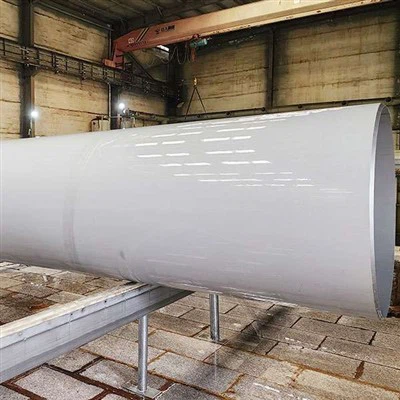
The reduction of area is a crucial mechanical property parameter that provides valuable insights into the ductility and deformation behavior of materials, especially in the context of metallic alloys like UNS N08904. As a supplier of UNS N08904, understanding and being able to communicate about the reduction of area of this material is essential for both technical support and customer engagement.
Understanding the Concept of Reduction of Area
The reduction of area is defined as the difference between the original cross - sectional area of a test specimen and the minimum cross - sectional area at the fracture point, expressed as a percentage of the original cross - sectional area. Mathematically, it can be represented as:
[RA(%)=\frac{A_0 - A_f}{A_0}\times100]
where (A_0) is the original cross - sectional area of the specimen before testing, and (A_f) is the cross - sectional area at the fracture point after the test.
This parameter is determined through a tensile test, which is a fundamental mechanical test used to evaluate the strength and ductility of materials. During a tensile test, a specimen of the material is gradually pulled until it fractures. By measuring the cross - sectional areas before and after the test, the reduction of area can be calculated.
Significance of Reduction of Area for UNS N08904
UNS N08904, also known as Stainless Steel 904L Stainless Steel 904L / UNS N08904 / 1.4539, is a high - alloy austenitic stainless steel. It is characterized by its excellent corrosion resistance, especially in aggressive environments such as those containing sulfuric acid, phosphoric acid, and chloride ions.
The reduction of area is an important property for UNS N08904 for several reasons. Firstly, it is an indicator of the ductility of the material. A high reduction of area value implies that the material can undergo significant plastic deformation before fracturing. This is particularly important in applications where the material needs to be formed or shaped, such as in the manufacturing of pipes, tubes, and sheets.
Secondly, the reduction of area can also provide information about the quality and integrity of the material. A low reduction of area value may indicate the presence of defects, such as inclusions, porosity, or improper heat treatment. These defects can weaken the material and reduce its ability to deform plastically, leading to premature failure.
Factors Affecting the Reduction of Area of UNS N08904
Several factors can influence the reduction of area of UNS N08904. One of the most significant factors is the chemical composition of the material. The alloying elements in UNS N08904, such as nickel, chromium, and molybdenum, play a crucial role in determining its mechanical properties. For example, nickel enhances the ductility and toughness of the material, while chromium improves its corrosion resistance.
The heat treatment process also has a profound impact on the reduction of area. Proper heat treatment can optimize the microstructure of the material, resulting in improved ductility. On the other hand, improper heat treatment, such as over - heating or rapid cooling, can lead to the formation of undesirable phases or residual stresses, which can reduce the reduction of area.
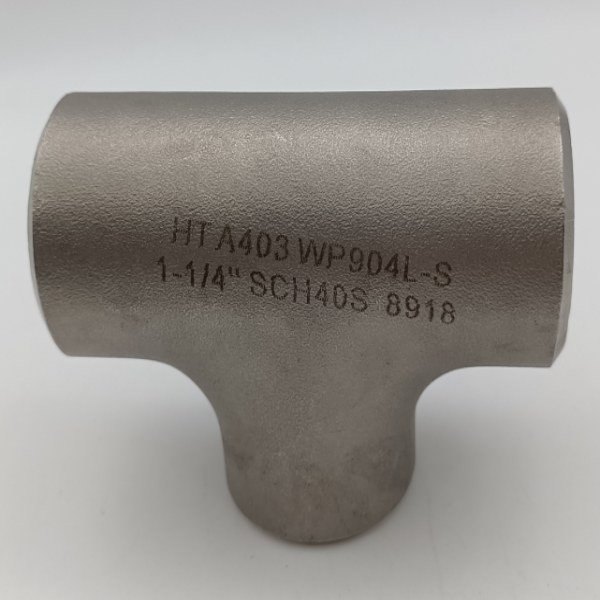

The testing conditions, such as the strain rate and temperature, can also affect the reduction of area. At higher strain rates, the material may exhibit lower ductility, resulting in a lower reduction of area. Similarly, the reduction of area can vary with temperature. Generally, the ductility of UNS N08904 increases with increasing temperature up to a certain point, after which it may start to decrease due to the onset of dynamic recrystallization or other thermal effects.
Comparison with Other Stainless Steels
To better understand the reduction of area of UNS N08904, it is useful to compare it with other stainless steels. For example, Stainless Steel 304 Stainless Steel 304 / UNS S30400 / 1.4301 is a widely used austenitic stainless steel. While both 304 and 904L are austenitic stainless steels, 904L has a higher alloy content, which gives it better corrosion resistance and generally higher ductility, as reflected in its reduction of area.
Stainless Steel 321 Stainless Steel 321 / UNS S32100 / 1.4541 is another austenitic stainless steel that contains titanium, which stabilizes the material against inter - granular corrosion. However, compared to UNS N08904, 321 may have different mechanical properties, including a different reduction of area, due to its specific chemical composition and microstructure.
Typical Reduction of Area Values for UNS N08904
The typical reduction of area for UNS N08904 can vary depending on the manufacturing process, heat treatment, and testing conditions. In general, for well - processed and heat - treated UNS N08904, the reduction of area can range from 50% to 60%. These values indicate that the material has good ductility and can withstand significant plastic deformation before fracturing.
It is important to note that these values are approximate, and actual reduction of area values may deviate depending on the specific application and requirements. For critical applications, it is recommended to conduct detailed testing and analysis to ensure that the material meets the desired mechanical properties.
Implications for Applications
The reduction of area of UNS N08904 has significant implications for its applications. In the chemical processing industry, where corrosion resistance and formability are crucial, the high ductility of UNS N08904, as indicated by its reduction of area, makes it suitable for the fabrication of equipment such as reactors, storage tanks, and piping systems.
In the food and beverage industry, where hygiene and corrosion resistance are essential, the ability of UNS N08904 to be formed into various shapes without cracking or fracturing is highly beneficial. It can be used to manufacture equipment such as tanks, pipes, and processing machinery.
Conclusion
As a supplier of UNS N08904, we understand the importance of the reduction of area as a key mechanical property of this material. It provides valuable information about the ductility, quality, and performance of UNS N08904 in various applications. By ensuring that our products meet the desired reduction of area requirements, we can provide our customers with high - quality materials that are suitable for their specific needs.
If you are interested in purchasing UNS N08904 or have any questions regarding its mechanical properties, including the reduction of area, please feel free to contact us for further discussion and negotiation. We are committed to providing you with the best solutions and products in the field of stainless steel alloys.
References
- ASM Handbook Volume 1: Properties and Selection: Irons, Steels, and High - Performance Alloys. ASM International.
- ISO 6892 - 1: Metallic materials - Tensile testing - Part 1: Method of test at room temperature. International Organization for Standardization.