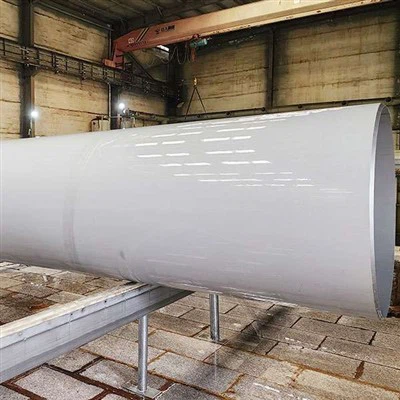
What is the pitting corrosion resistance of UNS S34700?
As a supplier of UNS S34700, I often encounter inquiries about the pitting corrosion resistance of this remarkable stainless - steel alloy. Pitting corrosion is a form of localized corrosion that leads to the creation of small holes or pits on the metal surface. It can be particularly troublesome in various industrial applications as it can cause rapid and unexpected failure of components. In this blog, I'll delve into the pitting corrosion resistance of UNS S34700, exploring its composition, factors affecting its resistance, and how it compares to other stainless - steel alloys.
Composition and Pitting Resistance Mechanisms
UNS S34700, also known as Stainless Steel 347, is an austenitic stainless steel. Its chemical composition plays a crucial role in determining its pitting corrosion resistance. The alloy contains approximately 17 - 19% chromium (Cr), 9 - 13% nickel (Ni), and 0.7% maximum of niobium (Nb). Chromium is a key element in stainless steels for corrosion resistance. It forms a passive oxide layer on the surface of the metal, which acts as a protective barrier against corrosive agents. This passive layer is self - healing, meaning that if it is damaged, it can reform in the presence of oxygen.
Nickel enhances the stability of the austenitic structure and improves the general corrosion resistance of the alloy. Niobium is added to stabilize the alloy against intergranular corrosion, which can sometimes be a precursor to pitting corrosion. When the alloy is exposed to a corrosive environment, the passive layer formed by chromium prevents the metal from reacting with the corrosive medium. However, in the presence of aggressive anions such as chloride ions (Cl⁻), the passive layer can be disrupted, leading to the initiation of pitting corrosion.
Factors Affecting Pitting Corrosion Resistance of UNS S34700
Chloride Concentration
Chloride ions are one of the most common causes of pitting corrosion in stainless steels. In environments with high chloride concentrations, such as seawater or some industrial process waters, the likelihood of pitting increases. The chloride ions can penetrate the passive layer and react with the metal beneath, creating small pits. The pitting corrosion resistance of UNS S34700 decreases as the chloride concentration increases. However, compared to some other stainless steels, it still shows relatively good resistance in moderately chloride - containing environments.
Temperature
Temperature also has a significant impact on the pitting corrosion resistance of UNS S34700. As the temperature rises, the rate of chemical reactions increases, and the stability of the passive layer decreases. Higher temperatures can accelerate the breakdown of the passive layer by chloride ions, leading to more rapid pitting corrosion. In high - temperature applications, it is important to carefully assess the corrosive environment and ensure that the alloy is suitable for the operating conditions.
pH Value
The pH value of the corrosive environment affects the pitting corrosion resistance. In acidic solutions, the passive layer on the surface of UNS S34700 can be more easily attacked. A lower pH value can lead to the dissolution of the passive layer and the initiation of pitting. On the other hand, in alkaline solutions, the alloy generally shows better corrosion resistance. However, extreme alkaline conditions can also cause problems, such as stress - corrosion cracking in some cases.


Comparison with Other Stainless - Steel Alloys
To better understand the pitting corrosion resistance of UNS S34700, it is useful to compare it with other stainless - steel alloys.
Stainless Steel 321H / UNS S32109 / 1.4878
Stainless Steel 321H / UNS S32109 / 1.4878 is another austenitic stainless steel. It contains titanium (Ti) for stabilization against intergranular corrosion. In terms of pitting corrosion resistance, UNS S34700 and Stainless Steel 321H are similar in many respects. However, in chloride - rich environments, UNS S34700 may have a slight edge due to the presence of niobium, which can enhance the overall stability of the alloy.
Stainless Steel 904L / UNS N08904 / 1.4539
Stainless Steel 904L / UNS N08904 / 1.4539 is a high - alloy austenitic stainless steel with a higher nickel and molybdenum (Mo) content compared to UNS S34700. Molybdenum is well - known for its ability to improve pitting corrosion resistance. In highly aggressive chloride environments, Stainless Steel 904L generally offers better pitting resistance than UNS S34700. However, UNS S34700 is more cost - effective in less severe corrosive conditions.
Stainless Steel AL6XN / UNS N08367 / 1.4529
Stainless Steel AL6XN / UNS N08367 / 1.4529 is a super austenitic stainless steel with high levels of chromium, nickel, and molybdenum. It has excellent pitting corrosion resistance, especially in harsh chloride - containing environments. Compared to UNS S34700, Stainless Steel AL6XN can withstand much higher chloride concentrations and more severe corrosive conditions. However, its high cost may not be justified in all applications.
Applications and Pitting Resistance Requirements
UNS S34700 is widely used in various industries due to its good combination of corrosion resistance and mechanical properties. In the chemical processing industry, it is used in equipment such as heat exchangers, pipes, and storage tanks. In these applications, the alloy may be exposed to a variety of corrosive chemicals, and its pitting corrosion resistance is essential to ensure the long - term integrity of the equipment.
In the food and beverage industry, UNS S34700 is used for processing and storage equipment. The alloy's resistance to pitting corrosion is important to prevent contamination of the food products. In architectural applications, such as building facades and structural components, the alloy's aesthetic appearance and pitting resistance make it a popular choice, especially in coastal areas where it may be exposed to salt - laden air.
Conclusion
The pitting corrosion resistance of UNS S34700 is determined by its chemical composition, the corrosive environment, and operating conditions. While it is not the most corrosion - resistant alloy in highly aggressive environments, it offers a good balance of performance and cost - effectiveness in many applications. Understanding the factors that affect its pitting resistance is crucial for proper material selection and design.
If you are in need of UNS S34700 for your project and want to discuss its suitability for your specific corrosive environment, I encourage you to reach out for a detailed consultation. We can work together to ensure that you get the best material for your needs and achieve optimal performance and longevity in your applications.
References
- Fontana, M. G. (1986). Corrosion Engineering. McGraw - Hill.
- Uhlig, H. H., & Revie, R. W. (1985). Corrosion and Corrosion Control. Wiley.
- ASTM International. (20XX). Standard test methods for pitting and crevice corrosion resistance of stainless steels and related alloys by the use of ferric chloride solution. ASTM G48.