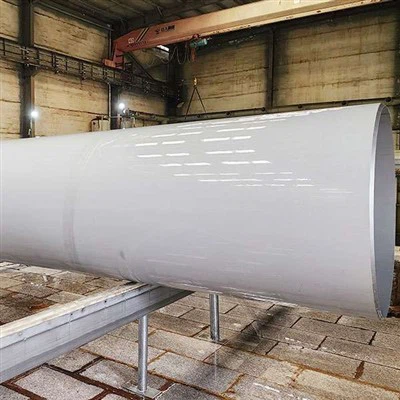
Hey there! As a supplier of UNS S31703, I often get asked about the melting point of this awesome stainless - steel alloy. So, I thought I'd write this blog to share all the cool details about it.
First off, let's talk a bit about what UNS S31703 is. It's a type of austenitic stainless steel. Austenitic steels are super popular because they've got great corrosion resistance, and they're easy to work with. UNS S31703 is no exception. It contains a higher amount of chromium, nickel, and molybdenum compared to some other common stainless - steel grades. These elements give it enhanced corrosion resistance, especially in environments where there are chlorides present.
Now, onto the main question: what's the melting point of UNS S31703? Well, the melting point of UNS S31703 typically ranges from about 1370°C to 1400°C (2498°F to 2552°F). This range can vary a bit depending on the exact chemical composition of the alloy. For example, if there are small variations in the amounts of chromium, nickel, or other elements, it can slightly affect the melting point.
To understand why this melting - point range is important, let's think about how UNS S31703 is used. It's often used in applications where it has to withstand high - temperature and corrosive conditions. For instance, in the chemical processing industry, it might be used in equipment like heat exchangers. Knowing the melting point helps engineers design these pieces of equipment properly. They need to make sure that the temperature in the process never gets close to the melting point of the material, otherwise, the equipment could fail.
Let's compare UNS S31703 with some other well - known stainless - steel grades. Take Stainless Steel 316L / UNS S31603 / 1.4404 for example. Stainless Steel 316L has a melting point in the range of about 1375°C to 1400°C (2507°F to 2552°F). As you can see, the melting points of UNS S31703 and 316L are pretty similar. However, UNS S31703 has better corrosion resistance due to its higher alloy content.
Another grade is Stainless Steel 310S / UNS S31008 / 1.4845. Stainless Steel 310S has a higher melting point, usually in the range of 1400°C to 1450°C (2552°F to 2642°F). This is because it has a higher chromium and nickel content, which increases its heat resistance. But it also means that it's a bit more difficult to work with during the manufacturing process, as you need to use higher temperatures to melt and shape it.
And then there's Stainless Steel 17 - 4PH / UNS S17400 / 1.4542. This is a precipitation - hardened stainless steel. Its melting point is around 1400°C to 1440°C (2552°F to 2624°F). It's used in different applications compared to UNS S31703, like in the aerospace and automotive industries, where high strength and good corrosion resistance are required.
When it comes to processing UNS S31703, the melting point plays a crucial role. During the manufacturing process, if you're melting the alloy to make new products, you need to heat it up to the right temperature. If you don't reach the melting point, the alloy won't melt properly, and you won't be able to shape it as desired. On the other hand, if you heat it too much above the melting point, it can cause problems like excessive oxidation or the formation of unwanted phases in the alloy.


In welding, the melting point is also important. When you're welding UNS S31703, you need to use a welding process and parameters that can heat the material enough to create a good weld joint without overheating it. If the heat input is too high, it can cause the material near the weld to reach a temperature close to the melting point, which can lead to issues like distortion or reduced corrosion resistance in the heat - affected zone.
The heat - treatment process of UNS S31703 is also related to its melting point. Heat treatment is often used to improve the mechanical properties of the alloy. For example, annealing can be done at a temperature well below the melting point to relieve internal stresses in the material. This helps to improve its ductility and toughness.
As a supplier of UNS S31703, I know how important it is to provide high - quality material with the right properties. When we produce UNS S31703, we carefully control the chemical composition to ensure that it meets the required standards and has the appropriate melting point. We also test the material to make sure that it performs well in different applications.
If you're in the market for UNS S31703, whether it's for a small project or a large - scale industrial application, we've got you covered. Our UNS S31703 products are of the highest quality, and we can provide you with all the technical information you need, including the exact chemical composition and melting - point data.
If you're interested in learning more about UNS S31703 or are thinking about making a purchase, don't hesitate to get in touch. We're here to answer all your questions and help you find the right solution for your needs. Whether you're an engineer looking for the perfect material for a new design or a procurement manager sourcing materials for your company, we're ready to have a chat and discuss your requirements.
References:
- ASM Handbook Volume 1: Properties and Selection: Irons, Steels, and High - Performance Alloys
- Stainless Steel Handbook by Addison - Wesley Publishing Company