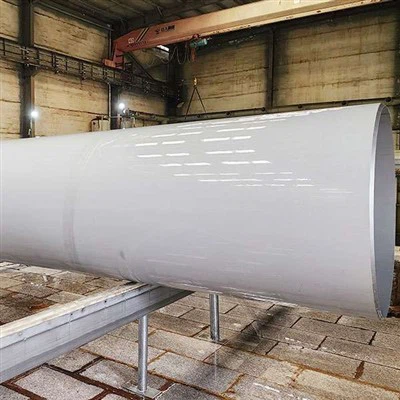
UNS S31635, also known as 316H stainless steel, is a well - recognized austenitic stainless steel grade. As a supplier of UNS S31635, I am often asked about its fatigue resistance. In this blog, I will delve into what the fatigue resistance of UNS S31635 is, the factors influencing it, and how it compares with other stainless steel grades.
Understanding Fatigue Resistance
Fatigue resistance refers to a material's ability to withstand cyclic loading without failing. When a material is subjected to repeated stress, even if the stress is below its ultimate tensile strength, it can develop cracks over time. These cracks gradually grow, and eventually, the material fails. This type of failure is known as fatigue failure.
For UNS S31635, fatigue resistance is a crucial property, especially in applications where the material is exposed to cyclic loading. For example, in the construction of bridges, pressure vessels, and mechanical components, the material needs to endure repeated stress over a long period. If the fatigue resistance is poor, it can lead to premature failure, which may cause significant safety hazards and economic losses.
Factors Affecting the Fatigue Resistance of UNS S31635
Chemical Composition
The chemical composition of UNS S31635 plays a vital role in its fatigue resistance. It contains approximately 16 - 18% chromium, 10 - 14% nickel, and 2 - 3% molybdenum. Chromium forms a passive oxide layer on the surface of the steel, which protects it from corrosion. Corrosion can significantly reduce the fatigue resistance of a material by creating stress concentration points. Nickel enhances the toughness and ductility of the steel, allowing it to better withstand cyclic loading. Molybdenum improves the pitting and crevice corrosion resistance, which also contributes to maintaining good fatigue performance.
Microstructure
The microstructure of UNS S31635 is also an important factor. Austenitic stainless steels like UNS S31635 have a face - centered cubic (FCC) crystal structure. This structure provides good ductility and toughness, which are beneficial for fatigue resistance. However, the presence of impurities, inclusions, or non - uniform grain sizes can reduce the fatigue resistance. For example, large inclusions can act as stress concentration points, where cracks are more likely to initiate.
Surface Finish
The surface finish of the UNS S31635 material has a significant impact on its fatigue resistance. A smooth surface finish reduces the stress concentration at the surface, making it more difficult for cracks to initiate. On the other hand, a rough surface finish can create micro - notches, which act as stress raisers and promote crack initiation. Therefore, proper surface treatment, such as polishing or grinding, can improve the fatigue resistance of UNS S31635.
Loading Conditions
The type, magnitude, and frequency of the cyclic loading also affect the fatigue resistance of UNS S31635. Tensile - compressive cyclic loading, for example, can cause different fatigue behaviors compared to pure tensile or compressive loading. Higher stress amplitudes generally lead to shorter fatigue lives. Additionally, the frequency of the cyclic loading can influence the fatigue process. At high frequencies, the material may experience more rapid crack growth due to the increased rate of stress application.
Comparison with Other Stainless Steel Grades
Stainless Steel 321 / UNS S32100 / 1.4541
Stainless Steel 321 / UNS S32100 / 1.4541 contains titanium, which stabilizes the steel against intergranular corrosion. In terms of fatigue resistance, both UNS S31635 and Stainless Steel 321 have good performance. However, UNS S31635's higher molybdenum content gives it better pitting and crevice corrosion resistance, which can indirectly contribute to better fatigue performance in corrosive environments.
Stainless Steel 347H / UNS S34709 / 1.4961
Stainless Steel 347H / UNS S34709 / 1.4961 is stabilized with niobium. It has good high - temperature strength and creep resistance. When it comes to fatigue resistance, UNS S31635 and Stainless Steel 347H have comparable performance under normal conditions. But in applications where corrosion is a concern, UNS S31635 may have an advantage due to its better corrosion - resistant properties.
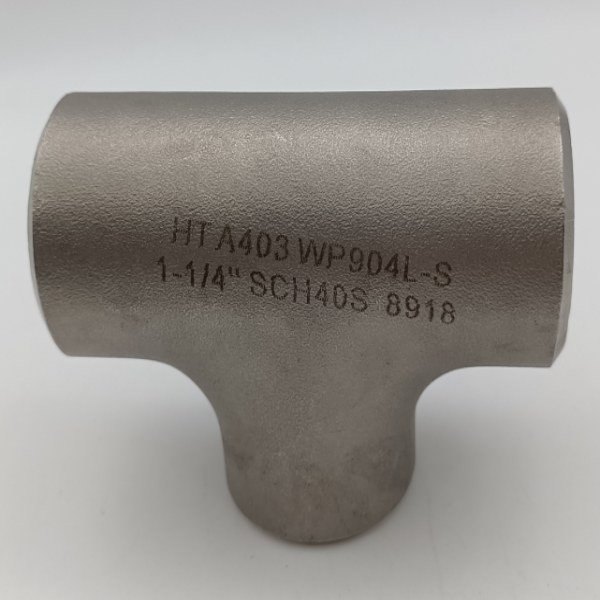
Stainless Steel 904L / UNS N08904 / 1.4539
Stainless Steel 904L / UNS N08904 / 1.4539 is a high - alloy austenitic stainless steel with a high nickel and molybdenum content. It offers excellent corrosion resistance in a wide range of aggressive environments. In terms of fatigue resistance, both UNS S31635 and Stainless Steel 904L can perform well. However, Stainless Steel 904L may have an edge in extremely corrosive environments, while UNS S31635 provides a good balance between fatigue resistance and cost - effectiveness.

Testing and Evaluation of Fatigue Resistance
To determine the fatigue resistance of UNS S31635, various testing methods are available. One of the most common methods is the rotating - beam fatigue test. In this test, a specimen is subjected to cyclic bending stress while rotating. The number of cycles to failure is recorded at different stress levels, and a fatigue curve (S - N curve) is plotted. The S - N curve shows the relationship between the stress amplitude and the number of cycles to failure.
Another method is the axial fatigue test, where the specimen is subjected to cyclic axial loading. This method is more suitable for simulating real - world loading conditions in some applications, such as in pressure vessels.
Applications Utilizing the Fatigue Resistance of UNS S31635
UNS S31635's good fatigue resistance makes it suitable for a wide range of applications. In the petrochemical industry, it is used in the construction of pressure vessels and piping systems. These components are often subjected to cyclic pressure changes, and the fatigue resistance of UNS S31635 ensures their long - term reliability.
In the aerospace industry, UNS S31635 can be used in the manufacturing of aircraft components, such as landing gear parts and engine mounts. These parts need to withstand repeated stress during take - off, flight, and landing.
In the food and beverage industry, UNS S31635 is used in equipment like storage tanks and processing machinery. The cyclic loading may come from factors such as filling and emptying of the tanks or the operation of the machinery.
Conclusion
In conclusion, the fatigue resistance of UNS S31635 is a complex property influenced by multiple factors, including chemical composition, microstructure, surface finish, and loading conditions. It offers good fatigue performance, especially when considering its corrosion - resistant properties. Compared with other stainless steel grades, it provides a cost - effective solution in many applications.
If you are looking for a reliable UNS S31635 supplier for your projects that require good fatigue resistance, I am here to assist you. Whether you need detailed product information, customized processing, or technical support, feel free to contact me for procurement and further discussions.
References
- ASM Handbook Volume 13A: Corrosion: Fundamentals, Testing, and Protection.
- Stainless Steel: A Practical Guide, Second Edition by George E. Totten and D. Scott MacKenzie.
- ASTM standards related to fatigue testing of metals.