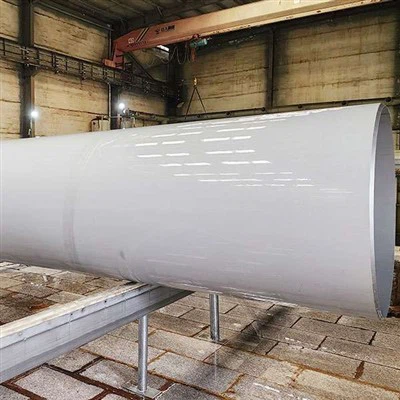
Yo, what's up everyone! I'm an UNS S34700 supplier, and today I wanna dig deep into the effect of humidity on the corrosion of UNS S34700.
First off, let's get to know UNS S34700 a bit better. It's a type of austenitic stainless steel. Austenitic stainless steels are known for their good corrosion resistance, formability, and weldability. UNS S34700 has a composition that includes chromium, nickel, and niobium. The chromium forms a passive oxide layer on the surface of the steel, which helps protect it from corrosion. The nickel enhances the toughness and ductility of the steel, while the niobium stabilizes the steel against intergranular corrosion.
Now, humidity plays a crucial role in the corrosion process. Humidity refers to the amount of water vapor present in the air. When the humidity is high, there's more water vapor around, and this can have a significant impact on the corrosion of UNS S34700.
One of the main ways humidity affects corrosion is by providing an electrolyte. Corrosion is an electrochemical process, and for it to occur, there needs to be an electrolyte, which is a substance that can conduct electricity. Water is a great electrolyte, and when the humidity is high, water droplets can condense on the surface of the UNS S34700. These water droplets can dissolve salts and other contaminants in the air, forming an electrolyte solution.


Once the electrolyte solution is present on the surface of the steel, corrosion can start. The passive oxide layer on the surface of the UNS S34700 can be damaged by the electrolyte solution, allowing the underlying steel to react with oxygen and other corrosive agents in the air. This leads to the formation of rust and other corrosion products.
Another factor related to humidity is the presence of oxygen. In a high - humidity environment, there's usually more oxygen available. Oxygen is one of the key components in the corrosion process. It reacts with the iron in the steel to form iron oxides, which are the main constituents of rust. The higher the humidity, the more likely it is for oxygen to be present in the water droplets on the surface of the steel, accelerating the corrosion process.
Let's talk about some specific scenarios. In a coastal area, the humidity is often high, and there's also a lot of salt in the air. Salt is a very effective electrolyte, and when combined with high humidity, it can be extremely corrosive to UNS S34700. The salt can break down the passive oxide layer on the steel surface more easily, and the high humidity provides the necessary water for the electrochemical reactions to occur.
On the other hand, in a dry environment with low humidity, the corrosion rate of UNS S34700 is much lower. Without enough water vapor in the air, there's no electrolyte solution to conduct electricity, and the corrosion process is severely limited.
But it's not all bad news. UNS S34700 is still a pretty corrosion - resistant material. The niobium in its composition helps prevent intergranular corrosion, which can be a big problem in some stainless steels. Even in a moderately humid environment, it can hold up well for a long time.
Now, let's compare UNS S34700 with some other stainless steels. For example, Stainless Steel 316Ti / UNS S31635 / 1.4571. This steel also has good corrosion resistance, but its performance in high - humidity and high - salt environments might be different from UNS S34700. 316Ti contains titanium, which stabilizes the steel against intergranular corrosion, similar to how niobium does in UNS S34700. However, the overall corrosion behavior can vary depending on the specific conditions.
Stainless Steel 17 - 4PH / UNS S17400 / 1.4542 is a precipitation - hardening stainless steel. It has high strength but might have different corrosion characteristics compared to UNS S34700. In a high - humidity environment, its corrosion resistance could be affected by the precipitation - hardening process and the specific alloying elements it contains.
Stainless Steel 316 / UNS S31600 / 1.4401 is one of the most commonly used stainless steels. It has good general corrosion resistance, but in high - humidity and aggressive environments, UNS S34700 might outperform it due to the presence of niobium.
So, if you're considering using UNS S34700 in a project, you need to take the humidity of the environment into account. If it's a high - humidity area, you might need to take some additional protective measures. One option is to apply a protective coating to the steel. A good coating can act as a barrier between the steel surface and the corrosive environment, preventing water and oxygen from reaching the steel.
Another option is to use a corrosion inhibitor. Corrosion inhibitors are chemicals that can be added to the environment or applied to the steel surface to slow down the corrosion process. They work by either forming a protective film on the steel surface or by interfering with the electrochemical reactions involved in corrosion.
As a UNS S34700 supplier, I've seen firsthand how different humidity levels can affect the performance of this steel. I've worked with customers in various industries, from construction to manufacturing, and the humidity factor is always something we discuss. Whether it's a building in a coastal city or a piece of equipment in a humid factory, understanding the impact of humidity on UNS S34700 is crucial for long - term durability.
If you're in the market for UNS S34700 or have any questions about how it will perform in your specific environment, don't hesitate to reach out. We can have a detailed discussion about your project requirements and find the best solutions for you. Whether it's choosing the right grade of steel or implementing the right protective measures, I'm here to help you make the most of your investment.
In conclusion, humidity has a significant effect on the corrosion of UNS S34700. High humidity can accelerate the corrosion process by providing an electrolyte and more oxygen, while low humidity can slow it down. But with the right knowledge and protective measures, you can ensure that your UNS S34700 components last a long time. So, if you're thinking about using this steel in your next project, give it some thought and get in touch with me to start the conversation.
References:
- "Corrosion of Stainless Steels" by George S. Painter
- "Handbook of Stainless Steels" edited by Sam S. Hecker