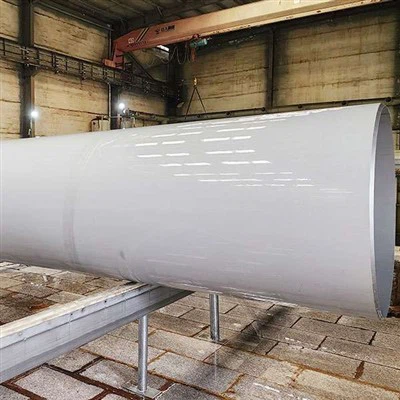
UNS S17400, also known as 17-4 PH stainless steel, is a precipitation-hardening martensitic stainless steel that offers a combination of high strength, good corrosion resistance, and excellent mechanical properties. As a supplier of UNS S17400, I often encounter questions about its various properties, and one of the frequently asked questions is about its elongation. In this blog post, I will delve into what elongation is, how it is measured for UNS S17400, and its significance in practical applications.
Understanding Elongation
Elongation is a measure of the ability of a material to deform plastically before breaking. It is expressed as a percentage and represents the increase in length of a specimen after it has been subjected to a tensile test until fracture, relative to its original length. In simpler terms, it shows how much a material can stretch without breaking.
The formula for calculating elongation is:
[ \text{Elongation} (%) = \frac{L_f - L_0}{L_0} \times 100 ]
where ( L_f ) is the final length of the specimen after fracture and ( L_0 ) is the original length of the specimen.
Measuring Elongation of UNS S17400
To measure the elongation of UNS S17400, a standard tensile test is conducted. A specimen of the material is prepared according to specific standards, such as ASTM E8 or ISO 6892-1. The specimen is then placed in a tensile testing machine, which applies a gradually increasing tensile force until the specimen breaks.
During the test, the machine records the load applied and the corresponding elongation of the specimen. The elongation is measured using an extensometer, which is a device that precisely measures the change in length of the specimen. Once the specimen fractures, the final length is measured, and the elongation percentage is calculated using the formula mentioned above.
Factors Affecting the Elongation of UNS S17400
Several factors can influence the elongation of UNS S17400. One of the most significant factors is the heat treatment process. UNS S17400 can be heat-treated to achieve different levels of strength and hardness, and these heat treatment conditions can have a profound impact on its elongation.
For example, when the material is solution annealed and then aged at a specific temperature, it undergoes precipitation hardening, which increases its strength but may reduce its elongation. On the other hand, if the heat treatment is not properly controlled, it can lead to the formation of undesirable phases or microstructures, which can also affect the elongation.
The chemical composition of UNS S17400 also plays a role in its elongation. Minor variations in the amounts of elements such as chromium, nickel, copper, and niobium can influence the material's mechanical properties, including its elongation. Additionally, the presence of impurities or inclusions in the material can act as stress concentrators, reducing the elongation and increasing the likelihood of fracture.
Typical Elongation Values for UNS S17400
The typical elongation values for UNS S17400 can vary depending on the specific heat treatment condition and the form of the material (e.g., bar, plate, or wire). In general, the elongation of solution-annealed UNS S17400 is relatively high, typically around 25 - 35%. After precipitation hardening, the elongation may decrease to around 10 - 20%, depending on the aging temperature and time.
It's important to note that these are just general ranges, and the actual elongation values may vary based on the factors mentioned above. Therefore, it is always recommended to refer to the material specifications provided by the manufacturer or conduct specific tests to determine the exact elongation of a particular batch of UNS S17400.
Significance of Elongation in Practical Applications
Elongation is an important property in many practical applications of UNS S17400. In applications where the material is subjected to bending, forming, or stretching operations, a higher elongation is desirable. For example, in the manufacturing of aerospace components, such as landing gear parts or structural components, the ability of the material to deform plastically without breaking is crucial to ensure proper fit and functionality.
In addition, elongation is also related to the material's ductility and toughness. A material with good elongation is generally more ductile, which means it can absorb more energy before fracturing. This is important in applications where the material may be exposed to impact or dynamic loading, such as in the automotive or machinery industries.
Comparison with Other Stainless Steels
When considering the use of UNS S17400, it's often useful to compare its elongation with other stainless steels. For instance, Stainless Steel 316L Mod / UNS S31603 / 1.4435 is a commonly used austenitic stainless steel. It typically has a higher elongation compared to precipitation-hardened UNS S17400, with elongation values often in the range of 40 - 60%. This makes it more suitable for applications that require extensive forming or bending.
Stainless Steel 316H / UNS 31609 / 1.4919 is another austenitic stainless steel. It also has relatively high elongation values, similar to 316L Mod, but it offers better high-temperature strength. In contrast, Stainless Steel 321H / UNS S32109 / 1.4878 has good oxidation resistance and high-temperature strength, and its elongation values are also comparable to other austenitic stainless steels.


Conclusion
In conclusion, the elongation of UNS S17400 is an important mechanical property that reflects its ability to deform plastically before breaking. It is influenced by factors such as heat treatment, chemical composition, and the presence of impurities. Understanding the elongation of UNS S17400 is crucial for selecting the right material for specific applications and ensuring its proper performance.
As a supplier of UNS S17400, I can provide you with high-quality material that meets your specific requirements. Whether you need a material with high elongation for forming operations or high strength for structural applications, I can offer you the right solution. If you are interested in purchasing UNS S17400 or have any questions about its properties, please feel free to contact me for further discussion and procurement negotiations.
References
- ASTM E8: Standard Test Methods for Tension Testing of Metallic Materials.
- ISO 6892-1: Metallic materials — Tensile testing — Part 1: Method of test at room temperature.