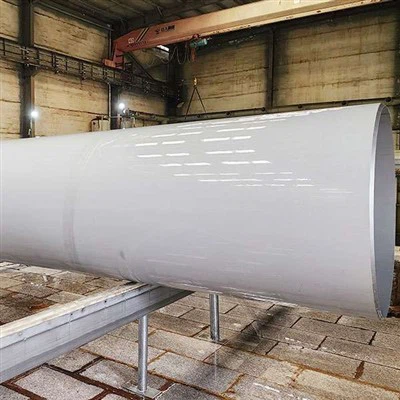
In the field of materials science and engineering, welding is a crucial process that joins materials together, and the heat input during welding plays a significant role in determining the microstructure of the welded materials. As a supplier of UNS S31254, I have witnessed firsthand the importance of understanding the relationship between heat input and the microstructure of this high - performance stainless steel.
UNS S31254, also known as Stainless Steel 254SMO / F44 / UNS S31254 / 1.4547 Stainless Steel 254SMO / F44 / UNS S31254 / 1.4547, is a super austenitic stainless steel with excellent corrosion resistance, high strength, and good weldability. It contains high levels of chromium, molybdenum, and nitrogen, which contribute to its superior properties. However, the welding process can introduce changes in its microstructure due to the heat generated, and these changes can have a profound impact on the performance of the welded joints.
1. Basics of Heat Input in Welding
Heat input in welding is defined as the amount of heat energy transferred to the workpiece per unit length of the weld. It is calculated using the formula:
[
\text{Heat Input}(J/mm)=\frac{60\times\text{Voltage}(V)\times\text{Current}(A)}{\text{Welding Speed}(mm/min)}
]
The heat input affects the cooling rate of the weld metal and the heat - affected zone (HAZ). A high heat input results in a slower cooling rate, while a low heat input leads to a faster cooling rate.
2. Microstructure of UNS S31254 in the As - Received State
Before welding, the microstructure of UNS S31254 consists mainly of austenite grains. Austenite is a face - centered cubic (FCC) structure that provides good ductility and toughness. The high levels of alloying elements in UNS S31254 also contribute to the stability of the austenite phase at room temperature.
3. Effects of Heat Input on the Weld Metal Microstructure
3.1 High Heat Input
When a high heat input is used during welding, the weld metal experiences a slow cooling rate. This slow cooling allows for more time for the diffusion of alloying elements and the formation of secondary phases. In the case of UNS S31254, high heat input can lead to the precipitation of intermetallic phases such as sigma phase ((\sigma)) and chi phase ((\chi)).
The sigma phase is a hard and brittle intermetallic compound that forms at intermediate temperatures (about 600 - 900°C). Its presence in the weld metal can significantly reduce the ductility and toughness of the welded joint. The chi phase is also an intermetallic phase that can form under similar conditions and has a negative impact on the mechanical properties of the weld.
Moreover, high heat input can cause grain growth in the weld metal. Coarse grains reduce the strength and impact resistance of the material. The large grain size also provides more sites for crack initiation and propagation, increasing the susceptibility to cracking.
3.2 Low Heat Input
On the other hand, a low heat input results in a fast cooling rate. The rapid cooling restricts the diffusion of alloying elements and the formation of secondary phases. As a result, the weld metal microstructure is more likely to retain the austenite phase with a finer grain size.
The fine - grained austenite structure provides better mechanical properties, including higher strength and toughness. The reduced formation of intermetallic phases also improves the corrosion resistance of the weld metal. However, very low heat input can lead to insufficient fusion and porosity in the weld, which can also degrade the performance of the welded joint.
4. Effects of Heat Input on the Heat - Affected Zone (HAZ)
The HAZ is the region of the base metal that is affected by the heat of welding but does not melt. The heat input has a significant impact on the microstructure and properties of the HAZ.


4.1 High Heat Input in the HAZ
High heat input in the HAZ causes a large temperature gradient and a slow cooling rate. This can lead to grain growth in the HAZ, similar to what happens in the weld metal. Coarse grains in the HAZ reduce the strength and toughness of the material.
In addition, high heat input can cause the precipitation of intermetallic phases in the HAZ. The presence of these phases can increase the susceptibility to corrosion and stress - corrosion cracking. The HAZ may also experience a change in the phase balance, with a potential increase in the amount of ferrite in some cases.
4.2 Low Heat Input in the HAZ
Low heat input in the HAZ results in a smaller temperature gradient and a faster cooling rate. This helps to maintain a finer grain size in the HAZ, which is beneficial for the mechanical properties. The reduced formation of intermetallic phases also improves the corrosion resistance of the HAZ.
5. Comparison with Other Stainless Steels
To better understand the effects of heat input on UNS S31254, it is useful to compare it with other stainless steels such as Stainless Steel 17 - 4PH / UNS S17400 / 1.4542 Stainless Steel 17 - 4PH / UNS S17400 / 1.4542 and Stainless Steel 316H / UNS 31609 / 1.4919 Stainless Steel 316H / UNS 31609 / 1.4919.
Stainless Steel 17 - 4PH is a precipitation - hardening stainless steel. The heat input during welding can affect the precipitation of the strengthening phases in the HAZ and the weld metal. High heat input may over - age the material, reducing its strength.
Stainless Steel 316H is an austenitic stainless steel. Similar to UNS S31254, high heat input can cause grain growth and the formation of intermetallic phases in the weld metal and HAZ. However, the alloying composition of 316H is different from that of UNS S31254, so the specific effects of heat input may vary.
6. Controlling Heat Input for Optimal Microstructure
To obtain a welded joint with optimal microstructure and properties, it is essential to control the heat input. This can be achieved by adjusting the welding parameters such as voltage, current, and welding speed.
For UNS S31254, a moderate heat input is generally recommended. A heat input in the range of 0.5 - 1.5 kJ/mm is often considered suitable to balance the formation of secondary phases and grain growth. Pre - heating and post - weld heat treatment can also be used to further control the cooling rate and improve the microstructure of the welded joint.
7. Importance of Microstructure on the Performance of Welded UNS S31254
The microstructure of the welded UNS S31254 directly affects its mechanical and corrosion properties. A well - controlled microstructure with a fine - grained austenite phase and minimal secondary phases provides high strength, good toughness, and excellent corrosion resistance.
In applications where the welded joints are exposed to corrosive environments, such as in the chemical and marine industries, the corrosion resistance of the welded joint is of utmost importance. A proper microstructure ensures that the welded joint can withstand the corrosive attack and maintain its integrity over time.
In mechanical applications, the strength and toughness of the welded joint are critical. A microstructure with fine grains and no brittle intermetallic phases can prevent cracking and ensure the reliable performance of the welded component.
8. Conclusion and Call to Action
In conclusion, the heat input during welding has a significant effect on the microstructure of welded UNS S31254. High heat input can lead to the formation of intermetallic phases and grain growth, which degrade the mechanical and corrosion properties of the welded joint. Low heat input can result in a fine - grained austenite structure but may cause other issues such as insufficient fusion.
As a supplier of UNS S31254, we understand the importance of providing high - quality materials and technical support to our customers. We can offer guidance on the welding process, including the selection of appropriate heat input and welding parameters, to ensure that our customers can achieve the best results in their welding applications.
If you are interested in purchasing UNS S31254 or have any questions about its welding and microstructure, please feel free to contact us for further discussion and procurement. We are committed to providing you with the best solutions for your specific needs.
References
- ASM Handbook, Volume 6: Welding, Brazing, and Soldering. ASM International.
- Stainless Steel Handbook, Edited by L. L. Shreir. Butterworth - Heinemann.
- Research papers on the welding of UNS S31254 from relevant academic journals.