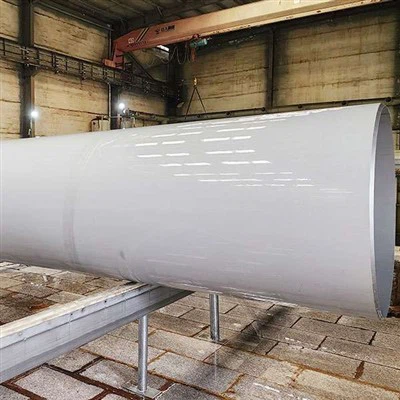
Hey there! As a supplier of UNS S31703, I've gotten a ton of questions about how this material performs in high - pressure environments. So, I thought I'd sit down and write this blog to share what I know.
First off, let's get a bit of background. UNS S31703, also known as Stainless Steel 317L, is a low - carbon version of Stainless Steel 317. You can find more detailed info about it on this page: Stainless Steel 317L / UNS S31703 / 1.4438. It's part of the austenitic stainless - steel family, and it's got a bunch of elements like chromium, nickel, and molybdenum in it. These elements give it some pretty cool properties that make it a great choice for different applications, especially in high - pressure situations.
One of the key things about UNS S31703 in high - pressure environments is its strength. High - pressure conditions can really put a strain on materials, and you need something that can hold up. UNS S31703 has good tensile strength, which means it can resist being pulled apart. In a high - pressure system, there are often forces acting on the material in different directions, and the tensile strength of UNS S31703 helps it stay intact. For example, in deep - sea oil and gas exploration, where the pressure can be extremely high, pipes made of UNS S31703 can withstand the forces exerted on them without breaking.
Another important aspect is its corrosion resistance. High - pressure environments are often also corrosive. For instance, in chemical processing plants, high - pressure vessels may be exposed to all sorts of aggressive chemicals. The chromium in UNS S31703 forms a passive oxide layer on the surface of the material. This layer acts as a shield, protecting the underlying metal from corrosion. The molybdenum in it further enhances this corrosion resistance, especially against pitting and crevice corrosion. If you want to compare it with other stainless - steel types, check out Stainless Steel 317 / UNS S31700 / 1.4449 and Stainless Steel 316Ti / UNS S31635 / 1.4571. While they also have good corrosion resistance, UNS S31703's performance in high - pressure and corrosive conditions is often better.
The ductility of UNS S31703 is also a plus in high - pressure applications. Ductility means the ability of a material to deform without breaking. In high - pressure systems, there can be some minor deformations due to the pressure changes. UNS S31703 can handle these deformations well, which reduces the risk of sudden failures. For example, in a high - pressure steam system, the pipes may expand and contract slightly as the steam pressure changes. The ductility of UNS S31703 allows it to adapt to these changes without cracking.
Now, let's talk about its performance in high - pressure and high - temperature environments. In some industries, like power generation, materials are exposed to both high pressure and high temperatures. UNS S31703 maintains its mechanical properties at elevated temperatures. The nickel in it helps to keep the austenitic structure stable, which is important for maintaining strength and corrosion resistance. Even at high temperatures, the passive oxide layer formed by chromium still provides protection against corrosion.
However, it's not all roses. There are some limitations to UNS S31703 in high - pressure environments. For example, in extremely high - pressure situations, there may be some fatigue issues over time. Fatigue is the weakening of a material due to repeated loading and unloading. If the pressure in a system fluctuates a lot, the material may develop small cracks over time. But compared to many other materials, the fatigue resistance of UNS S31703 is still relatively good.


In terms of welding, UNS S31703 can be welded, but proper welding techniques are crucial, especially in high - pressure applications. If the welding is not done correctly, it can create weak points in the material, which may lead to failures under high pressure. So, when using UNS S31703 in high - pressure projects, it's important to work with experienced welders who know how to handle this material.
In conclusion, UNS S31703 has some great performance characteristics in high - pressure environments. Its strength, corrosion resistance, ductility, and performance at high temperatures make it a top choice for many industries. Whether it's in the oil and gas sector, chemical processing, or power generation, this material can hold its own.
If you're involved in a project that requires a material for high - pressure applications, I highly recommend considering UNS S31703. And if you're interested in purchasing it, feel free to reach out for a chat. We can discuss your specific needs and see how UNS S31703 can fit into your project.
References
- ASM Handbook Volume 13A: Corrosion: Fundamentals, Testing, and Protection
- Stainless Steel Handbook by The Nickel Institute