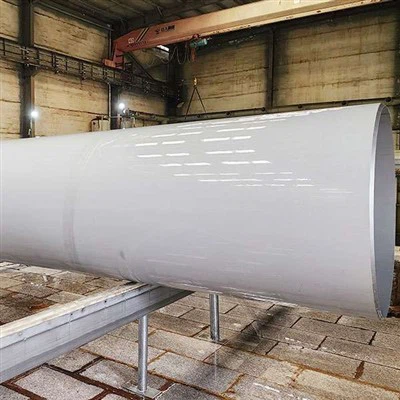
Hey there! As a supplier of Inconel alloys, I've been getting a lot of questions about the aging treatment of Inconel 718 lately. So, I thought I'd put together this blog post to give you all the lowdown on what it is, why it's important, and how it works.
First off, let's talk a bit about Inconel 718 itself. It's a super-alloy that's widely used in a variety of high - stress applications, like aerospace, gas turbines, and nuclear reactors. Inconel 718 / UNS N07718 / 2.4668 is known for its excellent mechanical properties, including high strength, good corrosion resistance, and outstanding creep resistance at elevated temperatures.
But here's the thing: to really make the most of these properties, Inconel 718 often needs to go through an aging treatment. Aging, also known as precipitation hardening, is a heat - treatment process that helps to improve the alloy's strength and hardness.
What is Aging Treatment?
Aging treatment is a two - step process. The first step is solution annealing, and the second is aging proper.
Solution Annealing
Solution annealing is like the warm - up act for the aging treatment. In this step, the Inconel 718 is heated to a high temperature, usually around 954 - 982°C (1750 - 1800°F), and held there for a certain period of time. This high - temperature soak allows all the alloying elements in the material to dissolve into a solid solution. Think of it as making a well - mixed cocktail where all the ingredients are evenly distributed.
After the soaking time is up, the material is rapidly cooled, usually by quenching in water or oil. This rapid cooling "freezes" the alloying elements in the solid solution, creating a supersaturated state. This supersaturated state is crucial because it sets the stage for the next step: aging.
Aging
Once the solution annealing is done, it's time for the aging part. Aging is carried out at a lower temperature than solution annealing, typically in the range of 704 - 760°C (1300 - 1400°F). During aging, the supersaturated solid solution starts to break down, and tiny particles of strengthening phases, mainly gamma - prime (γ') and gamma - double - prime (γ''), start to precipitate out.
These precipitates act like little roadblocks in the crystal structure of the alloy. When the material is subjected to stress, these roadblocks prevent the movement of dislocations (defects in the crystal lattice), which in turn increases the strength and hardness of the alloy.
Why is Aging Treatment Important for Inconel 718?
The aging treatment is a game - changer for Inconel 718. Without it, the alloy wouldn't have the high strength and hardness required for many of its applications.
In aerospace, for example, components made from Inconel 718 need to withstand extreme mechanical and thermal stresses. The aging treatment helps these components maintain their shape and integrity under such harsh conditions. In gas turbines, where high - temperature strength is crucial, the precipitation - hardened Inconel 718 can operate more efficiently and for longer periods without failure.
How Does the Aging Treatment Affect Different Properties?
Strength and Hardness
As I mentioned earlier, the main effect of aging treatment is to increase the strength and hardness of Inconel 718. The precipitation of the gamma - prime and gamma - double - prime phases creates a fine - scale microstructure that resists deformation. This means that the material can handle higher loads without bending or breaking.
Ductility
While the aging treatment increases strength and hardness, it can also have an impact on ductility. Ductility is the ability of a material to deform plastically before breaking. As the strength goes up, the ductility of Inconel 718 usually goes down a bit. However, the right aging parameters can be adjusted to achieve a good balance between strength and ductility, depending on the specific application requirements.
Corrosion Resistance
Inconel 718 already has good corrosion resistance in its base state. The aging treatment doesn't significantly change this property. In fact, in some cases, the precipitation of the strengthening phases can even enhance the corrosion resistance by providing a more stable surface layer.
Factors Affecting the Aging Treatment
Several factors can affect the outcome of the aging treatment for Inconel 718.
Temperature
The aging temperature is a critical factor. If the temperature is too low, the precipitation process will be very slow, and the strengthening phases may not form properly. On the other hand, if the temperature is too high, the precipitates may grow too large, which can actually reduce the strength of the alloy. So, finding the right temperature is like finding the sweet spot for a perfect bake.
Time
The time the material spends at the aging temperature also matters. Longer aging times generally lead to more precipitation and higher strength, but there's a point of diminishing returns. If the aging time is too long, the precipitates may start to coarsen, and the strength may start to decrease.
Alloy Composition
The exact composition of the Inconel 718 can also influence the aging treatment. Small variations in the amounts of elements like nickel, chromium, niobium, and titanium can affect the precipitation behavior and the final properties of the alloy.
Comparing Inconel 718 with Other Inconel Alloys
It's interesting to compare Inconel 718 with other Inconel alloys like Inconel 601 / UNS N06601 / 2.4851 and Inconel 625 / UNS N06625 / 2.4856.
Inconel 601 is mainly used for its excellent oxidation resistance at high temperatures. It doesn't rely as much on precipitation hardening as Inconel 718. Its strength comes more from its base alloy composition and the formation of a protective oxide layer on the surface.
Inconel 625, on the other hand, has good corrosion resistance and moderate strength. While it can also undergo a form of aging treatment, the strengthening mechanism is different from that of Inconel 718. Inconel 625's strength is enhanced by the precipitation of carbide phases rather than the gamma - prime and gamma - double - prime phases seen in Inconel 718.
Our Role as an Inconel Supplier
As an Inconel supplier, we play a crucial role in ensuring that our customers get the best - quality Inconel 718. We work closely with manufacturers to understand their specific requirements and provide materials that are properly heat - treated.
We have strict quality control measures in place to make sure that the aging treatment is carried out correctly. This includes monitoring the temperature and time during both the solution annealing and aging steps, as well as conducting various tests on the final product to verify its properties.
If you're in the market for Inconel 718 or any other Inconel alloys, we're here to help. Whether you need advice on the right heat - treatment process for your application or you're looking for high - quality raw materials, we've got you covered. Don't hesitate to reach out to us to start a conversation about your procurement needs. We're always happy to discuss how we can meet your specific requirements and provide you with the best Inconel solutions.

References
- ASM Handbook Volume 4: Heat Treating. ASM International.
- “Inconel 718: Properties, Processing, and Applications” by various industry experts.