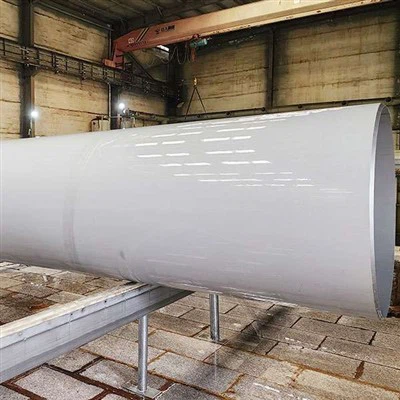
In the realm of nuclear applications, the quality control of materials is of utmost importance. UNS S31653, a specific type of stainless steel, has emerged as a crucial material in nuclear facilities due to its unique properties. As a supplier of UNS S31653, I understand the significance of meeting the strict requirements for quality control in nuclear applications. In this blog, I will delve into the key requirements for the quality control of UNS S31653 in nuclear settings.
Chemical Composition Requirements
The chemical composition of UNS S31653 is a fundamental aspect of quality control. In nuclear applications, even the slightest deviation in chemical composition can have significant implications for the material's performance and safety. The main elements in UNS S31653 include chromium (Cr), nickel (Ni), molybdenum (Mo), and nitrogen (N), among others.


Chromium is a key element that provides corrosion resistance to the stainless steel. In nuclear environments, where the material is exposed to high - energy radiation and corrosive agents, a sufficient amount of chromium is necessary to form a protective oxide layer on the surface. Typically, the chromium content in UNS S31653 should be within a specific range, usually around 16 - 18%. This range ensures optimal corrosion resistance under nuclear operating conditions.
Nickel also plays an important role in enhancing the corrosion resistance and toughness of the material. It helps to stabilize the austenitic structure of the stainless steel, which is beneficial for maintaining the mechanical properties in nuclear applications. The nickel content in UNS S31653 is generally in the range of 10 - 14%. This specific range is carefully defined to balance the various properties required for nuclear use.
Molybdenum is another vital element that improves the pitting and crevice corrosion resistance of the material. In nuclear power plants, where the water chemistry can be complex and aggressive, molybdenum helps to prevent localized corrosion. The molybdenum content in UNS S31653 is usually around 2 - 3%.
Nitrogen is added to strengthen the material and improve its resistance to intergranular corrosion. The nitrogen content in UNS S31653 is precisely controlled to achieve the desired mechanical and corrosion - resistant properties.
In addition to these main elements, the content of impurities such as sulfur (S) and phosphorus (P) must be strictly limited. Sulfur can form sulfide inclusions, which can act as initiation sites for corrosion and crack propagation. Phosphorus can reduce the ductility and impact toughness of the material. Therefore, the sulfur content is typically limited to less than 0.03% and the phosphorus content to less than 0.045%.
Mechanical Property Requirements
Mechanical properties are equally important in nuclear applications. UNS S31653 must possess adequate strength, ductility, and toughness to withstand the harsh operating conditions in nuclear facilities.
Tensile strength is a critical mechanical property. It measures the maximum stress that the material can withstand before breaking under tension. In nuclear applications, the material needs to have sufficient tensile strength to bear the mechanical loads during normal operation and potential accident scenarios. The minimum tensile strength of UNS S31653 is usually specified according to relevant nuclear standards.
Yield strength is also an important parameter. It represents the stress at which the material begins to deform plastically. A proper yield strength is necessary to ensure that the material can maintain its shape and integrity under normal operating stresses without excessive deformation.
Ductility, often measured by elongation and reduction of area, is essential for the material to absorb energy during deformation. In nuclear applications, ductility allows the material to withstand sudden changes in stress, such as those caused by seismic events. Adequate ductility helps to prevent brittle fracture, which could lead to catastrophic failures.
Toughness, which is related to the material's ability to resist crack propagation, is crucial in nuclear environments. High - toughness materials can better withstand the combined effects of radiation, corrosion, and mechanical stress. Charpy impact testing is commonly used to evaluate the toughness of UNS S31653.
Microstructure Requirements
The microstructure of UNS S31653 has a significant impact on its properties. In nuclear applications, a homogeneous and fine - grained microstructure is desirable.
A fine - grained microstructure can improve the mechanical properties of the material, such as strength and toughness. It also enhances the corrosion resistance by providing a more uniform surface for the formation of the protective oxide layer. The grain size of UNS S31653 is carefully controlled during the manufacturing process.
The austenitic structure of UNS S31653 is important for its corrosion resistance and mechanical stability. However, the presence of undesirable phases, such as ferrite or sigma phase, can degrade the properties of the material. Ferrite can reduce the corrosion resistance and toughness, while the sigma phase can cause embrittlement. Therefore, strict quality control measures are in place to ensure that the microstructure is free from these harmful phases.
Radiological Requirements
In nuclear applications, radiological properties are a unique aspect of quality control. UNS S31653 must have low levels of radioactive isotopes. During the production process, the raw materials and manufacturing methods are carefully selected to minimize the incorporation of radioactive elements.
Some elements, such as cobalt (Co), can have radioactive isotopes that can pose a radiation hazard in nuclear facilities. Therefore, the cobalt content in UNS S31653 is strictly controlled to keep the radiation levels within acceptable limits.
Non - Destructive Testing Requirements
Non - destructive testing (NDT) is an essential part of quality control for UNS S31653 in nuclear applications. NDT methods are used to detect internal and surface defects without damaging the material.
Ultrasonic testing (UT) is commonly used to detect internal defects such as cracks, porosity, and inclusions. It can accurately locate and size these defects, allowing for timely repairs or rejection of sub - standard materials.
Radiographic testing (RT) is another important NDT method. It uses X - rays or gamma rays to produce images of the internal structure of the material. RT can detect hidden defects that may not be visible on the surface.
Magnetic particle testing (MT) is suitable for detecting surface and near - surface defects in ferromagnetic materials. Although UNS S31653 is austenitic stainless steel and has low ferromagnetism, MT can still be used in some cases to detect surface cracks.
Liquid penetrant testing (PT) is used to detect surface - opening defects. It involves applying a liquid penetrant to the surface of the material, allowing it to seep into the defects, and then removing the excess penetrant and applying a developer to make the defects visible.
Documentation and Traceability Requirements
In nuclear applications, strict documentation and traceability are required. Every batch of UNS S31653 must have detailed documentation regarding its chemical composition, mechanical properties, manufacturing process, and NDT results.
This documentation serves as evidence of the material's quality and compliance with nuclear standards. It also allows for traceability, which is crucial in case of any quality issues or accidents. Traceability means that the origin of the raw materials, the manufacturing steps, and the distribution history of the material can be traced back.
As a supplier of UNS S31653, we understand the importance of these requirements. We have established a comprehensive quality control system to ensure that our UNS S31653 products meet all the strict requirements for nuclear applications. Our products are carefully tested and inspected at every stage of the production process, from raw material selection to final product delivery.
If you are looking for high - quality UNS S31653 for nuclear applications, we are here to provide you with the best solutions. Our experience and expertise in the field of stainless steel production make us a reliable partner. We are committed to delivering products that meet the highest standards of quality and safety.
If you have any questions or are interested in purchasing UNS S31653 for your nuclear projects, please feel free to contact us for further discussion. We are ready to assist you in finding the most suitable products for your specific needs.
For more information about related stainless steel products, you can visit the following links:
Stainless Steel 316H / UNS 31609 / 1.4919
Stainless Steel 316L Mod / UNS S31603 / 1.4435
Stainless Steel 304L / UNS S30403 / 1.4306, 1.4307
References
- ASME Boiler and Pressure Vessel Code, Section II - Materials.
- ASTM International standards related to stainless steel for nuclear applications.
- Nuclear Regulatory Commission (NRC) regulations on materials used in nuclear power plants.