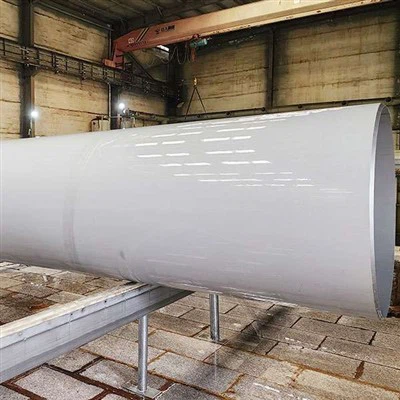
Hey there! As a supplier of UNS S30403, I often get asked about the optical properties of this awesome material. So, I thought I'd take some time to break it down for you in this blog post.
First off, let's understand what UNS S30403 is. It's also known as Stainless Steel 304L. You can find more detailed info about it here: Stainless Steel 304L / UNS S30403 / 1.4306, 1.4307. This stainless - steel grade is super popular because of its great corrosion resistance, good formability, and weldability. But when it comes to optical properties, there's a lot more to it.
Reflectivity
One of the key optical properties of UNS S30403 is its reflectivity. The surface finish of the material plays a huge role here. A polished surface of UNS S30403 can be quite reflective. When light hits a well - polished piece of this stainless steel, a significant amount of the light is reflected back. This is why you often see shiny stainless - steel products in kitchens or architectural applications.
The reflectivity can vary depending on the wavelength of light. In the visible light spectrum, a highly polished UNS S30403 surface can reflect a large portion of the light, giving it that bright, shiny appearance. However, in the infrared or ultraviolet regions, the reflectivity might change. For example, in the infrared, the reflectivity can be affected by the surface roughness and the composition of the alloy. If there are impurities or oxides on the surface, they can absorb some of the infrared light, reducing the overall reflectivity.
Absorption
Absorption is another important optical property. When light interacts with UNS S30403, some of the light energy is absorbed by the material. This absorption is related to the electronic structure of the atoms in the alloy. The electrons in the atoms can absorb photons of specific energies, which correspond to certain wavelengths of light.
In the case of UNS S30403, the absorption is relatively low in the visible light range for a polished surface. But if the surface has been oxidized or has some surface defects, the absorption can increase. Oxidation can create a layer of metal oxides on the surface, which have different electronic properties compared to the pure alloy. These oxides can absorb more light, especially in the shorter wavelengths of the visible spectrum, making the surface look duller.
Transmission
Transmission of light through UNS S30403 is extremely low. Since it's a solid metal alloy, it's opaque to visible light. Light can't pass through it like it can through a transparent material such as glass or some plastics. However, in very thin foils or in special circumstances where the material is in a nanostructured form, there might be some very limited transmission in certain wavelengths. But for normal applications where we use UNS S30403 in sheets, bars, or pipes, transmission of light is not a relevant factor.
How Surface Finish Affects Optical Properties
The surface finish of UNS S30403 has a massive impact on its optical properties. There are different types of surface finishes available, like a mill finish, a brushed finish, and a mirror - like polished finish.
A mill finish is the most basic. It has a relatively rough surface, which scatters light in different directions. This results in a less shiny appearance compared to a polished finish. The scattered light gives the material a more matte look, and the reflectivity is lower. The absorption might also be slightly higher due to the increased surface area exposed to light.


A brushed finish gives the material a textured look. It has fine parallel lines on the surface, which can also scatter light. The scattering is more directional compared to a mill finish. Light is scattered along the direction of the brush strokes, creating a unique visual effect. The reflectivity is better than a mill finish but not as high as a polished finish.
A mirror - like polished finish is the most reflective. It has a very smooth surface, which allows light to be reflected in a specular manner. This means that the light is reflected at the same angle as it hits the surface, creating a clear reflection. The absorption is minimized, and the material looks very bright and shiny.
Comparison with Other Stainless - Steel Grades
It's always interesting to compare UNS S30403 with other stainless - steel grades in terms of optical properties. Let's take a look at Stainless Steel 317L / UNS S31703 / 1.4438 and Stainless Steel 316H / UNS 31609 / 1.4919.
Stainless Steel 317L has a higher molybdenum content compared to UNS S30403. This can affect its optical properties. The higher molybdenum can change the electronic structure of the alloy, which might lead to different absorption and reflectivity characteristics. In general, 317L might have slightly different reflectivity in the infrared region due to the presence of molybdenum.
Stainless Steel 316H is a high - carbon version of 316 stainless steel. The carbon content can influence the surface properties, especially when it comes to oxidation. Oxidation can have a big impact on the optical properties. If 316H oxidizes more easily than UNS S30403, its absorption will increase, and the reflectivity will decrease, making it look duller over time.
Applications Based on Optical Properties
The optical properties of UNS S30403 make it suitable for a wide range of applications. In the architectural field, its high reflectivity and shiny appearance are used to create modern and aesthetically pleasing structures. It can be used for facades, handrails, and decorative elements. The ability to achieve different surface finishes allows architects to create unique visual effects.
In the kitchenware industry, the reflective and non - absorbent properties of UNS S30403 are ideal. Pots, pans, and sinks made from this material are not only durable but also look great. The shiny surface is easy to clean, and the low absorption means that it doesn't retain food stains or odors.
In the automotive industry, UNS S30403 can be used for trim pieces and decorative elements. The high reflectivity can enhance the overall look of the vehicle, giving it a more luxurious appearance.
Conclusion
So, there you have it - the optical properties of UNS S30403. Its reflectivity, absorption, and the way it interacts with light are all influenced by factors such as surface finish, composition, and the presence of impurities. Whether you're an architect looking for a shiny material for your next project, a chef in need of high - quality kitchenware, or an automotive designer wanting to add a touch of luxury to a vehicle, UNS S30403 has a lot to offer.
If you're interested in purchasing UNS S30403 for your project, don't hesitate to reach out. We're here to help you choose the right grade and surface finish to meet your optical and other performance requirements. Let's start a conversation and see how we can work together to make your project a success.
References
- "Introduction to Materials Science for Engineers" by James F. Shackelford
- "Stainless Steels: Their Properties and Selection" by ASM International