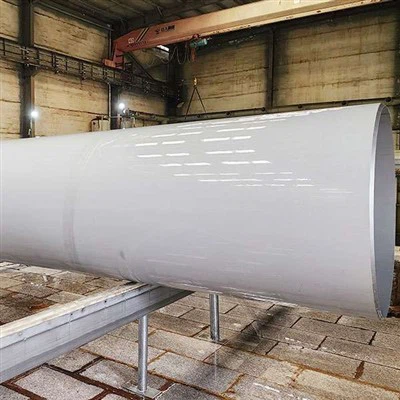
UNS S31603, also known as Stainless Steel 316L, is a widely used austenitic stainless steel grade. As a reliable supplier of UNS S31603, I am delighted to share comprehensive insights into its mechanical properties, which play a crucial role in various industrial applications.
Tensile Strength
Tensile strength is one of the fundamental mechanical properties that measures the maximum stress a material can withstand while being stretched or pulled before breaking. For UNS S31603, the typical minimum tensile strength is around 485 MPa (70 ksi). This relatively high tensile strength makes it suitable for applications where the material needs to endure significant pulling forces. For example, in the construction of bridges and high - rise buildings, structural components made of UNS S31603 can handle the tensile stresses caused by wind, seismic activities, and the weight of the structure itself.
The fine - grained microstructure of UNS S31603 contributes to its good tensile strength. During the manufacturing process, strict control of alloying elements and heat treatment ensures a homogeneous structure, which in turn enhances the material's ability to resist deformation under tension. When compared to other stainless steel grades like Stainless Steel 321 / UNS S32100 / 1.4541, UNS S31603 generally has a similar tensile strength range, but the specific values can vary depending on factors such as the exact chemical composition and the manufacturing process.
Yield Strength
Yield strength is the stress at which a material begins to deform plastically, meaning it will not return to its original shape after the load is removed. The minimum yield strength of UNS S31603 is approximately 170 MPa (25 ksi). This property is essential in applications where the material needs to maintain its shape under normal operating loads. In the automotive industry, for instance, parts made of UNS S31603, such as exhaust systems, need to withstand the vibrations and mechanical stresses during vehicle operation without undergoing permanent deformation.
The low carbon content in UNS S31603 (designated as "L" for low carbon) helps to improve its yield strength and also reduces the risk of carbide precipitation during welding and heat treatment. Carbide precipitation can lead to a decrease in the material's corrosion resistance and mechanical properties. Compared with Stainless Steel 317 / UNS S31700 / 1.4449, which has a higher alloy content, UNS S31603 may have a slightly lower yield strength, but it still offers excellent performance in many common applications.
Elongation
Elongation is a measure of the ability of a material to stretch before breaking. UNS S31603 typically has an elongation of at least 40%. This high elongation value indicates that the material is ductile, which is beneficial in forming processes such as bending, rolling, and stamping. In the manufacturing of kitchen utensils, for example, the good ductility of UNS S31603 allows it to be easily formed into various shapes without cracking.
The austenitic structure of UNS S31603 is responsible for its high ductility. Austenite is a face - centered cubic (FCC) crystal structure that provides a large number of slip systems, allowing the atoms to move relative to each other under stress. This enables the material to deform plastically over a large range without fracturing. When compared to some ferritic stainless steels, which have a body - centered cubic (BCC) structure and generally lower elongation values, UNS S31603 offers superior formability.
Hardness
The hardness of UNS S31603 can vary depending on factors such as heat treatment and cold working. In the annealed condition, the Brinell hardness of UNS S31603 is typically around 217 HB. Hardness is an important property in applications where the material needs to resist wear and abrasion. For example, in the food processing industry, equipment made of UNS S31603, such as conveyor belts and mixing tanks, need to withstand the friction and abrasion caused by the movement of food products and cleaning agents.
Cold working can significantly increase the hardness of UNS S31603. When the material is cold - rolled or cold - drawn, the dislocation density in the crystal structure increases, which restricts the movement of atoms and thus increases the hardness. However, cold working also reduces the ductility of the material. Therefore, a balance needs to be struck between hardness and ductility depending on the specific application requirements.
Impact Resistance
UNS S31603 exhibits good impact resistance, especially at low temperatures. This is due to its austenitic structure, which remains ductile even at sub - zero temperatures. In cryogenic applications, such as the storage and transportation of liquefied natural gas (LNG), materials need to have high impact resistance to prevent brittle fracture. UNS S31603 can meet these requirements and is often used in the construction of LNG storage tanks and pipelines.
The addition of nickel in UNS S31603 enhances its impact resistance. Nickel stabilizes the austenitic structure and improves the material's toughness. When compared to some other stainless steel grades with lower nickel content, UNS S31603 generally has better impact resistance, making it a preferred choice in applications where sudden impact loads are likely to occur.
Fatigue Resistance
Fatigue resistance is the ability of a material to withstand repeated loading and unloading cycles without failure. UNS S31603 has good fatigue resistance, which is important in applications such as rotating machinery and aerospace components. In aircraft engines, for example, components made of UNS S31603 need to endure millions of loading cycles during the engine's operation.
The fine - grained microstructure and the homogeneous distribution of alloying elements in UNS S31603 contribute to its fatigue resistance. The material's ability to resist crack initiation and propagation under cyclic loading is crucial. Surface finish also plays a role in fatigue resistance. A smooth surface finish can reduce stress concentrations and improve the fatigue life of UNS S31603 components.
Corrosion Resistance and Its Influence on Mechanical Properties
One of the most significant advantages of UNS S31603 is its excellent corrosion resistance. The addition of chromium, nickel, and molybdenum in its composition forms a passive oxide layer on the surface of the material, which protects it from corrosion in various environments. This corrosion resistance is closely related to its mechanical properties.
In a corrosive environment, if a material is not corrosion - resistant, corrosion can cause pitting, crevice corrosion, and stress - corrosion cracking. These forms of corrosion can significantly reduce the cross - sectional area of the material and introduce stress concentrations, which in turn can lead to a decrease in the material's mechanical properties such as tensile strength and fatigue resistance. Since UNS S31603 has high corrosion resistance, it can maintain its mechanical integrity over a long period in corrosive environments, such as marine and chemical processing applications.
Applications Based on Mechanical Properties
The unique combination of mechanical properties of UNS S31603 makes it suitable for a wide range of applications. In the medical field, its biocompatibility, along with its good mechanical properties, makes it an ideal material for surgical instruments and implants. The high tensile strength and corrosion resistance ensure the durability and safety of these medical devices.
In the chemical industry, the corrosion resistance and mechanical strength of UNS S31603 make it suitable for the construction of reaction vessels, pipelines, and storage tanks. These components need to withstand the corrosive effects of chemicals and the mechanical stresses caused by the flow of fluids and the pressure inside the vessels.


Conclusion
As a supplier of Stainless Steel 316L / UNS S31603 / 1.4404, I understand the importance of the mechanical properties of UNS S31603 in different industries. Its high tensile strength, good yield strength, excellent elongation, appropriate hardness, impact resistance, fatigue resistance, and corrosion resistance make it a versatile material for a wide variety of applications.
If you are in need of high - quality UNS S31603 for your projects, we are here to provide you with the best products and services. Our team of experts can assist you in selecting the most suitable material based on your specific requirements. Contact us to start a procurement discussion and find the ideal solution for your needs.
References
- ASM Handbook Volume 1: Properties and Selection: Irons, Steels, and High - Performance Alloys
- Stainless Steel World Magazine articles on austenitic stainless steels
- Technical data sheets from major stainless steel manufacturers