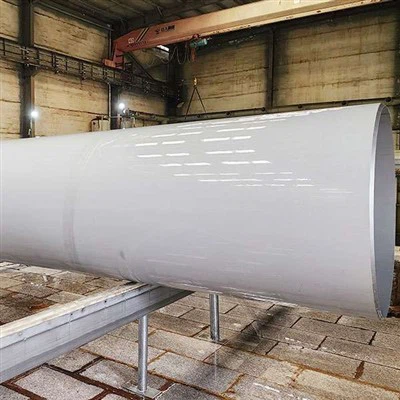
Hey there! As a supplier of UNS 31609, I often get asked about its fire - resistance properties. So, I thought I'd write this blog to share all the cool stuff I know about it.


First off, let's understand what UNS 31609 is. It's a type of stainless steel that's an upgraded version of the well - known 316 stainless steel. The main difference lies in its carbon content. UNS 31609 has a higher carbon content compared to standard 316, which gives it some unique properties, especially when it comes to high - temperature applications.
Now, let's dive into the fire - resistance properties. Fire resistance is super important in many industries, like construction, oil and gas, and even in some manufacturing processes. When a material is exposed to fire, it has to withstand high temperatures without losing its structural integrity.
One of the key factors in the fire resistance of UNS 31609 is its chromium and nickel content. Chromium forms a protective oxide layer on the surface of the steel when it's heated. This oxide layer acts as a barrier, preventing further oxidation and corrosion of the steel. Nickel, on the other hand, helps to maintain the austenitic structure of the steel at high temperatures. The austenitic structure is tough and ductile, which means it can bend and stretch a bit without breaking under the stress caused by heat expansion.
In terms of actual temperature resistance, UNS 31609 can handle temperatures up to around 870°C (1600°F) for short periods. This makes it suitable for applications where there might be occasional exposure to high - temperature events, like in fire - rated partitions or in exhaust systems where hot gases are present.
When compared to other stainless steels, UNS 31609 holds its own pretty well. For example, Stainless Steel 304 / UNS S30400 / 1.4301 is a widely used stainless steel, but it has lower fire - resistance capabilities. 304 starts to lose its strength and corrosion resistance at relatively lower temperatures compared to UNS 31609.
Another steel, Stainless Steel AL6XN / UNS N08367 / 1.4529, is known for its excellent corrosion resistance in harsh environments. While it also has good high - temperature properties, UNS 31609 can be a more cost - effective option for applications where the main concern is fire resistance rather than extreme corrosion resistance.
Stainless Steel 17 - 4PH / UNS S17400 / 1.4542 is a precipitation - hardened stainless steel. It has high strength, but its fire - resistance properties are not as good as UNS 31609. The precipitation - hardening process can cause the steel to become brittle at high temperatures, which is a big no - no when it comes to fire - resistant applications.
In addition to its chemical composition, the manufacturing process of UNS 31609 also plays a role in its fire resistance. Proper heat treatment during production can optimize the microstructure of the steel, enhancing its ability to withstand high temperatures. For example, a well - annealed UNS 31609 will have a more uniform grain structure, which helps to distribute the stress caused by heat more evenly.
However, it's important to note that even though UNS 31609 has good fire - resistance properties, it's not indestructible. In a long - duration, high - intensity fire, the steel will eventually start to degrade. But compared to many other materials, it can maintain its integrity for a longer time, giving more time for evacuation and fire - fighting efforts.
If you're in an industry where fire resistance is a concern, UNS 31609 could be a great choice for your projects. Whether you're building a new high - rise building, an industrial facility, or an offshore platform, this steel can provide the reliability and safety you need.
I'm here as your UNS 31609 supplier, and I'm more than happy to help you with your procurement needs. If you have any questions about the fire - resistance properties, or if you want to discuss how UNS 31609 can be used in your specific application, just reach out. We can have a chat and figure out the best solution for you.
So, don't hesitate to get in touch if you're interested in learning more or making a purchase. Let's work together to make your projects safer and more reliable with UNS 31609.
References:
- ASM Handbook Volume 13C: Corrosion: Stainless Steels
- The Stainless Steel Handbook by Llanos and Payer