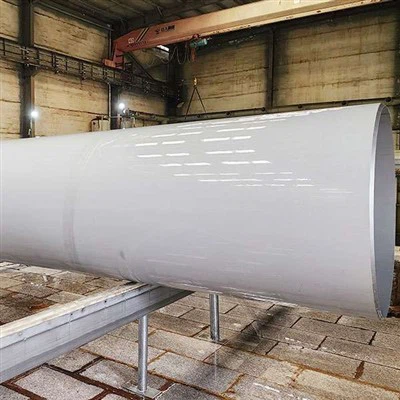
UNS S31008, also known as Stainless Steel 310S, is a widely used austenitic stainless steel alloy. As a supplier of UNS S31008, I have in - depth knowledge of its properties, applications, and most importantly, its common microstructures. In this blog, I will explore the various microstructures of UNS S31008, their formation mechanisms, and the impact they have on the alloy's performance.
Austenite: The Primary Microstructure
The most prominent microstructure in UNS S31008 is austenite. Austenite is a face - centered cubic (FCC) crystal structure that provides the alloy with excellent ductility, toughness, and corrosion resistance. The high nickel (Ni) and chromium (Cr) content in UNS S31008 (typically around 19 - 22% Cr and 9 - 13% Ni) stabilizes the austenitic phase at room temperature and over a wide range of temperatures.
The formation of austenite in UNS S31008 occurs during the melting and solidification process. When the alloy is heated above its critical temperature, the iron atoms rearrange into the FCC structure, and the alloy transforms into austenite. During cooling, the austenitic phase is retained due to the alloying elements, preventing the formation of other less - desirable phases.


The austenitic microstructure gives UNS S31008 its characteristic non - magnetic property. This makes it suitable for applications where magnetic interference needs to be avoided, such as in some electronic and medical equipment. Additionally, the austenite phase allows the alloy to be easily formed and welded, which is beneficial for manufacturing processes.
Delta Ferrite
Although austenite is the dominant phase in UNS S31008, small amounts of delta ferrite can also be present. Delta ferrite is a body - centered cubic (BCC) crystal structure that forms during solidification. It is typically found at the grain boundaries of the austenite phase.
The presence of delta ferrite in UNS S31008 is mainly due to the alloy's chemical composition and the solidification rate. Elements such as chromium and molybdenum (Mo) promote the formation of ferrite, while nickel and carbon (C) stabilize the austenite phase. If the cooling rate during solidification is too fast, the alloying elements do not have enough time to diffuse, and delta ferrite can form.
Delta ferrite can have both positive and negative effects on the properties of UNS S31008. On the positive side, it can improve the alloy's resistance to hot cracking during welding. The ferrite phase can act as a diffusion path for impurities, reducing the likelihood of crack formation. However, excessive amounts of delta ferrite can reduce the alloy's corrosion resistance, especially in environments containing chlorides.
Carbides
Carbides are another common microstructure in UNS S31008. Carbides are compounds formed between carbon and other elements, such as chromium, in the alloy. The most common carbide in UNS S31008 is chromium carbide (Cr₂₃C₆).
Carbide formation occurs when the alloy is heated to intermediate temperatures (around 425 - 815°C) for an extended period. This process is known as sensitization. During sensitization, carbon atoms diffuse to the grain boundaries and react with chromium to form chromium carbides. As a result, the chromium content in the vicinity of the grain boundaries is depleted, reducing the alloy's corrosion resistance in these areas. This phenomenon is known as intergranular corrosion.
To prevent carbide formation and sensitization, UNS S31008 can be subjected to a solution annealing treatment. In this process, the alloy is heated to a high temperature (around 1065 - 1120°C) to dissolve the carbides and then rapidly cooled to prevent their re - precipitation.
Sigma Phase
The sigma phase is an intermetallic compound that can form in UNS S31008 under certain conditions. It is a hard and brittle phase that contains iron, chromium, and sometimes other elements such as nickel and molybdenum.
The formation of the sigma phase is favored by long - term exposure to intermediate temperatures (around 540 - 870°C). The sigma phase forms at the expense of the austenite and delta ferrite phases, and its presence can significantly reduce the alloy's ductility and toughness. Additionally, the sigma phase can also decrease the alloy's corrosion resistance.
To avoid the formation of the sigma phase, it is important to control the alloy's chemical composition and heat treatment process. Minimizing the presence of elements that promote sigma - phase formation, such as molybdenum, and avoiding long - term exposure to the critical temperature range can help prevent the formation of this undesirable phase.
Impact of Microstructures on Applications
The different microstructures in UNS S31008 have a significant impact on its applications. The austenitic microstructure makes the alloy suitable for a wide range of applications, including high - temperature environments, chemical processing, and food processing industries. Its excellent corrosion resistance and ductility allow it to be used in equipment such as heat exchangers, furnace components, and storage tanks.
The presence of delta ferrite can be beneficial in welding applications, but it needs to be carefully controlled to avoid negative effects on corrosion resistance. For applications where corrosion resistance is critical, such as in marine environments, minimizing the amount of delta ferrite is essential.
Carbide formation and sensitization can limit the use of UNS S31008 in environments where intergranular corrosion is a concern. However, with proper heat treatment, the alloy can be made resistant to this type of corrosion, expanding its application range.
The sigma phase is generally undesirable in most applications due to its negative impact on mechanical properties and corrosion resistance. Therefore, it is crucial to prevent its formation through proper alloy design and heat treatment.
Comparison with Other Stainless Steel Alloys
When comparing UNS S31008 with other stainless steel alloys, such as Stainless Steel 304 / UNS S30400 / 1.4301 and Stainless Steel 316L / UNS S31603 / 1.4404, the microstructural differences become apparent.
Stainless Steel 304 has a lower chromium and nickel content compared to UNS S31008. As a result, it is more prone to carbide formation and sensitization, and its corrosion resistance in high - temperature and aggressive environments is not as good as that of UNS S31008.
Stainless Steel 316L contains molybdenum, which enhances its corrosion resistance in chloride - containing environments. However, the presence of molybdenum also increases the risk of sigma - phase formation. In contrast, UNS S31008, with its relatively high chromium and nickel content, offers good overall corrosion resistance and high - temperature performance without the same level of sigma - phase risk as some molybdenum - containing alloys.
Conclusion
As a supplier of UNS S31008, understanding the common microstructures of this alloy is crucial for ensuring its quality and performance. The austenite phase provides the alloy with its excellent ductility, toughness, and corrosion resistance, while the presence of delta ferrite, carbides, and sigma phase can have both positive and negative effects on its properties.
By carefully controlling the alloy's chemical composition, heat treatment process, and manufacturing conditions, we can optimize the microstructures of UNS S31008 to meet the specific requirements of different applications. Whether you are in the chemical processing, high - temperature, or food processing industry, UNS S31008 can be a reliable choice for your projects.
If you are interested in purchasing UNS S31008 for your application, I encourage you to contact me for a detailed discussion. We can work together to determine the best grade and specification of the alloy based on your specific needs.
References
- ASM Handbook, Volume 1: Properties and Selection: Irons, Steels, and High - Performance Alloys
- Metals Handbook Desk Edition, Third Edition
- Stainless Steel for Design Engineers, Second Edition