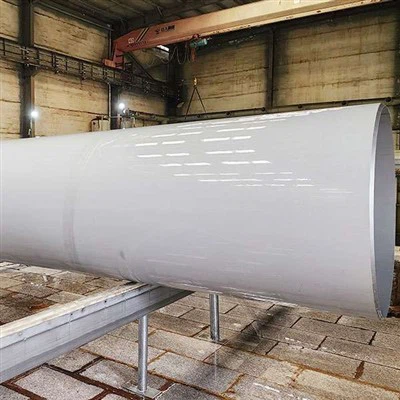
As a supplier of UNS S31700, I often encounter inquiries from customers regarding the compliance of this material with ASME (American Society of Mechanical Engineers) standards. This blog post aims to provide a comprehensive analysis of whether UNS S31700 is compliant with ASME standards, exploring its properties, applications, and the specific requirements of ASME codes.
Understanding UNS S31700
UNS S31700, also known as Stainless Steel 317 / UNS S31700 / 1.4449 Stainless Steel 317 / UNS S31700 / 1.4449, is an austenitic stainless steel alloy. It contains a higher percentage of chromium, nickel, and molybdenum compared to other common stainless steels such as Stainless Steel 316 / UNS S31600 / 1.4401 Stainless Steel 316 / UNS S31600 / 1.4401 and Stainless Steel 347 / UNS S34700 / 1.4550 Stainless Steel 347 / UNS S34700 / 1.4550. These alloying elements contribute to its enhanced corrosion resistance, particularly in environments containing chlorides and other aggressive chemicals.
The typical chemical composition of UNS S31700 includes approximately 18 - 20% chromium, 11 - 15% nickel, and 3 - 4% molybdenum. The high chromium content forms a passive oxide layer on the surface of the steel, which protects it from corrosion. The nickel enhances the austenitic structure, improving the steel's toughness and ductility. The molybdenum further enhances the corrosion resistance, especially in pitting and crevice corrosion environments.
ASME Standards and Their Relevance
ASME standards play a crucial role in the design, fabrication, and inspection of pressure vessels, piping systems, and other mechanical components. These standards ensure the safety and reliability of equipment used in various industries, including chemical processing, power generation, and oil and gas.
There are several ASME codes and sections that may be relevant to UNS S31700, depending on the specific application. For example, ASME Boiler and Pressure Vessel Code (BPVC) Section II, Part A provides material specifications for ferrous and non - ferrous metals used in pressure vessels. Section VIII, Division 1 and Division 2 cover the rules for the design, fabrication, and inspection of pressure vessels. ASME B31.3, Process Piping, provides requirements for the design, materials, fabrication, erection, inspection, and testing of process piping systems.
Compliance of UNS S31700 with ASME Standards
Chemical Composition Requirements
ASME standards specify the acceptable chemical composition ranges for materials used in pressure - containing applications. UNS S31700 generally meets the chemical composition requirements of relevant ASME codes. For instance, in ASME BPVC Section II, Part A, the chemical composition limits for austenitic stainless steels are defined to ensure the desired properties and performance of the materials. The chromium, nickel, and molybdenum contents of UNS S31700 fall within the acceptable ranges specified by these standards, which is essential for its corrosion resistance and mechanical properties.
Mechanical Properties
ASME standards also set requirements for mechanical properties such as tensile strength, yield strength, and elongation. UNS S31700 typically has a minimum tensile strength of around 515 MPa (75 ksi) and a minimum yield strength of about 205 MPa (30 ksi). These values meet or exceed the requirements of ASME codes for austenitic stainless steels used in pressure - containing applications. The high ductility of UNS S31700, with an elongation of at least 40%, also ensures that the material can withstand deformation during fabrication and service without failure.
Heat Treatment and Fabrication
ASME standards provide guidelines for heat treatment and fabrication processes to ensure the integrity of the final product. UNS S31700 can be hot - worked and cold - worked, but proper heat treatment is often required to relieve stresses and restore the desired microstructure. Solution annealing at a temperature of around 1010 - 1120°C (1850 - 2050°F) followed by rapid quenching is a common heat treatment process for UNS S31700. This process helps to dissolve any carbides that may have formed during fabrication and restores the corrosion resistance of the material.
During fabrication, welding is a critical process. ASME codes provide specific requirements for welding procedures, filler materials, and post - weld heat treatment. When welding UNS S31700, appropriate filler materials with similar chemical compositions should be used to ensure the joint's corrosion resistance and mechanical properties. Post - weld heat treatment may also be required depending on the thickness of the material and the application.
Applications and ASME Compliance
UNS S31700 is widely used in applications where high corrosion resistance is required. In the chemical processing industry, it is used in the construction of storage tanks, reaction vessels, and piping systems for handling corrosive chemicals. In the food and beverage industry, it is used in equipment such as tanks, pipes, and valves due to its hygienic properties and corrosion resistance.


In all these applications, compliance with ASME standards is essential to ensure the safety and reliability of the equipment. For example, in a chemical processing plant, a pressure vessel made of UNS S31700 must comply with ASME BPVC Section VIII to ensure that it can withstand the internal pressure and corrosive environment without failure. Similarly, a process piping system made of UNS S31700 must comply with ASME B31.3 to ensure the integrity of the piping and prevent leaks.
Challenges and Considerations
While UNS S31700 generally complies with ASME standards, there are some challenges and considerations that need to be addressed. One of the challenges is the potential for sensitization during welding or other heat - affected processes. Sensitization occurs when chromium carbides precipitate at the grain boundaries, depleting the chromium in the adjacent areas and reducing the corrosion resistance. To prevent sensitization, proper welding procedures and post - weld heat treatment should be followed.
Another consideration is the cost. UNS S31700 is more expensive than some other stainless steels due to its higher alloy content. However, in applications where corrosion resistance is critical, the long - term cost savings due to reduced maintenance and replacement can outweigh the initial higher cost.
Conclusion
In conclusion, UNS S31700 is generally compliant with ASME standards for use in pressure - containing applications such as pressure vessels and piping systems. Its chemical composition, mechanical properties, and ability to be fabricated and heat - treated according to ASME requirements make it a suitable material for various industries where corrosion resistance is a primary concern.
As a supplier of UNS S31700, I can provide high - quality materials that meet all the relevant ASME standards. If you are in need of UNS S31700 for your next project, I encourage you to reach out for more information and to discuss your specific requirements. We can work together to ensure that you get the right material for your application, with all the necessary documentation to prove its compliance with ASME standards.
References
- ASME Boiler and Pressure Vessel Code (BPVC), various sections.
- ASME B31.3, Process Piping.
- Material data sheets for UNS S31700 from reliable steel manufacturers.